
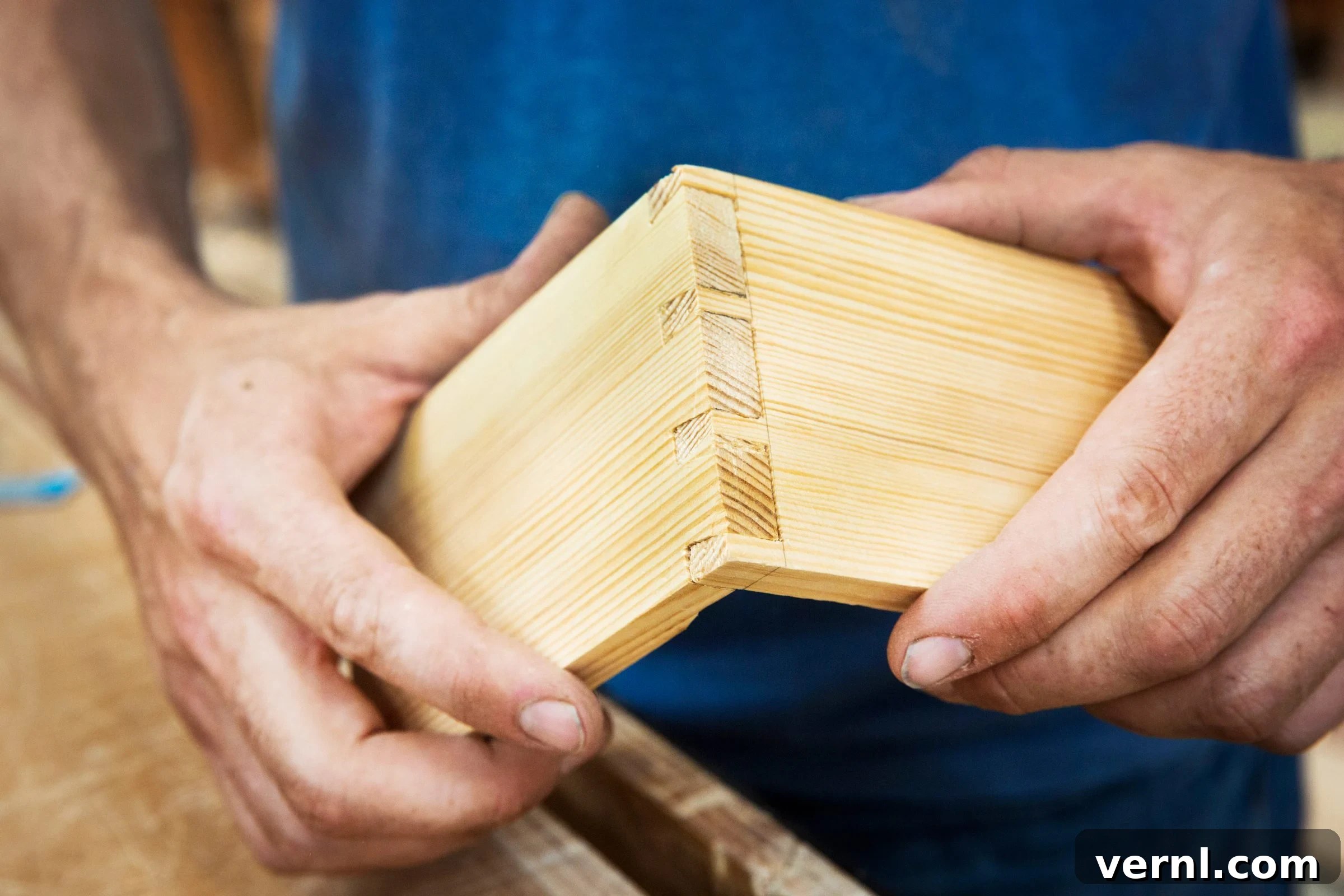
Dovetail joints stand as a testament to the timeless artistry and structural integrity found within the world of wood joinery. Renowned for their distinctive, interlocking pattern that starts narrow and gracefully flares outwards, dovetail joints exude an unparalleled elegance and dramatic flair that captivates both the artisan and the admirer. They represent not merely a method of connecting two pieces of wood, but a hallmark of superior craftsmanship and enduring quality that has been cherished for centuries.
Well-made dovetails possess a transformative power, capable of elevating a simple wooden box into a cherished work of art. The mesmerizing and seemingly mysterious swell of their interlocking geometry consistently impresses those unfamiliar with the intricacies of woodworking. For the dedicated craftsperson, mastering this sophisticated joint is a pivotal achievement that profoundly distinguishes their projects, imbuing them with a sense of heritage, strength, and meticulous attention to detail that sets them apart from the mass-produced and less refined.
What Is a Dovetail Joint? The Anatomy of Strength and Beauty
At its core, a dovetail joint is a series of precisely cut, overlapping, and flared connectors that interlock to join two pieces of wood. These distinct connectors are universally referred to as “tails” and “pins.” When observing the face of one of the boards, the flared sections bear a striking resemblance to a dove’s tail, hence the name. Conversely, when examining the end grain of the opposing board, the pin sections also echo this characteristic shape, creating a perfect mirror image that ensures a snug fit.
The intricate design involves specific terminology: the gaps between the tails are known as “pin sockets,” while the corresponding gaps between the pins are referred to as “tail sockets.” The true brilliance of a dovetail lies in how these pins and tails interlock perfectly, creating a connection that is virtually impossible to pull apart along its length. When properly executed, dovetails are designed to slide together and apart in only one specific direction, forming a robust mechanical lock. This unique configuration provides numerous points of contact and ample surface area for wood glue to adhere, further reinforcing the joint’s incredible strength and longevity. The angle of the tails and pins is crucial; typically, a shallower angle (e.g., 1:8 or 1:10) is used for softwoods, while a steeper angle (e.g., 1:6 or 1:7) is often preferred for hardwoods to maximize interlocking strength.
A Brief History of Dovetail Joinery
The dovetail joint is far from a modern invention; its use dates back thousands of years, solidifying its status as one of the oldest and most enduring forms of wood joinery. Evidence of dovetail construction has been found in ancient Egyptian furniture entombed with mummies, dating back to the First Dynasty (around 3000 BC), showcasing its impressive longevity and early adoption. Examples have also been discovered in ancient Chinese joinery and Roman artifacts, demonstrating its widespread recognition across diverse cultures and eras.
During the European Renaissance, the dovetail joint experienced a resurgence, becoming a staple in high-quality furniture making. Its strength and aesthetic appeal made it the preferred joint for chests, cabinets, and drawers, a tradition that continues to this day. The craftsmanship required to cut precise dovetails by hand became a mark of a skilled artisan, a legacy that continues to resonate within the woodworking community. This rich history underscores the joint’s proven effectiveness and its enduring appeal as both a functional and decorative element in fine woodworking.
Exploring the Diverse Types of Dovetail Joints
While the fundamental principle of interlocking tails and pins remains constant, dovetail joints come in several variations, each suited for different aesthetic and structural requirements. Understanding these distinctions allows woodworkers to choose the perfect joint for their specific project.
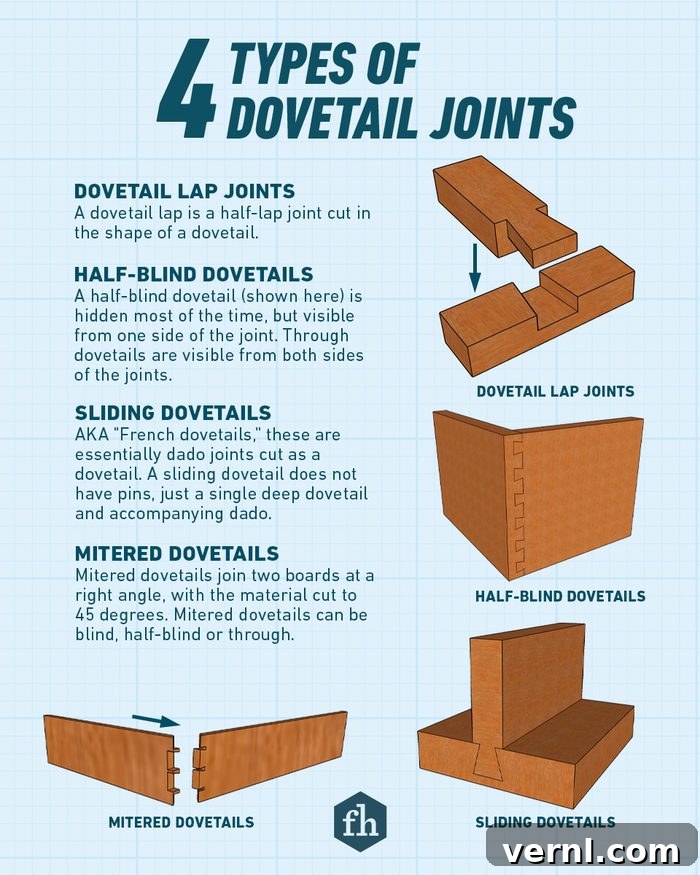
- Through Dovetails: This is the most recognizable and straightforward type of dovetail joint. In a through dovetail, both the pins and tails are visible on the exterior surfaces of both boards being joined. They are openly displayed, showcasing the craftsman’s skill. This type is ideal when both strength and the visual appeal of the dovetail are desired, commonly seen in chest construction, blanket boxes, and carcase joinery where the ends are meant to be exposed.
- Half-Blind Dovetails: As the name suggests, half-blind dovetails conceal the pins and tails on one side of the joint. The pins are cut into the end grain of one board, but the tails are not cut all the way through the face of the mating board, leaving a solid edge that hides the joint from one angle. This is the most common joint for drawer fronts, where the aesthetic of a clean, unblemished front is desired, but the robust interlocking strength of a dovetail is still needed for durability against pulling forces. They are only revealed when the drawer is opened or viewed from a specific angle.
- Sliding Dovetails: Also frequently referred to as “French dovetails,” these joints function more like a specialized dado joint. Instead of multiple pins and tails, a sliding dovetail typically features a single, elongated, deep dovetail-shaped tenon that slides into a corresponding dovetail-shaped groove (dado). This design excels in applications where a strong, secure, yet easily assembled or disassembled connection is required, such as attaching shelves to cabinet sides, securing dividers, or constructing table leg assemblies. Unlike traditional dovetails, sliding dovetails do not have distinct pins; they rely on the wedging action of the tapered tenon within the groove.
- Mitered Dovetails: These sophisticated joints combine the aesthetic of a miter joint with the strength of a dovetail. They join two boards at a right angle, with the material cut to 45 degrees, effectively concealing the end grain of both boards from the exterior. Within this miter, a dovetail joint is hidden. Mitered dovetails can be implemented as blind, half-blind, or through variations, depending on the level of concealment desired. The most complex and visually clean is the “secret mitered dovetail,” where the dovetail elements are completely hidden, making the joint appear as a simple miter from all exterior angles while retaining immense strength. This is a true mark of advanced craftsmanship and often used in high-end furniture.
- Dovetail Lap Joints: Similar to a half-lap joint, this variation involves cutting one board with dovetail-shaped protrusions that fit into corresponding recesses in the mating board. It creates a strong mechanical connection where one board partially overlaps the other. This type is less common but can be useful in specific situations where a strong, semi-exposed corner joint is desired.
Common Applications for Dovetail Joints in Woodworking
Dovetail joints are typically employed in woodworking when a particularly robust and aesthetically pleasing joint is desired, or when the woodworker wishes to showcase a high level of skill and dedication to craftsmanship. Their inherent strength and beauty make them ideal for a range of applications where durability and visual appeal are paramount.
By far, the most ubiquitous application for dovetail joints is in cabinetry, especially in drawer construction. Many discerning consumers actively seek out dovetails as a visual shorthand, an immediate indicator of superior quality construction and an investment in longevity. The interlocking nature of dovetails means that drawer boxes, when subjected to years of pulling and pushing, will resist failure far better than those assembled with less robust methods like butt joints or staples. This makes them a standard feature in high-end kitchen cabinets, dressers, and fine furniture.
Beyond drawers, dovetails also frequently appear in other aspects of furniture construction. They are essential for assembling the robust carcases of chests, wardrobes, and larger storage units, where they provide structural integrity that can withstand significant stress over time. Fine boxes, jewelry boxes, and intricate display cases often feature through dovetails, not only for their strength but also for their decorative quality, turning the functional joint into a design element. While less common in general carpentry compared to furniture, dovetails can sometimes be found in specialized architectural elements or custom built-ins where the craftsman’s touch is highly valued.
Dovetail Joint Advantages and Disadvantages: A Balanced Perspective
Like all types of woodworking joints, dovetails come with a unique set of advantages and disadvantages that woodworkers must consider when selecting the appropriate joinery for a project.
Advantages of Dovetail Joints
- Unmatched Aesthetic Beauty: It is simply undeniable; dovetails are inherently attractive in almost any application where they are visible. Their symmetrical, interlocking pattern is a classic design element that speaks of natural beauty and meticulous human effort. They add a touch of timeless elegance and sophistication, enhancing the perceived value and artistry of any piece of furniture.
- Exceptional Strength and Durability: The primary functional advantage of dovetails lies in their incredible strength. The interlocking tails and pins create a mechanical lock that resists pulling forces in all directions except the one perpendicular to the joint’s face. This makes them exceptionally strong against racking and separation, particularly when combined with modern wood glues. The numerous angled surfaces provide an expansive area for glue adhesion, further strengthening the connection and contributing to the overall longevity of the piece.
- A Clear Display of Quality and Skill: For woodworkers, visible dovetails are an unequivocal mark of superior craftsmanship. They demonstrate patience, precision, and a mastery of traditional woodworking techniques. If your goal is to impress clients, command a higher price for your bespoke work, or simply take immense pride in your creations, incorporating visible dovetails is an excellent way to achieve it. They communicate an immediate message of quality and attention to detail that mass-produced items simply cannot replicate.
- Resistance to Wood Movement: The interlocking nature helps to resist the forces of wood expansion and contraction, which can compromise less robust joints over time. While wood movement always needs to be accounted for, the dovetail’s design provides a stable and long-lasting connection.
Disadvantages of Dovetail Joints
- Complexity and Learning Curve: While well within the reach of most beginner or intermediate woodworkers, cutting dovetails—especially by hand—is a skill that demands significant practice and a keen eye for detail. It is not a joint that can be rushed. If the tails and pins are not cut cleanly and precisely, the joint will inevitably suffer from unsightly gaps or tight pinches. These imperfections not only detract from the aesthetic appeal but also weaken the connection, making a less attractive and less reliable joint.
- Time-Consuming Process: Compared to simpler joints like butt joints or dadoes, cutting dovetails, especially by hand, requires considerable time for layout, cutting, and fitting. This increased labor time contributes to higher production costs for custom pieces.
- Potential for Material Waste: Due to the precision required, mistakes during the cutting or fitting process can lead to wasted material, particularly for novice woodworkers who are still honing their skills.
- Specialized Tooling: While possible with basic tools, achieving high-quality dovetails often benefits from specialized hand tools or dedicated router jigs, which represent an initial investment.
Essential Tools for Crafting Dovetail Joints
The creation of dovetail joints, whether by hand or with power tools, requires precision and the right instruments. Historically, dovetails were exclusively hand-cut, a tradition that continues with many fine woodworkers. However, modern machinery offers efficient alternatives. Dovetails are largely crafted with a combination of hand tools or a router. Some woodworkers utilize specialized table saw jigs, but these methods are generally less common than hand-cutting or routing.
Dovetail Saws (or Tenon Saw)
A dovetail saw is specifically designed for delicate, precise cuts required for pins and tails. It typically features a thin plate, a brass or steel spine for rigidity, and a high tooth count (often rip-tooth geometry) for clean cross-grain and rip cuts. This specialized saw allows for incredibly straight and accurate cuts along the dovetail layout lines. Once the initial cuts are made, the waste material between the tails can be removed with a coping saw or chisels. A tenon saw, which is generally slightly larger and more robust than a dovetail saw, can also be effectively used for cutting larger dovetails or pins due to its similar design for accurate joinery cuts.
Dovetail Markers and Marking Gauges
While you don’t technically *need* dovetail markers to lay out your cuts, they are incredibly helpful, especially for beginners. These small, precisely angled guides (typically 1:6 or 1:8 for hardwoods/softwoods) ensure consistent and accurate angles for your tails. Combined with a sharp pencil or a marking knife, they establish the crucial layout lines. Additionally, a marking gauge is indispensable for accurately scribing the depth of the pins and tails across the end grain of your boards, ensuring a perfect fit.
Coping Saw
A precise coping saw, with its thin, adjustable blade, is an excellent tool for removing the bulk of the waste material between the tails (the pin sockets) after the initial saw cuts. Its ability to maneuver curves and tight spaces makes the clean-up process with chisels much easier and reduces the risk of damaging the delicate tail shoulders.
Chisels and Mallets
Wood chisels are absolutely fundamental for hand-cut dovetails. A set of sharp, well-maintained bench chisels (bevel-edge chisels are often preferred) is used to pare away the remaining waste material with extreme precision. Cleaning up the surfaces of the dovetails and the sockets with a chisel ensures a tight, gap-free fit and provides superior gluing surfaces. A wooden or plastic mallet is often used in conjunction with chisels to drive them for heavier waste removal, though much of the fine paring is done by hand pressure alone.
Router and Jigs
For those looking for efficiency, particularly when making many dovetails for production work, a router is a fantastic and rapid way to create these joints. Dovetail router bits, which are specifically shaped to cut the unique profile of the joint, are essential. When these bits are combined with a dedicated dovetail jig (either fixed or adjustable), they can make quick work of this otherwise complicated joint. Router jigs ensure consistency and accuracy, allowing even a novice to produce clean, repeatable dovetails with relative ease, albeit with a different aesthetic from hand-cut versions.
Additional Measuring and Marking Tools
Beyond the specialized tools, basic measuring and marking instruments are crucial. These include steel rulers, combination squares for checking squareness and transferring lines, and a sharp utility knife or marking knife for crisp layout lines that guide your saw and chisel cuts, preventing tear-out and ensuring accuracy. Good quality clamps are also indispensable for securing your workpieces firmly to the workbench while cutting and chiseling.
Hand-Cut vs. Router-Cut Dovetails: A Woodworker’s Dilemma
The debate between hand-cut and router-cut dovetails is a long-standing one in the woodworking community, each method offering distinct advantages and catering to different priorities. Understanding these differences is key to choosing the right approach for your project.
The Artistry of Hand-Cut Dovetails
Hand-cutting dovetails is often considered the pinnacle of fine woodworking. This method requires significant skill, patience, and a deep understanding of wood grain. Each joint is unique, bearing the subtle marks of the artisan. The process itself is a meditative experience, allowing the woodworker to intimately connect with the material. Hand-cut dovetails are characterized by their slightly irregular appearance, which some find more aesthetically pleasing and a true testament to human craftsmanship. They allow for greater customization of tail and pin size, spacing, and angle, offering creative freedom that machine-cut joints cannot easily replicate. While slower and more challenging to master, the result is a joint that carries a unique story and a higher perceived value, often sought after in bespoke furniture and heirloom pieces.
The Efficiency of Router-Cut Dovetails
Router-cut dovetails offer unparalleled speed, consistency, and repeatability, making them ideal for production work or when a large number of identical joints are needed. Using a router with a specialized jig significantly reduces the learning curve and the time investment required per joint. The results are typically flawless, with perfectly uniform pins and tails that fit together snugly with minimal effort. This method is highly efficient for cabinet shops, hobbyists who prioritize speed, or anyone who needs strong, precise dovetails without the extensive practice demanded by hand-cutting. However, router-cut dovetails tend to have a more uniform, “manufactured” look, and the specific geometry (e.g., pin size) is often dictated by the router bit and jig, limiting some creative flexibility.
Ultimately, the choice between hand-cut and router-cut dovetails depends on the woodworker’s goals, skill level, and the specific requirements of the project. Both methods produce incredibly strong and beautiful joints, but they represent different philosophies in woodworking.
Tips for Cutting Perfect Dovetails: A Beginner’s Guide
Mastering dovetail joints, whether by hand or machine, requires precision and patience. Here are some essential tips to help aspiring woodworkers achieve beautiful, tight-fitting dovetails:
- Start with Sharp Tools: This cannot be overstated. Dull saws will wander, and dull chisels will crush wood fibers instead of cleanly cutting them. Invest in quality sharpening stones and learn to keep your tools razor-sharp.
- Accurate Layout is Key: “Measure twice, cut once” is paramount with dovetails. Use a sharp pencil or, better yet, a marking knife for precise lines. A marking gauge is essential for scribing shoulder lines consistently.
- Cut to the Waste Side: Always make your saw and chisel cuts just *outside* your layout lines. It’s easier to remove a tiny sliver of wood later than to try and put it back. When paring with chisels, always keep the bevel side facing the waste.
- Transfer Marks Accurately: When transferring the tails to the pin board (or vice-versa), use a marking knife or a very sharp pencil to precisely trace the shape. Secure the boards together firmly in a vise or with clamps to prevent movement during transfer.
- Practice on Scrap Wood: Before committing to your project wood, practice on identical species and thickness scrap pieces. This allows you to refine your technique, dial in your angles, and get a feel for the wood’s specific characteristics without fear of ruin.
- Work Methodically and Be Patient: Dovetails are not a race. Take your time with each cut and each paring stroke. Rushing leads to mistakes and frustration. Enjoy the process of precision.
- Choose the Right Wood: For beginners, choosing a stable, medium-density hardwood like poplar or cherry can be more forgiving than very soft woods (which can tear out easily) or very hard, dense woods (which are difficult to cut). Straight grain is also easier to work with.
- Illuminate Your Workspace: Good lighting is crucial for seeing your layout lines and cuts clearly, especially when chiseling out waste.
The Enduring Legacy of Dovetail Joinery
From ancient Egyptian tombs to contemporary fine furniture, the dovetail joint has consistently proven itself as a pinnacle of woodworking excellence. Its remarkable strength, timeless beauty, and the profound skill required to craft it by hand ensure its place as a revered element in the world of joinery. Whether chosen for its robust mechanical properties, its aesthetic appeal, or as a deliberate statement of quality craftsmanship, the dovetail joint remains an indispensable and celebrated technique for woodworkers worldwide. Mastering this iconic joint not only elevates a project’s durability and visual appeal but also connects the artisan to a rich tradition of craftsmanship that spans millennia.
[cf]skyword_tracking_tag[/cf]