
Are Your Smart Devices Always Listening? Understanding Privacy and Control in the Smart Home
If you’re among the majority of households using smart tech, you might wonder: what are your smart devices actually listening to, and what happens to that information? While devices like Amazon’s Alexa and Apple’s Siri are designed to respond to specific trigger phrases, other smart devices, such as cameras and doorbells, might be capturing a broader range of sounds and activities.
According to John Beaver of Desky, “The main issue is that companies often configure these devices to gather as much data as possible, and most users never adjust these default settings. However, you have more control over your privacy than you might think.”
This article delves into what your smart devices listen to, how they use this information, and how you can enhance your privacy while still benefiting from the convenience of smart technology.
Do Smart Devices Listen Around the Clock? The Truth About Always-On Microphones
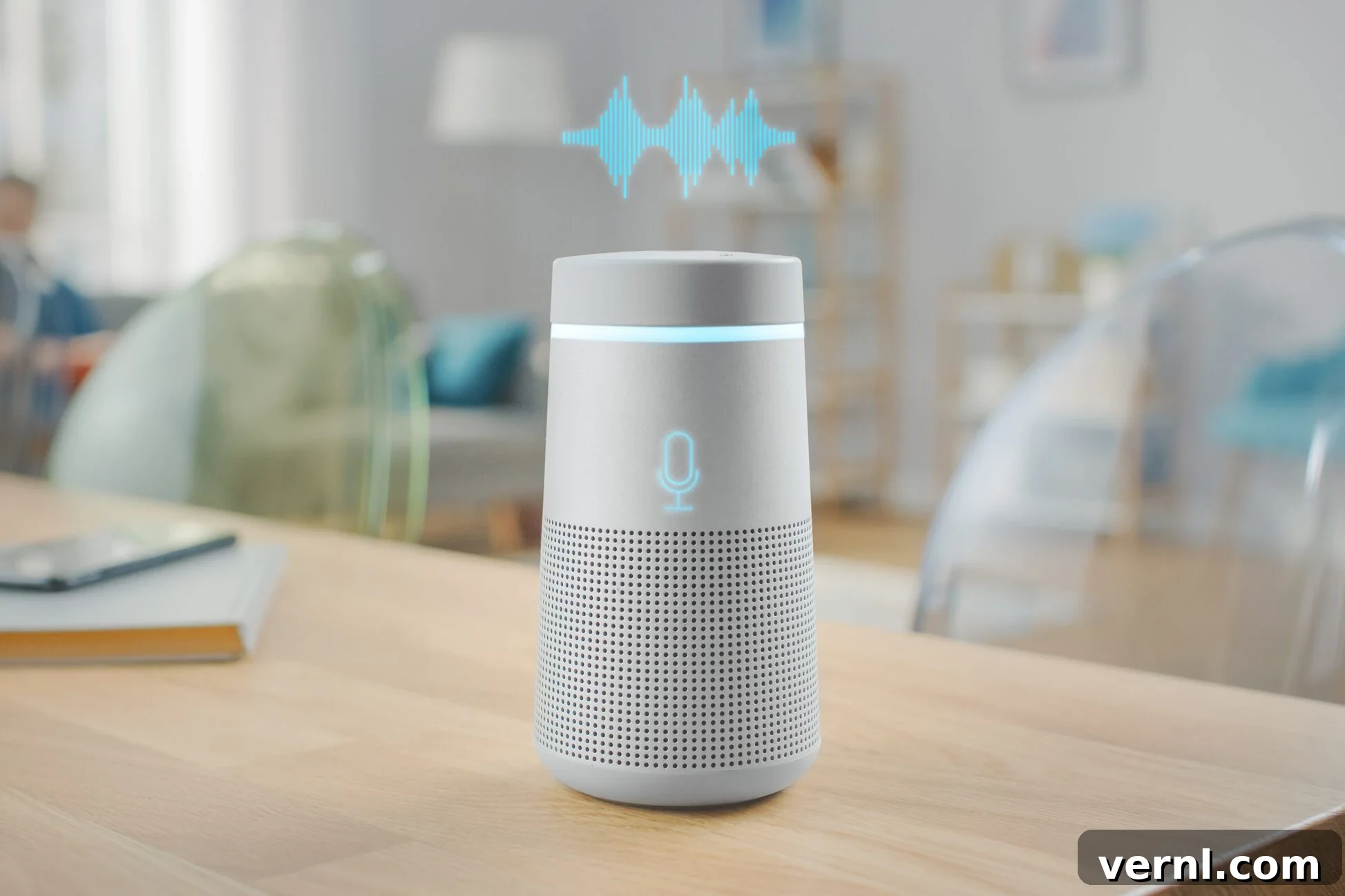
The answer is complex. By default, many smart devices come with microphones that are always active. However, for smart speakers from companies like Apple, Amazon, and Google, the primary function is to listen for specific keywords. When these devices detect a “wake word” or “trigger phrase” – such as “Hey Siri,” “Alexa,” or “Hey Google” – they begin recording. Before the wake word is detected, the device processes audio locally, not sending it to the cloud, to identify the trigger phrase. This allows for quick activation without constantly transmitting data.
Chris Hauk of Pixel Privacy points out that other smart devices, including video doorbells, security cameras, and baby monitors, may continuously record audio and video, depending on the manufacturer and user settings. Understanding the recording behavior of each device is crucial for managing your privacy.
How Do Smart Devices Recognize Voice Commands? The Wake Word Process
Smart devices rely on a specific program designed to identify wake words. Steven Athwal of The Big Phone Store explains, “This program is relatively simple; it doesn’t understand language in a comprehensive way. Instead, it listens for a specific sound pattern associated with the wake word.” This is a computationally efficient process that allows the device to remain in a low-power listening state.
It’s important to note that words or sounds similar to the wake word can inadvertently trigger recording. “These devices can make mistakes, which is why you might find unexpected recordings in your device’s history,” Athwal adds. After detecting the wake word, the device begins recording and transmits the audio to cloud servers for processing and fulfilling your requests.
The Journey of Your Voice Data: What Happens After Recording?
Once a smart device initiates recording, the audio is transmitted to the cloud, where it undergoes processing by algorithms, artificial intelligence (AI), and, in some cases, human reviewers. The processed data is then stored in the cloud and often used to enhance AI models for voice command recognition and response accuracy.
According to John Beaver, “Companies retain recordings to refine their systems and improve their ability to understand speech. While audio files are typically kept private, patterns derived from your queries may be used for advertising purposes. For example, repeatedly asking about ergonomic chairs could influence the types of ads you see online.” This practice raises concerns about data privacy and the potential for targeted advertising based on personal voice interactions.
What Specific Information is Sent to the Cloud?
When a smart device records and transmits data, it includes your account ID, IP address, and the audio recording itself. Chris Hauk notes that many companies, including Apple, Amazon, and Google, allow users to request access to the data they have collected. This transparency allows users to review the information stored about them and gain a better understanding of how their data is being used.
How Long Are Voice Recordings Stored?
The duration for which voice recordings are stored varies depending on the specific product and the user’s settings. Some recordings may be temporary, while others are stored indefinitely. Pavel Sukhachev of Electromania LLC explains, “In most cases, if you don’t actively delete the recordings, they will be retained for an extended period. Some users have discovered years’ worth of stored conversations that they had forgotten about.” This underscores the importance of regularly reviewing and managing your voice history to protect your privacy.
Taking Control: Managing What Your Smart Devices Hear and Record
Here are several strategies to control what your smart devices can hear and record, empowering you to manage your privacy:
- Adjust Microphone Sensitivity: Reduce the microphone’s sensitivity to minimize the range at which it picks up sounds. This can help prevent unintended recordings.
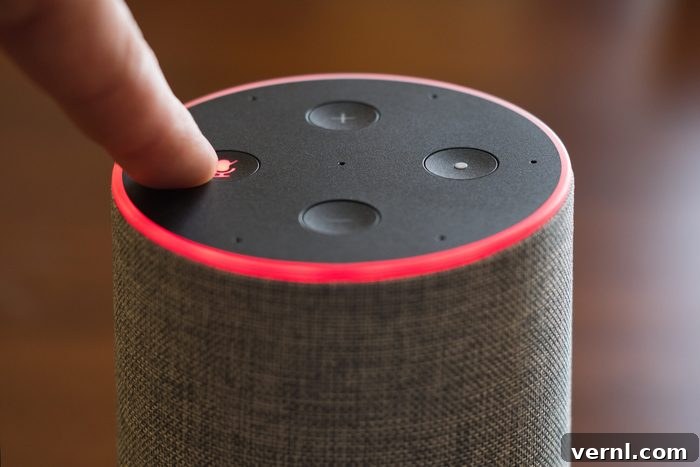
- Use Software Muting: Mute the microphone through the device’s software settings. This keeps the microphone “on” but instructs the device to ignore its input. However, be aware of “soft mute” limitations as discussed later.
- Physically Disable the Microphone: This provides the highest level of security. “Physically turning off the microphone offers the most security,” says Hauk. “Although that will require you to manually activate the device by pushing a button or long-pressing on your smartphone or tablet.”
- Regularly Delete Voice History: Set auto-delete settings to the shortest available option to automatically remove recordings after a set period.
- Disable “Help Improve” and “Human Review” Settings: Opt out of programs that allow companies to use your voice data for improving their AI or for human review.
- Separate Wi-Fi Network: Place smart devices on a separate Wi-Fi network to prevent them from accessing data on your primary network. This limits the potential spread of security breaches.
- Review App Permissions Monthly: Check which apps have microphone and data sharing access enabled. “Many apps request mic access unnecessarily,” says Sukhachev. Revoke permissions from apps that don’t require them.
- Router-Based Control: Configure your router to control which devices can connect to the internet and when. This allows you to automatically disconnect your smart speaker at night.
Ultimately, Aimee Simpson of Huntress advises, “If you’re not comfortable with the device listening to what you’re saying and potentially recording you, don’t have it in the room. This isn’t ideal, but it’s the most effective way to minimize risk.”
Controlling What Your Smart Devices Share: Taking Charge of Data Transmission
Most smart devices offer options to control what data is saved and shared, and in many cases, disabling these features won’t affect basic functionality. Access your smart device’s application and disable the following settings:
- Voice recording
- Data sharing
- “Help improve our services” options
Beaver warns, “Sometimes these settings are hidden deep within the menus. We disabled all third-party apps on our office devices after learning that voice data could be shared with app developers.” This highlights the importance of thoroughly exploring the settings on your devices to ensure your privacy preferences are correctly configured.
Deleting Your Voice History: Removing Recordings from the Cloud and Device
To fully remove your voice data, you’ll need to delete your voice history from both the cloud server and the device itself, depending on where it’s stored. Many devices also offer the option to configure automatic deletion on a recurring basis. Access the settings in your device’s app to review the available options and customize them to suit your privacy needs.
Frequently Asked Questions (FAQs) About Smart Device Privacy
What is the Difference Between a “Soft Mute” and a “Hard Mute”?
A soft mute tells the device not to listen, whereas a hard mute involves physically disconnecting the microphone to prevent it from picking up any sound. Matt Little of Festoon House explains, “A hard mute is the most secure method of disabling the microphone. Soft mutes offer limited security because a compromised operating system could potentially override the settings and re-enable the microphone.”
Does Deleting My Voice History Actually Remove the Data from the Company’s Servers?
Generally, yes. However, the data may remain on the servers for a short time following the deletion request. Furthermore, data that has been anonymized and used for AI training may be retained indefinitely. While you can remove your personal association with the data, the aggregated, anonymized information might still be used for improving AI models.
Which Smart Device Offers the Best Privacy Protection?
For smart speakers, Apple’s Siri is often considered to be the most privacy-focused option because it processes more data on the device itself, which reduces the amount of data stored in the cloud. Pavel Sukhachev notes, “If privacy is your top priority, Apple devices offer better protection, although no smart device is completely private.” The on-device processing minimizes data transmission and storage, providing an added layer of privacy.
For other smart home systems, Matt Little recommends Apple’s HomeKit for similar reasons. HomeKit emphasizes local processing and end-to-end encryption, providing a more secure and private smart home environment.
In general, prioritize smart devices that allow you to disable voice recording, opt out of data sharing, remove files from cloud storage, and feature a physical mute toggle switch. These features provide greater control over your data and privacy.
Aimee Simpson advises, “Before purchasing a smart device, carefully review its privacy policies and determine whether it allows you to configure voice capture settings. Some brands are less flexible when it comes to data capture and recording, so avoid those if you are concerned about where your voice might end up.”
Meet the Experts: Insights from Privacy and Security Professionals
- Chris Hauk is a consumer privacy advocate at Pixel Privacy, with over 25 years of experience in the IT industry, advising consumers on device and data security.
- Aimee Simpson is director of product marketing at Huntress, a cybersecurity company, specializing in data privacy and security.
- Pavel Sukhachev is founder of Electromania LLC, building AI automation systems and helping businesses implement secure smart technology.
- John Beaver is founder of Desky, creating smart ergonomic furniture using sensors and connected software, with a focus on privacy and data handling.
- Steven Athwal is CEO and founder of The Big Phone Store.
- Matt Little is managing director and founder of Festoon House, with expertise in IT, hardware protocols, and data security.
Sources: Additional Insights
- Rich Kingly is owner of Driveway King, and a home improvement specialist, advising homeowners on using smart home systems to minimize unnecessary data sharing.
Related Articles: Further Reading
- See a Green Dot on Your Android Phone? Here’s What It Means
- If You Get a USPS Scam Text, You Need To Do This Immediately
- This Is How Often You Should Restart Your Phone