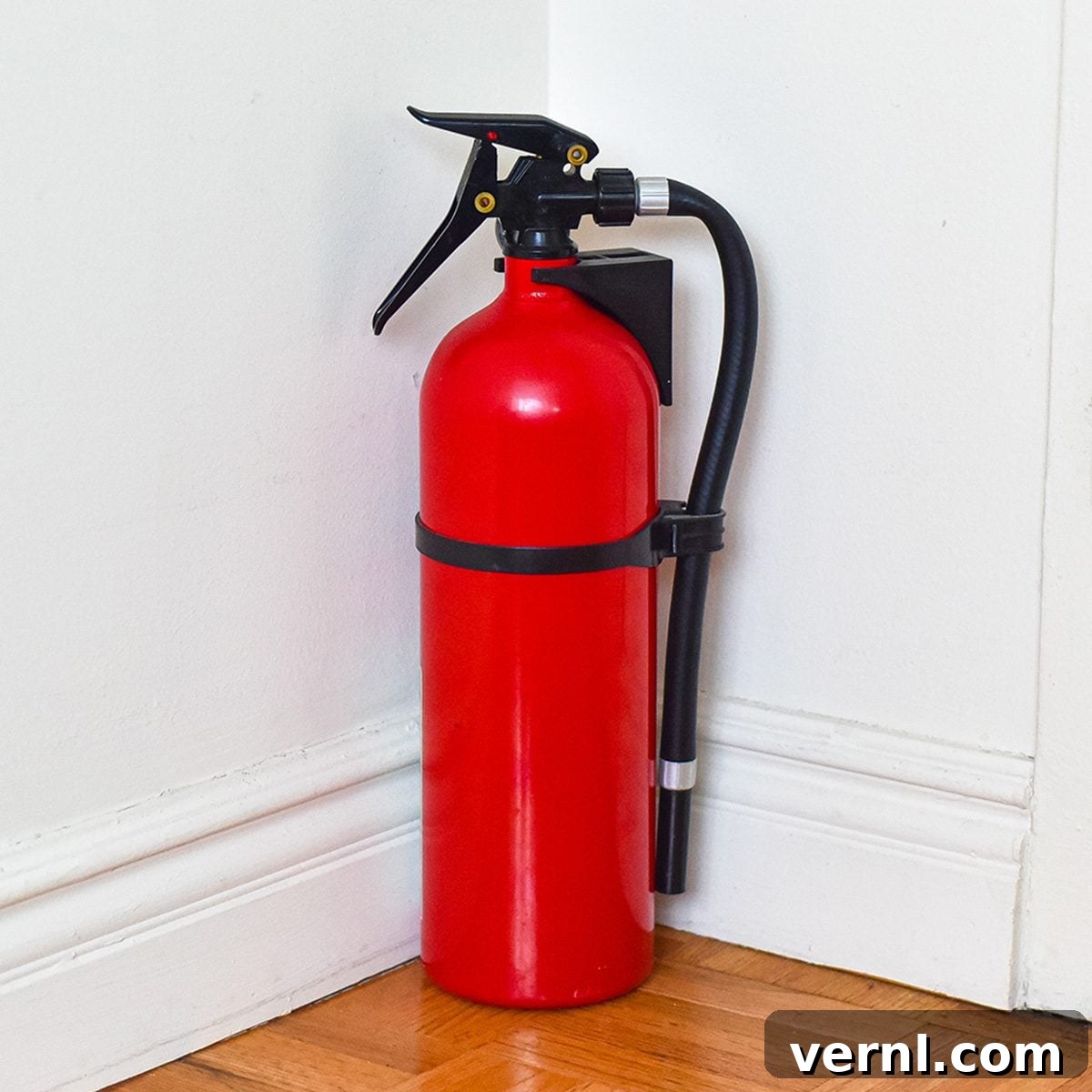
When it comes to fire safety, most homes now have at least one smoke detector, but roughly a quarter of households still lack a fire extinguisher. That gap matters: extinguishers help prevent thousands of home fires each year.
“People often don’t want to invest a few dollars into a safety product. But a small investment can go a long way if you need it,” says home safety expert Philip Farina.
Buying an extinguisher is only the first step. To be effective, extinguishers must be the correct type, placed where they’re accessible, and maintained. It’s also important to know when to use an extinguisher and when to evacuate. This guide explains the essentials for home fire extinguishers.
What Is a Home Fire Extinguisher?
A home fire extinguisher is a portable, pressurized container that releases a dry powder or wet chemical agent to suppress small fires. Extinguishers are designed to put out incipient, contained fires before they spread. They’re not legally required in most single-family homes, but many insurers offer discounts if extinguishers are installed.
Types of Fire Extinguishers for Home Use
There are five standard classifications:
- Class A: combustible materials such as wood, paper, and cloth.
- Class B: flammable liquids like gasoline and oil.
- Class C: electrical fires involving energized equipment.
- Class D: combustible metals (rarely found in typical homes).
- Class K: cooking oils and grease.
For most homes, a multi-purpose ABC extinguisher is recommended because it covers the most common risks. Extinguisher sizes generally range from 2.5 to 10 pounds; choose a size you can handle safely.
Where to Place Fire Extinguishers in Your Home
Key locations for extinguishers include the kitchen and garage or workshop. It’s also wise to have one on every floor, and consider placements in the master bedroom and laundry room. Keep an extinguisher near your grill or outdoor cooking area.
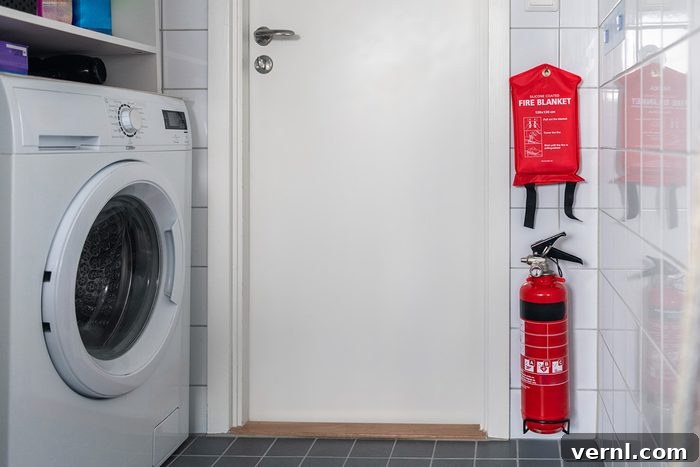
Fire and safety expert Lo Choe recommends five-pound ABC units for general living areas, with a separate Class K extinguisher for kitchen grease fires. A 10-pound ABC unit is a good option for the garage or workshop.
Mount extinguishers in visible, accessible spots, roughly 3.5 to 5 feet from the floor and near exits. For kitchens, position them 10 to 15 feet from the stovetop so you can approach safely. Never store extinguishers next to heat sources or in areas that routinely get hot, such as inside car trunks.
“That’s where things get genuinely dangerous,” warns home fire safety inspector Kameron Khan. “They can build internal pressure to the point of explosion.”
How to Use a Fire Extinguisher
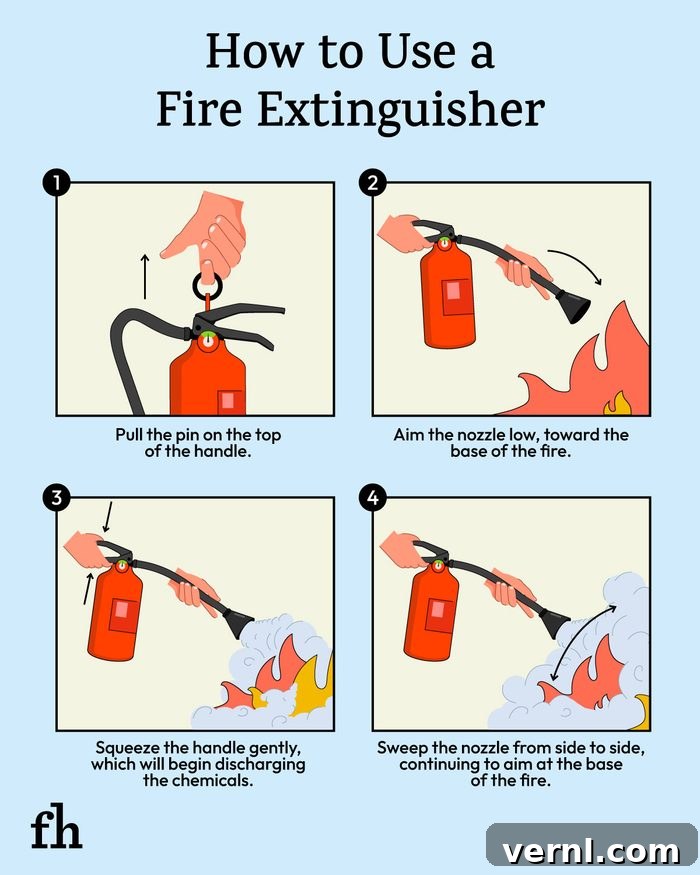
Follow the PASS technique:
- Pull the pin at the top of the handle.
- Aim the nozzle low, at the base of the fire.
- Squeeze the handle to discharge the agent.
- Sweep the nozzle side to side, keeping the aim at the base of the flames.
PASS (pull, aim, squeeze, sweep) is simple and effective. Start about six to eight feet from the fire, and if the fire appears controlled, back away slowly while watching for flare-ups.
What to Do After Using an Extinguisher
If there’s any uncertainty the fire is fully out, call the fire department for an inspection. Afterwards:
- Open windows to ventilate; dry chemicals can irritate lungs.
- Photograph the affected area for records and insurance.
- Replace or recharge the extinguisher promptly.
- Clean dry chemicals from electronics within 24 hours to avoid corrosion.
- Notify your insurance company within 72 hours if there was damage.
When NOT to Fight a Fire Yourself
Only attempt to fight a fire if it is small, no taller than chest height, and you have a clear escape route. If smoke is heavy or reaches above half the room, evacuate immediately. Close doors behind you and call 911 once you are safely outside.
“Fire needs oxygen to sustain itself, and if you are caught trying to fight a fire with limited visibility, you will have less than a minute before you are disoriented and pass out,” says Choe.
How to Choose the Right Extinguisher
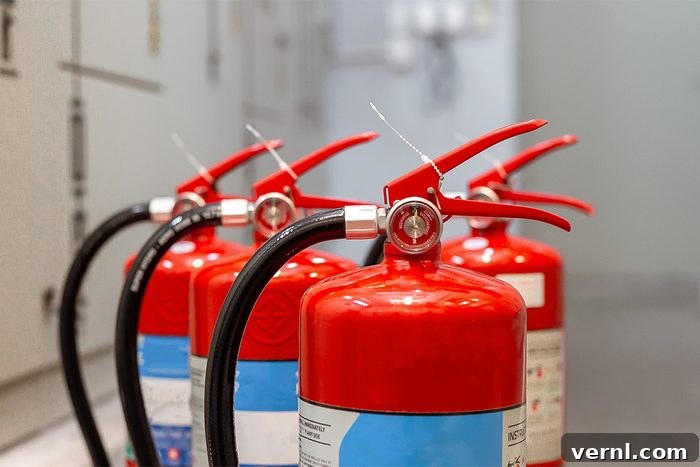
When selecting an extinguisher:
- Choose units with UL certification on the label.
- Prefer metal valves over plastic for durability.
- Check the pressure gauge—needle should be in the green zone.
- Opt for ABC-class extinguishers for broad home protection.
- Consider a Class K unit specifically for kitchen grease fires.
“Avoid disposable extinguishers with plastic heads; metal-head, rechargeable units have longer service lives,” Choe advises.
How to Train Yourself
Many local fire departments and safety organizations offer extinguisher training. If you cannot attend a formal class, teach all household members the PASS method and practice quickly removing an extinguisher from its mount and locating the pin. Practicing these actions reduces hesitation during an emergency.
“Pulling the pin and aiming the nozzle takes most people several seconds,” Choe notes. “That’s all it takes for an average stovetop fire to travel up the cabinets.”
When to Replace
Disposable home extinguishers typically last eight to 12 years from the manufacture date stamped on the bottom; rechargeable units can last 12 to 15 years with regular professional servicing. Inspect extinguishers monthly: ensure the gauge reads green, the pin and seal are intact, and the canister isn’t dented or corroded. Replace any unit with significant corrosion or damage and dispose of it at a household hazardous waste facility.
FAQ
How many fire extinguishers does a home need?
At minimum, have two extinguishers in most homes; more is safer. Aim for one per floor and near high-risk areas like the kitchen, laundry room, master bedroom, garage, fireplace, and outdoor grill. For larger homes, consider one extinguisher per 1,000 square feet and keep travel distance to an extinguisher under 40 feet.
Do fire extinguishers expire?
Yes. Depending on the model, extinguishers expire between eight and 15 years. Seals can leak, O-rings dry out, and agents can harden over time. Annual professional servicing is recommended to empty, inspect, and recharge units when needed.
Can a fire extinguisher explode?
Explosions are rare because modern extinguishers include safety valves, but risk increases if stored above 120°F, subjected to severe corrosion, or dropped onto a hard surface. Avoid exposing units to extreme heat or physical damage.
Where should you not store a fire extinguisher?
Do not store extinguishers in direct sunlight, hot attics, car trunks, non-insulated garages, or any location that can exceed 120°F or drop below -40°F. Avoid damp basements or rust-prone areas, and do not hide extinguishers behind furniture or lock them away. Mount them securely where they can be reached quickly without rolling or falling.
About the Experts
- Lo Choe is a licensed fire and electrical safety contractor and owner of Aura Fire Safety in the San Francisco Bay Area, with extensive experience in fire safety and NFPA standards.
- Philip Farina is founder and chief security and safety advisor for Risky Business consultants, known for expertise in home security, safety and disaster preparedness.
- Kameron Khan is founder and managing director of SilverWater Plumbing, which also conducts residential fire safety inspections.
- Cal Singh is head of marketing and partnerships at Equipment Leasing Canada and works with businesses that lease and service heavy equipment.