
Transform Your Home: Unleash Your Vision with the Best AI Interior Design Apps
Embarking on a home decoration or remodeling project can be an exhilarating yet daunting journey. From selecting the perfect sofa to deciding on bold navy blue kitchen cabinets, every choice can feel monumental. Thankfully, the digital age brings a revolutionary solution: AI interior design apps. These powerful tools, accessible on your smartphone or tablet, leverage cutting-edge technologies like virtual reality (VR), 3D modeling, and intelligent space planning to guide your decisions and bring your design ideas to life with unprecedented clarity.
According to Stefania Cardinali, a seasoned real estate professional with The Corcoran Group in New York City, integrating an AI interior design app into your initial planning stages is a strategic move. “It’s a fantastic way to truly grasp what will, or won’t, resonate within a given space. It offers homeowners a creative advantage and a visualization capability that they might not naturally possess,” Cardinali explains. She further emphasizes that this technology acts as a preventative measure, helping to identify and circumvent potential design missteps before they materialize into costly errors.
Chadwick Boyd, another prominent Real Estate Professional in New York City, echoes this sentiment, highlighting the growing popularity of AI design apps among homeowners. These tools empower users to visualize their selections comprehensively before committing to any purchases. “Utilizing an interior design app grants homeowners effortless access to powerful visuals, allowing them to explore a spectrum of possibilities and pinpoint exactly what truly captures their interest,” Boyd remarks. “When we can visually perceive something, it transcends from an abstract concept into a tangible, achievable reality.” This ability to ‘see before you build’ is fundamentally reshaping how people approach home design.
In this comprehensive guide, we’ll delve into a curated list of the best AI interior design apps designed to help you transform your design aspirations into stunning realities within your home. But before we explore these innovative tools, let’s equip you with some essential considerations and preparations to ensure a smooth and successful design journey.
Why AI is a Game-Changer in Modern Home Design
The evolution of Artificial Intelligence has brought about transformative changes across numerous industries, and interior design is no exception. AI-powered applications are not merely digital sketchpads; they are sophisticated design partners that democratize professional-level visualization and planning. They bridge the gap between abstract imagination and concrete reality, offering a myriad of benefits that empower homeowners and design enthusiasts alike.
One of the primary advantages, as Stefania Cardinali points out, is the ability to “realize and understand what may or may not work in a space.” This proactive insight is invaluable. Traditionally, homeowners would rely on costly mood boards, physical samples, or even make expensive purchases only to discover they don’t fit the vision. AI eliminates much of this guesswork by rendering hyper-realistic simulations of how furniture, colors, textures, and layouts will appear within your actual home environment.
Chadwick Boyd further elaborates on the psychological impact of visualization. “When our brains see something, it becomes more real and possible.” This psychological shift is crucial. It moves users from tentative ideas to confident decisions, fostering a deeper connection with their design choices. AI apps provide an accessible platform for experimentation, allowing users to rapidly iterate through various styles, arrangements, and palettes without any financial commitment or physical effort. This iterative process not only saves time and money but also mitigates the risk of design regret, ensuring a final outcome that truly reflects the homeowner’s desired aesthetic and functionality.
Beyond visualization, AI design apps offer efficiencies that traditional methods cannot match. They can analyze room dimensions, lighting conditions, and even existing furniture to suggest optimal layouts and compatible items. This blend of creative freedom and analytical precision makes AI an indispensable ally in navigating the complexities of home design and renovation, transforming what once seemed like an exclusive domain for professionals into an accessible and enjoyable process for everyone.
Before You Dive In: Essential Preparations for Using AI Design Apps
While AI interior design apps offer incredible convenience and insight, they are tools that work best when paired with thoughtful preparation. To maximize their potential and ensure a satisfying design experience, consider these crucial preliminary steps:
Do Your Homework: Research and Inspiration
Think of AI technology as a sophisticated guide, not a mind-reader. Before you even upload your first room photo, Stefania Cardinali strongly advises homeowners to conduct thorough research into various design styles, finishes, furnishings, and material options. Without this foundational knowledge, you “risk becoming overwhelmed by all the choices available.” Take time to explore different aesthetics – from minimalist and Scandinavian to industrial, bohemian, and traditional. Familiarize yourself with current trends and timeless classics. Browse product catalogs, visit showrooms, and note down what appeals to you. Understanding the vocabulary of design will enable you to interact more effectively with the AI, feeding it better prompts and making more informed decisions when reviewing its suggestions.
Accurate Measurements are Key: Precision Matters
The efficacy of many features within these AI apps hinges on the accuracy of your input, particularly concerning measurements. To truly leverage the 3D modeling and space planning capabilities, you must have precise dimensions of your space. Grab a tape measure and meticulously record the length, width, and height of your room, including any architectural quirks like alcoves, windows, doors, and built-in fixtures. Also, measure existing furniture you plan to keep. Be ready with clear, well-lit photos of your room from various angles, and if you have specific items in mind, gather links to their product pages. The more detailed and accurate the information you provide, the more realistic and helpful the design renderings will be, preventing frustrating inconsistencies in scale and placement.
Define Your Personal Style: A Clear Vision
One of the initial questions many AI design apps will pose is about your preferred design style or goal. If you’re unsure, scrolling through generic descriptions like “modern farmhouse,” “contemporary,” or “French country” can quickly become overwhelming. This is where pre-app inspiration gathering comes in handy. Dedicate time to exploring visual platforms like Pinterest, Instagram, Houzz, or even design magazines. Create mood boards, save images that resonate with you, and look for recurring themes in color palettes, furniture shapes, and overall ambiance. Identifying your aesthetic preferences will not only make the app experience smoother but also lead to more cohesive and personally satisfying design outcomes.
Embrace the Learning Curve: Expect the Unexpected
It’s important to remember that AI is a rapidly evolving technology, and many aspects are still being refined. Consequently, you should anticipate a certain degree of a learning curve and be prepared for occasional quirks or inconsistencies. As one user noted, an app might place “two end tables on top of each other” if your plan specifies two without clear positional data. Don’t be discouraged if some initial renderings don’t make perfect sense or if the results aren’t exactly what you envisioned. Approach these moments with patience and flexibility. Regenerate designs, adjust your prompts, or simply move on to explore other options. We are all learning to collaborate with AI, and this iterative process is part of discovering its full potential.
Top AI Interior Design Apps to Bring Your Vision to Life
With your preparations complete, you’re ready to explore the exciting world of AI-powered interior design. Here are some of the leading apps that can help you visualize, plan, and execute your dream home projects.
RoomGPT: Instant Room Transformations
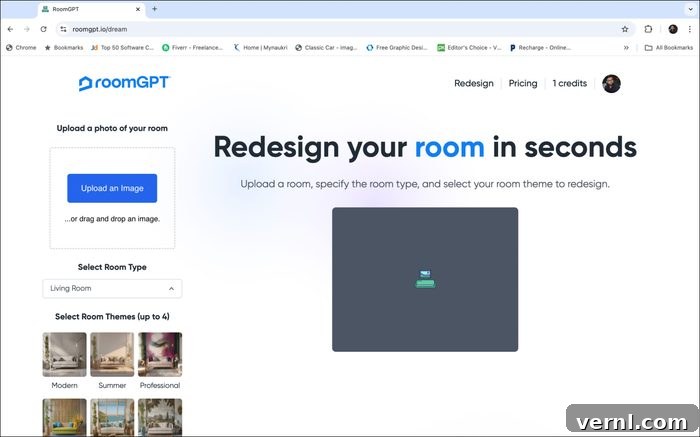
RoomGPT stands out for its straightforward approach, utilizing a common AI prompt model to generate semi-realistic renderings of your ideal space. The free version offers a remarkably simple user experience: upload an image of your room, select the room type from a comprehensive drop-down list (e.g., living room, bedroom, office), and then choose a design style from an extensive selection of approximately 25 descriptions. This intuitive process allows for quick experimentation with various aesthetics.
User Experience
In testing, RoomGPT quickly provided two distinct AI-generated design versions for a living room, along with the invaluable option to regenerate additional choices if the initial results didn’t perfectly align with personal tastes. While generally user-friendly, it’s worth noting that RoomGPT, primarily providing visual guidance, benefits significantly from the user’s basic understanding of design descriptions and terminology. This is where your preliminary “homework” on design language truly pays off, enabling you to better interpret the renderings and match your envisioned items with the visual suggestions.
Cost
- 1 free design generation to get started.
- Additional designs require purchasing credits. Credit packages are flexibly priced, ranging from $9 for 30 designs up to $29 for 200 designs, catering to different project scales.
Home Designs AI: A Beginner’s Dream for Style Exploration

Boasting an impressive array of over 75 distinct design style choices, HomeDesignsAI is a fantastic platform for stimulating your creative vision. The app prides itself on its simplicity, allowing users to upload a picture of their living room and begin experimenting with design options in just a few quick steps. Its intuitive interface makes it an ideal starting point for those new to interior design, offering a welcoming entry into the world of virtual home styling.
User Experience
My experience with HomeDesignsAI was remarkably smooth. Images of my room were swiftly processed, and the available tools for swapping elements were straightforward drag-and-drop options, yielding clear, vibrant, and true-to-life images. This was a notable advantage compared to some other apps that tended to distort colors, making choices appear overly vivid. While seasoned interior designers might find the absence of more advanced customization options somewhat limiting, this simplicity is precisely what makes HomeDesignsAI incredibly appealing and effective for beginners looking to explore design possibilities without complexity.
Cost
- A free 1-week trial is available, allowing users to explore its features.
- Ongoing access requires a subscription, with monthly rates typically ranging from $27 to $29.
DecorMatters: Design, Community, and Shopping Integration
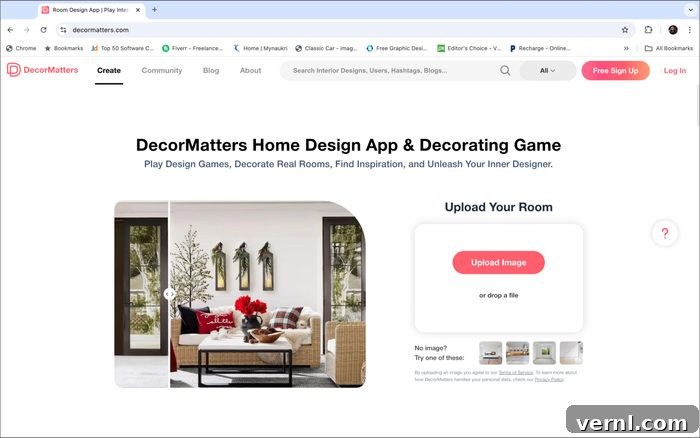
For those who appreciate a collaborative and social dimension to their design endeavors, DecorMatters offers a unique blend of practical design tools and a vibrant community platform. This app seamlessly combines rich informational resources and design capabilities to bring projects to fruition, alongside a dynamic social network where users can connect and share ideas. It’s an engaging space for decorating enthusiasts to thrive.
User Experience
I found DecorMatters’ library of furnishings to be exceptionally extensive, providing a vast array of choices for every design need. A standout feature is the ability to upload your designs to community boards, soliciting feedback and engaging in discussions with fellow home design planners. I particularly valued the app’s AI technology for its capacity to identify quality brand-name furniture options from both popular online retailers and physical stores where I typically shop. This integration of design and shopping is a significant time-saver.
Home decor enthusiasts with some experience in creating appealing spaces will likely find the app’s AI technology intuitive and greatly appreciate the opportunity to offer and receive feedback within the community. However, a minor drawback I observed was that the renderings for specific colors, shades of paint, and fabric textures did not always “read” with perfect realism. For instance, when experimenting with different shades of yellow for a chair, they all appeared largely identical in the final output, suggesting some room for improvement in color accuracy for finer details.
Cost
- Several core features are available for free, offering a solid entry point.
- For enhanced capabilities and an ad-free experience, premium memberships are available in various packages, ranging from $9.99 weekly to a more cost-effective $39.99 yearly option.
REimagine Home: Virtual Staging and Renovation Made Simple
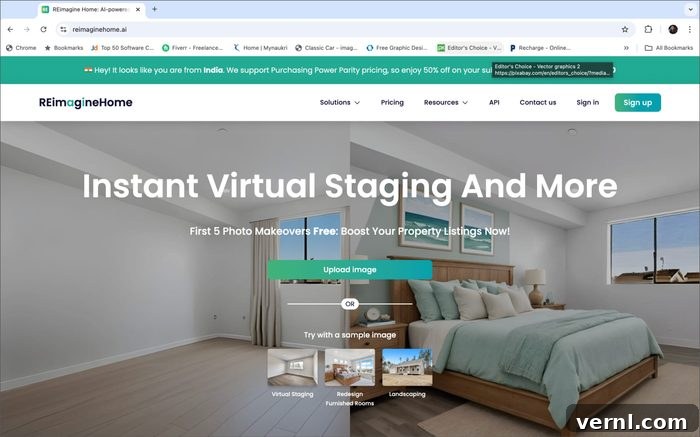
REimagine Home serves as an excellent entry point for anyone curious about using AI to assist with their interior decor planning, especially those exploring virtual staging and renovation ideas. The app’s robust tools enable users to effortlessly arrange furniture and other decorative items within rooms. More impressively, it allows for the visualization of significant architectural details, such as applying various paint colors to walls and trim, experimenting with ceiling designs and elements, and selecting different flooring materials. These features combine to help users quickly assemble a comprehensive general design picture without physical commitment.
User Experience
REimagine Home excels in user-friendliness, making it highly accessible for first-time users. It’s particularly beneficial for individuals who might not have a fully developed, clear plan for their design, as it facilitates broad exploration. However, for users attempting to recreate very specific or niche design trends—like a distinct “coastal” vibe or a precise “industrial” aesthetic—the library of options for furniture and certain accessories might occasionally feel somewhat limited. While it provides excellent foundational elements, designers seeking highly specialized pieces might need to manage expectations.
Cost
- Users benefit from 5 free design generations to get acquainted with the app’s capabilities.
- To access more extensive design options, additional designs require purchasing credits. Credit packages are structured to accommodate various needs, starting from $13 for 30 credits monthly, up to $99 for a substantial 1,200 credits monthly, ideal for larger projects or frequent users.
Palazzo.ai: Curated Design Inspired by an Icon
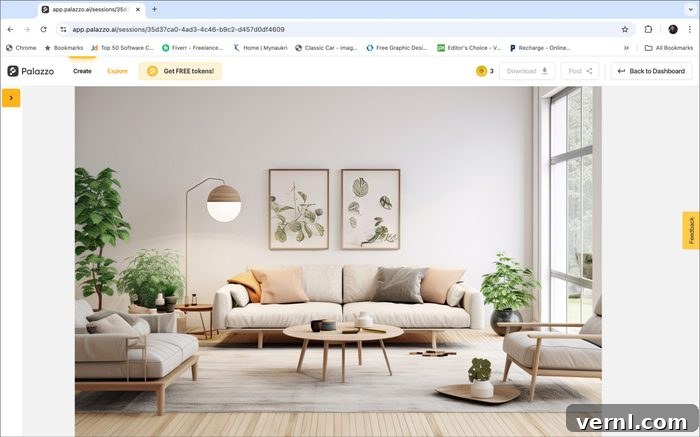
Design inspiration can emerge from the most unexpected places. In this case, a discussion about tennis serendipitously led to the discovery of the AI interior design app Palazzo.ai, notably co-founded by tennis legend Venus Williams. This unique origin story adds an intriguing layer to its appeal.
Palazzo guides users through a structured process, beginning with a personalized quiz designed to pinpoint their specific design preferences. Following this, users upload a picture of their room to embark on a journey of experimentation with various ideas, including diverse color palettes, furniture layouts, lighting fixtures, and other architectural details. It’s an approach that feels both guided and creatively open.
User Experience
As a relatively new application, Palazzo currently offers a more curated and somewhat limited range of design options, with its AI technology still actively expanding. However, these very restrictions proved to be a significant advantage during testing. Instead of being overwhelmed by endless lists of choices, users can focus on a refined selection, which can be particularly appealing to those who find too many options paralyzing. Currently, Palazzo functions as a standard design app, providing a focused selection of color palettes, furniture pieces, lighting fixtures, and material choices. The development team has articulated a clear goal: to continuously expand its offerings and introduce more options suitable for large-scale homeowner renovations, promising a more comprehensive experience in the future.
Cost
- Palazzo offers a limited number of free design generations, allowing users to sample its features.
- For extended use and additional design creations, users need to purchase credits. Credit packages are available, ranging from $5 for 20 credits up to $75 for 500 credits, accommodating different levels of engagement.
Frequently Asked Questions (FAQ) About AI Interior Design
Will AI replace traditional interior designers?
The short answer, emphatically, is no—AI is not poised to replace professional interior designers any time soon. As Chadwick Boyd articulately puts it, “Nothing will replace the feel of real fabric, the actual effect of a patterned rug to the eye and a room, or how paint colors actually look in a particular space.” He emphasizes that while “AI is a great tool for efficiency and seeing what is possible, homes are places for real people created by real people. Nothing will ever replace the human touch and connection.” This sentiment underscores the irreplaceable value of human empathy, nuanced understanding, and sensory experience in design.
Stefania Cardinali concurs, acknowledging the allure of AI but cautioning against viewing it as a standalone solution. “It’s become a tricky tango for the majority of genuine creatives, designers, and professionals in every industry,” she observes. “Third-party machinations are not a certain or tangible aid for the consumer. In this case, the results of the designers’ end work should not be confused with graphic art or software design and development.” Her point highlights that AI generates visuals, but a true interior designer crafts experiences and environments deeply integrated with human needs and aspirations.
Cardinali further elaborates on the profound difference, noting that interior designers bring a far more comprehensive skillset to the table than AI technology can. Their designs are based on a multitude of nuanced factors that extend far beyond merely making a room look stylish. This includes understanding client psychology, lifestyle, functional requirements, budget constraints, structural limitations, and the subtle interplay of light, texture, and flow within a space. “As a real estate professional,” she concludes, “I would definitely recommend professional and knowledgeable consultation or guidance, both large and small, depending on the scope of the renovation or redesign project, or when there is a great deal to inspect, anticipate, comprehend, and consider behind the scenes.” AI serves as a powerful visualization aid and a catalyst for inspiration, but it cannot replicate the invaluable expertise, creative problem-solving, and personal connection that defines a human interior designer.
Meet Our Esteemed Experts
-
Stefania Cardinali is a highly respected and licensed associate real estate broker whose remarkable success is a direct testament to the exceptional quality and dedication she brings to her work. As a consistently high-level producer and an award-winning professional, Stefania holds a prominent position in the upper echelons of her industry. Her unwavering commitment to not only meeting but consistently surpassing client expectations is the driving force behind her stellar reputation and distinguished career.
-
Chadwick Boyd is a licensed real estate salesperson renowned for his strategic, savvy, and deeply thoughtful approach to navigating the complex New York City real estate market. Clients consistently value their collaborations with Chadwick due to his extensive 30 years of business and marketing expertise, his meticulous attention to every detail, and his warm, genuinely engaging demeanor that makes the entire process seamless and enjoyable.
[cf]skyword_tracking_tag[/cf]