Optimize Your Home’s Climate: The Ultimate Guide to Attic Fans
Effective ventilation is a cornerstone of a comfortable and energy-efficient home, playing a particularly critical role in the attic. Attic fans stand out as an excellent solution for enhancing attic ventilation, which is vital for maintaining comfortable indoor temperatures during sweltering summers and even for preventing destructive ice dams in the depths of winter. By ensuring proper airflow, these fans contribute significantly to both your home’s longevity and your household’s bottom line.
When the primary goal is to keep your living spaces cool, energy expert Phil Bickel suggests a broader approach: strategically utilizing fans throughout your entire house. Bickel explains, “Fans excel at moving air around, rather than actively cooling it. To achieve a direct cooling sensation, position fans to blow air directly on occupants. Alternatively, set up your fans to draw cooler air from the outside—or from a naturally cooler section of your home—and direct it towards warmer areas.” This simple strategy can significantly improve comfort without over-relying on air conditioning.
However, the ventilation strategy for the attic differs slightly from that of the main living areas. Here, the objective is to facilitate the expulsion of superheated air through existing roof or gable vents. This process is only truly effective if your attic is properly sealed and insulated from the rest of the house. Without adequate sealing, an attic fan can inadvertently pull conditioned, cooler air from your living spaces and expel it outdoors, negating its benefits and increasing energy waste.
Understanding these nuances is crucial for homeowners considering an upgrade to their ventilation system. This comprehensive guide will help you determine if an attic fan is the right choice for your home, exploring their functions, types, benefits, and how they compare to other ventilation solutions.
What Are Attic Fans and Why Are They Essential?
Attic fans, as their name aptly describes, are mechanical ventilation systems designed to push stale, hot air out of your attic and draw in fresh, cooler air from the outside. While this simple act of air circulation might seem minor, its impact on overall home temperature and energy consumption can be profound. They act as a critical buffer between the scorching attic and your conditioned living spaces.
Reducing Cooling Costs and Energy Consumption
One of the most compelling reasons to install an attic fan is the potential for substantial savings on cooling costs. On hot days, heat naturally rises and accumulates in the attic, transforming it into an oven-like space. This superheated air then radiates downwards into the living areas below, forcing your air conditioning system to work harder and longer to maintain comfort. An attic fan actively counters this by continuously expelling this trapped hot air and drawing in cooler ambient air from outside. By preventing heat buildup, attic fans significantly reduce the heat load on your HVAC system, leading directly to lower electricity bills and improved energy efficiency. This proactive heat removal means your air conditioner won’t have to cycle as frequently or intensely, extending its lifespan and reducing wear and tear.
Year-Round Benefits: Beyond Summer Cooling
While often associated with summer cooling, attic fans provide crucial benefits throughout the entire year. A common winter problem, particularly in regions with significant snowfall, is the formation of ice dams on the roof. Ice dams occur when a poorly insulated and inadequately ventilated attic allows heat to escape and warm the roof deck, melting the snow above. This melted snow then runs down the roof until it reaches the colder eaves, where it refreezes, creating a barrier of ice. As more snow melts and refreezes behind this barrier, it can back up under shingles, leading to severe damage to roofing materials, gutters, exterior walls, and even interior ceilings. While other preventive measures like roof de-icing cables or roof rakes exist for snow removal, the importance of adequate attic ventilation cannot be overstated. Keeping the attic ventilated in winter helps maintain a consistent, cooler temperature on the roof deck, minimizing the snowmelt that causes ice dams and protecting your home from costly water damage.
Crucial Prerequisites: Insulation and Sealing
Despite their numerous advantages, attic fans are not a standalone solution. It is paramount that an attic is properly insulated and meticulously air-sealed before an attic fan is installed. According to Energy Star, if an attic lacks proper insulation and has significant air leaks, an attic fan can inadvertently draw expensive conditioned air from your living spaces and expel it through the attic. This creates a negative pressure differential, essentially pulling cool air out in the summer and warm air out in the winter, making your HVAC system work harder and negating any potential savings. Attic fans operate most efficiently when paired with robust insulation, well-maintained vents, and a completely sealed attic space that isolates it from the conditioned areas of your home.
Exploring the Types of Attic Fans
Attic fans come in various designs, each with unique characteristics regarding power source, mounting, and operational features. Their price points can range widely based on size, style, and integrated technologies. Common types include gable-mounted, roof-mounted, plug-in, and solar-powered units, with some relying entirely on passive ventilation principles.
Solar-Powered Attic Fans: Eco-Friendly Ventilation
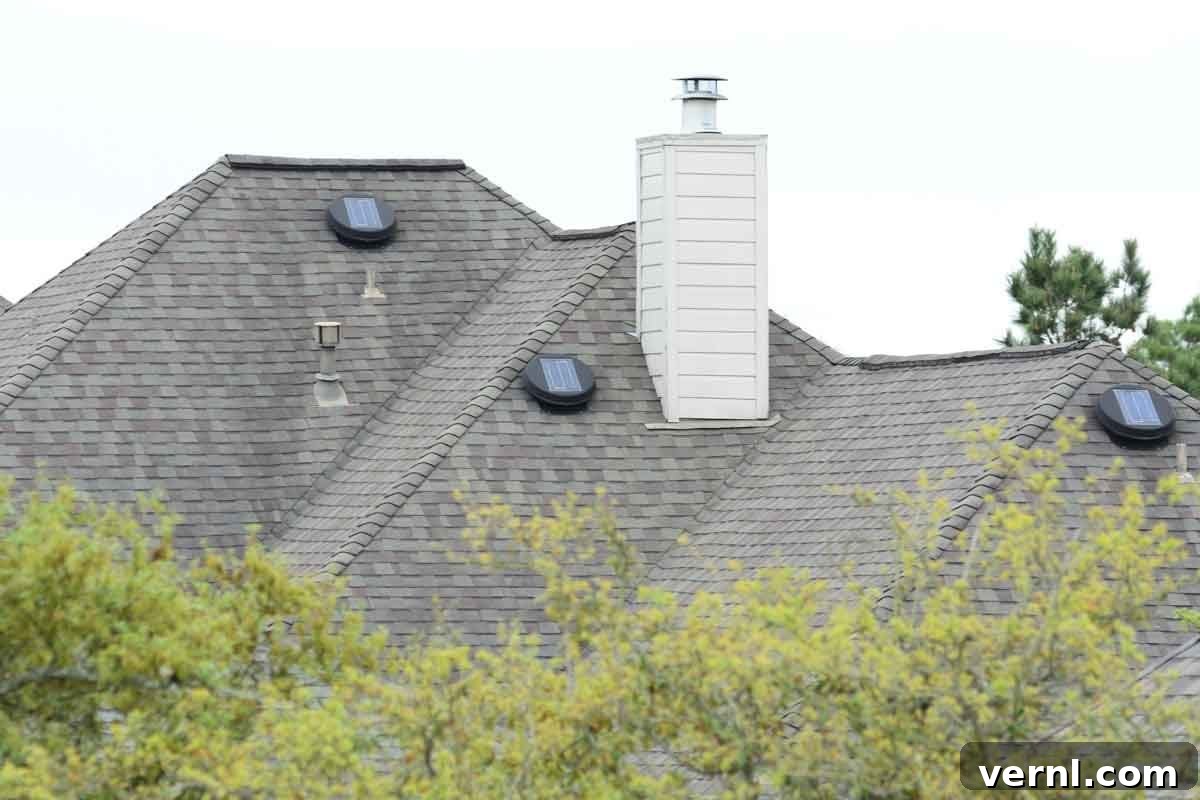
Photovoltaic (PV) panels are the driving force behind these innovative attic fans. A solar-powered attic fan typically mounts directly onto the exterior of the roof, where its integrated solar panel can capture sunlight effectively. These fans harness the sun’s energy to circulate warm, stagnant air from inside the attic out through existing eave or roof vents. The primary advantage of solar fans is their environmental friendliness and zero operating cost once installed. They are ideal for homeowners looking to reduce their carbon footprint and electricity bills. However, their performance is directly dependent on sunlight, meaning they may operate less effectively on cloudy days or after sunset, though some models include battery backups for continuous operation.
Electric Attic Fans: Consistent and Powerful Airflow
Electric attic fans draw their power directly from your home’s electrical system. These are often recommended for homes where direct sunlight for a solar panel is limited, or where there isn’t sufficient space under an eave or within a gable wall for mounting a solar-powered fan. Electric fans offer consistent power and performance, regardless of weather conditions or time of day. Many electric attic fans come equipped with integrated thermostats, which automatically activate the fan when attic temperatures reach a pre-set threshold. More advanced models can even be connected to the home’s existing heating and cooling system, providing a more integrated approach to temperature control and ensuring more even ventilation throughout the house. While they incur an electricity cost, this is often offset by the savings on overall cooling expenses.
Passive Attic Fans: Simple, Natural Ventilation
Passive attic fans, sometimes referred to as static vents or ridge vents, operate without electricity or solar power, relying instead on natural processes such as wind, convection, or pressure differentials to circulate air. They are typically the least expensive type of “attic fan” (though technically not a fan in the mechanical sense) and involve simple roof or gable vents. While they require no energy input and are completely silent, their effectiveness is limited by ambient conditions. They perform best when there is a significant temperature difference between the attic and outside, or when sufficient wind provides natural air movement. They are a good baseline for ventilation but may not be sufficient for attics with severe heat buildup or in climates with stagnant air.
Cost Considerations for Attic Fans
The upfront cost of an attic fan can vary significantly, generally ranging from $40 for basic passive models to $475 for high-end electric or solar units, with the average price hovering around $200. However, the total investment often includes installation costs, which can vary based on the fan type, roof accessibility, and the need for electrical wiring. Depending on the size and layout of your attic, you might need more than one fan—possibly several—to achieve adequate ventilation. Therefore, homeowners should anticipate spending anywhere from $100 to $1,000 or more to ensure comprehensive attic ventilation. While solar fans have no operating costs, electric fans will add a small amount to your monthly electricity bill, which is typically outweighed by the savings on air conditioning.
Attic Fans vs. Whole-House Fans: A Detailed Comparison
While both attic fans and whole-house fans aim to improve home comfort and ventilation, they serve distinctly different purposes and operate on different scales. Understanding these differences is key to choosing the right system for your needs.
Whole-House Fans: Comprehensive Home Ventilation
A whole-house fan is a powerful ventilation system designed to increase airflow throughout the entire house, not just the attic. Positioned centrally, typically in the ceiling of a hallway, it pulls fresh, cooler air in through open windows throughout the home and expels that air up into the attic, and then out through the attic’s existing vents, as explained by the U.S. Department of Energy. This creates a powerful draft that rapidly cools the entire living space, often allowing homeowners to reduce their reliance on air conditioning during milder summer evenings or spring days. To accommodate the significant volume of air exchanged by a whole-house fan, your attic must have considerably more ventilation capacity than it would for an attic fan alone.
While whole-house fans are highly effective at keeping the entire home cooler in the summer, they do come with certain drawbacks. They can be notably noisy during operation, which might be a concern for some homeowners. More importantly, if not installed and operated correctly, they can create a negative pressure inside the house, potentially leading to a backdraft in combustion appliances like water heaters or furnaces, which can be a serious safety hazard. It’s also important to note that whole-house fans are typically used when outdoor temperatures are cooler than indoor temperatures and are not generally used simultaneously with air conditioning.
Energy expert Phil Bickel further recommends augmenting the ventilation provided by a whole-house fan by simultaneously utilizing your existing exhaust fans in kitchens and bathrooms. He advises, “Exhaust fans in your kitchens and bathrooms efficiently capture hot, moist air before it has a chance to mingle with your house air and contribute to overheating.” He specifically recommends operating these exhaust fans during showers, baths, or whenever cooking indoors to proactively remove heat and humidity at their source.
How To Choose Between an Attic Fan and a Whole-House Fan
Deciding between an attic fan and a whole-house fan hinges on several factors, including your specific home issues, budget constraints, local climate, and overall ventilation goals. Each system targets different aspects of home comfort and energy efficiency.
If your house frequently experiences problems with distinct hot and cold spots, or if you desire rapid cooling of your entire living space without relying solely on air conditioning, a whole-house fan might be the more beneficial choice. By moving a large volume of air quickly through the entire structure, a whole-house fan helps to equalize temperatures across different rooms and levels, effectively preventing the formation of uncomfortable hot or cold zones throughout your home, especially during transitional seasons.
On the other hand, if your primary struggles involve excessive heat accumulation specifically on the upper floor of your home, or if you consistently battle with costly and damaging ice dams during the winter months, then an attic fan would likely be a more targeted and effective solution. An attic fan focuses solely on ventilating the attic space, directly addressing the root causes of these particular issues. It prevents attic heat from radiating into the living spaces below and keeps the roof deck cool enough to mitigate ice dam formation.
When in doubt, the wisest course of action is always to consult with a professional. A qualified HVAC expert can thoroughly assess your home’s unique specifications, including its size, existing insulation levels, current ventilation setup, local climate, and your specific comfort concerns. Based on this comprehensive evaluation, they can provide tailored recommendations and help you decide on the most appropriate and cost-effective ventilation strategy for your property, ensuring you make an informed decision that yields lasting benefits.
Frequently Asked Questions About Attic Fans
How do attic fans know when to turn on?
Most modern attic fans are equipped with sophisticated controls to ensure efficient operation. The most common control mechanism is a thermostat, which automatically switches the fan on when the attic temperature rises above a pre-set value, typically around 90-110°F (32-43°C). This ensures the fan only operates when necessary to expel excessive heat. Additionally, some attic fans can be controlled by a humidistat, which monitors moisture levels in the air. A humidistat is particularly useful in preventing mold and mildew growth in the attic by activating the fan when humidity exceeds a certain threshold. A third possibility, especially for simpler or older models, is a timer that switches the fan on during specific periods, such as the hottest part of the day, though this offers less precise control than a thermostat or humidistat. Solar-powered fans, by their nature, operate whenever there is sufficient sunlight to power their photovoltaic panels, providing passive, energy-free ventilation during daylight hours.
- Pro tip: A solar fan operates whenever there is enough sun to run it.
Can attic fans cause problems?
While highly beneficial, attic fans can indeed cause problems if not properly installed or if the attic’s conditions are unsuitable. As previously mentioned, a significant concern is that attic fans can inadvertently pull conditioned air from your living space into the attic, especially if the ceiling below is poorly insulated or has numerous air leaks. This negative pressure effect can make your house warmer in the summer and cooler in the winter, forcing your HVAC system to work harder, consuming more energy, and ultimately wasting money. Proper air sealing and insulation are critical preventative measures.
Another potential issue is that a poorly installed fan can compromise the integrity of your roof, leading to leaks. Improper flashing around the fan’s opening or inadequate sealing during installation can allow water to penetrate the attic, causing damage to structural components and insulation. Regular inspection of the fan and surrounding roof area can help identify and address these issues promptly.
Furthermore, it’s crucial to understand that while attic fans circulate air effectively, they do not inherently stop heat from radiating through a poorly insulated roof. If your attic lacks adequate insulation, heat will still transfer from the hot roof deck into the attic space, even with a fan running. For this reason, homeowners might not experience the expected cooling effect in their living spaces if insulation deficiencies are not addressed concurrently with fan installation. An attic fan is a component of a larger system, and its effectiveness is maximized when integrated into a well-insulated and properly sealed attic environment. Lastly, some older or cheaper models can be noisy, which might be a nuisance if the sound travels into living areas.
About the Expert
- Phil Bickel is the heat pump program manager at Efficiency Vermont, a leading organization dedicated to promoting energy efficiency and renewable energy solutions.
Sources
- Energy Star: About Attic Ventilation; (2025)
- U.S. Department of Energy: Cooling with a Whole House Fan; (2025)