The Enduring Precision of the Plumb Bob: Your Ultimate Guide to Achieving Perfect Vertical Alignment
In the vast landscape of tools used in construction, carpentry, and various DIY projects, some instruments stand out for their timeless effectiveness and remarkable simplicity. Among these, the plumb bob holds a revered position. Despite the advent of sophisticated laser levels and digital measuring devices, this unassuming tool, relying solely on the fundamental force of gravity, remains an indispensable asset for establishing a truly vertical line. From ancient architectural wonders to contemporary home improvements, the principle of the plumb bob has ensured accuracy and stability for millennia. Understanding its history, mechanics, and versatile applications is key to unlocking a level of precision that can elevate any project, guaranteeing that every structure stands perfectly plumb.
What is a Plumb Bob? Unveiling the Mechanism of Vertical Truth
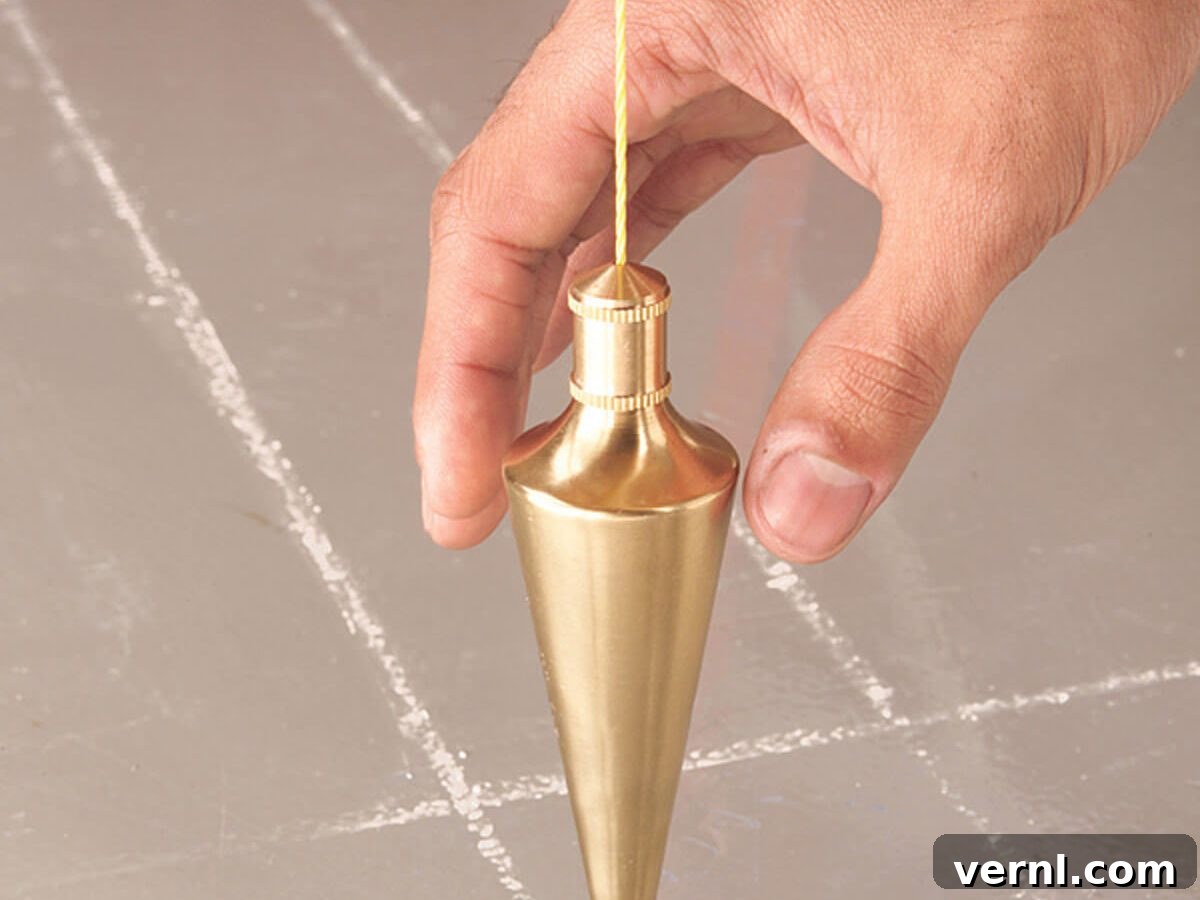
At its essence, a plumb bob is a weighted object, typically symmetrical and often pointed at one end, suspended from a string or cord. The very term “plumb” derives from the Latin word plumbum, which means lead—the dense material traditionally favored for the bob due to its weight. While early iterations might have been as simple as a stone tied to a string, modern plumb bobs are meticulously engineered from materials like brass, steel, or other high-density metals, designed for optimal balance and stability.
The ingenious simplicity of the plumb bob lies in its unwavering reliance on gravity. When freely suspended, the weighted bob naturally aligns itself with the Earth’s gravitational pull, settling into a stable position where the string forms a perfectly straight, vertical line. This line is universally known as a “plumb line,” as it points directly towards the center of the Earth. This natural phenomenon makes the plumb bob an incredibly accurate and reliable tool for determining if a surface, wall, or object is truly vertical, or “plumb,” which is crucial for structural integrity, safety, and aesthetic perfection across various disciplines.
While the classic image of a plumb bob features a conical or bullet-shaped metal weight, the fundamental concept is adaptable. For example, a standard chalk box or chalk line, when held suspended from its string, can effectively serve as a makeshift plumb bob for quick, informal vertical checks in the realm of DIY. The core requirement is simply any weighted object that can hang freely and stably to create that undeniable vertical reference.
A Journey Through Time: The Ancient Roots and Evolution of the Plumb Bob
The history of the plumb bob is as old as civilization itself, intertwining with the development of human architecture and engineering. Evidence of its use dates back thousands of years, solidifying its status as one of humanity’s earliest and most enduring precision tools.
Ancient Egypt: Perhaps the most famous testament to the plumb bob’s efficacy comes from ancient Egypt. Builders of the iconic pyramids and magnificent temples relied heavily on plumb bobs to ensure the absolute verticality of their colossal stone structures. Without such a precise tool, achieving the staggering accuracy seen in these monuments, which have withstood millennia, would have been impossible. Hieroglyphs and archaeological findings depict workers using simple versions of the plumb bob to align massive blocks and erect towering walls with incredible precision.
Greece and Rome: The Greeks and Romans, renowned for their sophisticated architectural and engineering feats, also incorporated plumb bobs into their building practices. From the Parthenon’s perfectly upright columns to the robust aqueducts and roadways of the Roman Empire, the plumb bob played a crucial role in maintaining vertical accuracy. Roman architects, in particular, often used a tool called a groma, which integrated plumb bobs to survey straight lines and right angles.
Medieval and Renaissance Eras: Throughout the Medieval period and into the Renaissance, master masons and carpenters continued to rely on plumb bobs. Cathedrals soaring to incredible heights, intricate castles, and sturdy timber-framed buildings all owe their stability and vertical integrity to this simple yet powerful tool. Leonardo da Vinci himself is known to have incorporated precise leveling and plumbing techniques into his architectural designs and mechanical inventions.
Over the centuries, while the materials and craftsmanship of plumb bobs evolved, their fundamental principle remained unchanged. This enduring relevance underscores the tool’s inherent effectiveness and its status as an unsung hero in the annals of construction history.
Types of Plumb Bobs: Beyond the Basic Bullet Shape
While the fundamental design of a plumb bob is straightforward, various types have emerged to suit different applications and preferences, each offering distinct advantages:
-
Traditional Metal Plumb Bobs: These are the most common type, typically made from brass, steel, or sometimes lead. They come in various weights (from a few ounces to several pounds) and shapes (bullet, conical, cylindrical, hexagonal). Heavier bobs are more stable and less susceptible to wind interference, making them ideal for outdoor work or taller structures. Lighter bobs offer greater precision for delicate indoor tasks.
-
Chalk Line Plumb Bobs: As mentioned, a chalk box or chalk line can double as a plumb bob. Many chalk boxes are designed with a pointed tip specifically for this purpose. This dual functionality makes them incredibly versatile for DIYers and professionals who need both a marking tool and a vertical reference.
-
Self-Retracting Plumb Bobs: These modern versions integrate the string and bob into a single, compact unit. A spring-loaded mechanism allows the string to be extended and retracted easily, preventing tangles and protecting the bob when not in use. Some even feature a magnetic base or a pin for quick attachment to various surfaces.
-
Line Plumb Bobs (Line Levels): While not a traditional “bob,” a small, lightweight level designed to clip onto a string is often used in conjunction with a string stretched between two points to establish a horizontal or vertical reference over longer distances. It’s a complementary tool often used in situations where a plumb bob might also be needed.
The choice of plumb bob often depends on the specific task, environmental conditions, and the required level of precision. However, all types share the core objective of providing an accurate, gravity-driven vertical line.
Modern Applications: Where Precision Matters Most
Despite the proliferation of advanced leveling technologies, the plumb bob remains an indispensable tool across a wide spectrum of modern applications:
Construction and Carpentry
-
Framing Walls: Essential for ensuring that wall studs and frames are perfectly vertical, preventing leaning walls and structural issues.
-
Setting Posts and Columns: Critical for verifying that fence posts, deck supports, and structural columns are installed true to vertical, ensuring stability and longevity.
-
Installing Door and Window Frames: Guarantees that frames are plumb, allowing doors and windows to open and close smoothly without binding.
-
Checking Foundations: Used to transfer points from a foundation to upper levels or to check the verticality of concrete forms before pouring.
-
Masonry Work: Bricklayers and stonemasons use plumb bobs to keep walls perfectly vertical, ensuring even courses and structural integrity.
Interior Design and DIY Projects
-
Hanging Artwork and Mirrors: Ensures that wall hangings are perfectly aligned, creating a visually appealing and balanced aesthetic.
-
Aligning Shelving Units: Crucial for installing shelves that are not only level horizontally but also perfectly plumb with the wall.
-
Centering Light Fixtures: Ideal for precisely positioning overhead lights, such as those above a kitchen island, ensuring they are centrally located.
-
Installing Wallpaper: Provides a critical vertical reference line for the first strip of wallpaper, ensuring subsequent strips are straight and consistent.
-
Plumbing Vertical Pipes: In basic plumbing tasks, a plumb bob can help ensure vertical pipe runs are straight, facilitating proper drainage and installation.
Surveying and Specialized Uses
-
Transferring Points: Surveyors use plumb bobs to accurately transfer ground points vertically to instruments or vice versa.
-
Aligning Machinery: In industrial settings, plumb bobs can be used for the precise vertical alignment of machinery components.
-
Boat Building: Essential for checking the verticality of masts and other structural elements during construction.
The versatility and accuracy of the plumb bob make it an indispensable tool for anyone requiring a true vertical reference, bridging the gap between ancient craftsmanship and modern precision.
How to Use a Plumb Bob Effectively: A Step-by-Step Guide for Flawless Verticality
Using a plumb bob is straightforward, but achieving maximum accuracy requires attention to detail. Follow these steps for reliable results:
-
Choose the Right Plumb Bob: Select a bob with an appropriate weight for your task. Heavier bobs (8-16 oz) are better for outdoor work or in drafty conditions as they are less affected by wind. Lighter bobs (4-6 oz) are sufficient for indoor, precision work.
-
Prepare the String/Cord: Ensure your string is strong, thin, and free of knots or kinks. A thin, braided nylon or silk line is ideal. The length should be sufficient for your measurement, allowing the bob to hang freely without touching the ground or any obstructions.
-
Suspend the Plumb Bob: Securely attach the string’s top end to a stable point directly above where you want to establish the vertical line. This could be a nail, a clamp, or simply holding it steady. Make sure the string is perfectly vertical at its suspension point.
-
Allow it to Settle: Gently release the bob and allow it to hang freely. Avoid swinging or bumping it. Wait patiently for the bob to stop oscillating and settle completely. This might take a minute or two, especially with heavier bobs.
-
Avoid External Disturbances: Ensure there are no air currents (e.g., open windows, fans) that could cause the bob to sway. If working outdoors, try to shield it from wind. Vibrations from machinery or footsteps can also affect accuracy.
-
Mark the Plumb Point: Once the bob is perfectly still, its pointed tip will indicate the exact plumb point. You can mark this point on the floor or surface directly below. If you’re checking a wall, hold the string against the top of the wall and observe the gap (or lack thereof) between the string and the wall along its length.
-
Check Multiple Points (Optional): For critical applications, take multiple readings by moving the suspension point slightly or checking different sections of a wall to confirm consistent verticality.
By following these steps, you can harness the power of gravity to achieve consistently accurate vertical measurements, ensuring the precision and quality of your work.
Plumb Bobs vs. Modern Leveling Tools: A Comparative Look
While the plumb bob excels at establishing a true vertical line, it’s important to understand its relationship with other common leveling tools. Each has its strengths and ideal applications:
Spirit Levels (Bubble Levels)
-
Strengths: Excellent for checking both horizontal and vertical surfaces over short to medium distances. Highly portable and requires no power. Versatile for general construction and DIY tasks.
-
Limitations: Accuracy can diminish over very long distances. Dependent on the quality and calibration of the level’s vials. Less precise for true vertical than a plumb bob over significant heights as it relies on the tool’s length, not a direct gravity line.
Laser Levels
-
Strengths: Projects highly accurate horizontal, vertical, or cross lines over long distances with speed and ease. Ideal for layout work, tiling, ceiling installation, and large-scale construction. Often self-leveling.
-
Limitations: Requires batteries or power. Can be expensive. Laser lines may be difficult to see in bright sunlight. While accurate, the laser line itself is a projection, not a physical string, meaning it can sometimes be affected by heat haze or dust over very long distances.
The Enduring Relevance of the Plumb Bob
Despite the advancements, the plumb bob offers unique advantages that keep it relevant:
-
Unmatched True Vertical Accuracy: No other tool relies as directly and fundamentally on gravity to establish a plumb line. It’s the gold standard for vertical reference, immune to electronic calibration errors or battery failure.
-
No Power Required: Operates completely independently of electricity or batteries, making it reliable in any environment.
-
Cost-Effective and Durable: Generally inexpensive and incredibly robust, a quality plumb bob can last a lifetime with proper care.
-
Simplicity: Its straightforward mechanism means there’s little to go wrong, and it’s easy for anyone to learn to use effectively.
Ultimately, these tools are often complementary. A plumb bob provides the absolute vertical, a spirit level ensures local horizontal and vertical checks, and a laser level excels at projecting lines over large areas. Integrating the plumb bob into your toolkit ensures you have the most reliable reference for true vertical alignment.
Choosing the Right Plumb Bob for Your Project
Selecting the best plumb bob involves considering a few key factors to match the tool to your specific needs:
-
Weight: For indoor work or sheltered environments with minimal air movement, a lighter bob (4-8 oz) offers sufficient precision. For outdoor projects, taller structures, or windy conditions, opt for a heavier bob (10-16 oz or more) to minimize sway and achieve faster stabilization.
-
Material: Brass and steel are common and durable. Brass offers excellent corrosion resistance, while steel is generally more robust against impact. Lead is dense but less common now due to health concerns. Ensure the bob is well-machined and balanced.
-
Shape and Tip: Bullet or conical shapes are common, providing a precise point. Ensure the tip is sharp and resilient. Some bobs have replaceable tips, which can be a valuable feature for longevity.
-
String/Cord Quality: A high-quality string is crucial. Look for thin, strong, non-stretching, and fray-resistant materials like braided nylon or silk. The string should be long enough for your typical applications.
-
Features: Consider self-retracting models for convenience, or those with a magnetic cap or a built-in pin for easy attachment to various surfaces. These features enhance usability and protection.
Investing in a good quality plumb bob that suits your work will ensure accurate vertical measurements for years to come.
Maintaining Your Plumb Bob: Tips for Longevity
A plumb bob is a low-maintenance tool, but a little care can ensure its longevity and continued accuracy:
-
Keep it Clean: Wipe the bob clean after each use, especially if it has been exposed to dirt, dust, or moisture. This prevents corrosion and keeps the tip sharp.
-
Protect the Tip: The pointed tip is critical for accuracy. Avoid dropping the bob or allowing the tip to strike hard surfaces. Many bobs come with a protective cap, or you can store it in a way that safeguards the tip.
-
Inspect the String: Regularly check the string for fraying, knots, or damage. A compromised string can lead to inaccurate readings or the bob breaking free. Replace the string if it shows signs of wear.
-
Proper Storage: Store your plumb bob in a toolbox or a dedicated pouch to protect it from damage and prevent the string from tangling. If it’s a self-retracting model, ensure the retraction mechanism is clean and functional.
Simple maintenance ensures your plumb bob remains a reliable and accurate tool for every project.
The Unsung Hero of Vertical Alignment: Conclusion
The plumb bob, with its ancient lineage and unwavering reliance on gravity, stands as a testament to intelligent design and fundamental principles. In an age of digital sophistication, its simple yet profound ability to establish a perfectly true vertical line remains unmatched by any other tool. Whether you are a seasoned builder erecting a skyscraper, a dedicated carpenter framing a house, or a meticulous DIY enthusiast hanging a picture, the plumb bob offers an accessible and absolutely reliable path to achieving vertical precision.
Incorporating this essential tool into your practice means embracing accuracy, ensuring structural integrity, and elevating the quality of your work. The humble plumb bob truly is the unsung hero of vertical alignment, proving that sometimes, the oldest tools are indeed the most trustworthy and indispensable.
Frequently Asked Questions About Plumb Bobs
Q: What is a plumb line?
A: A plumb line is the perfectly vertical line established by a freely suspended plumb bob, pointing directly towards the center of the Earth due to gravity.
Q: Why is it called a “plumb bob”?
A: The term “plumb” comes from the Latin word plumbum, meaning lead, which was traditionally used for the weighted object. “Bob” simply refers to the suspended weight itself.
Q: Can I use a plumb bob for horizontal leveling?
A: No, a plumb bob is specifically designed to establish a vertical line. For horizontal leveling, you would typically use a spirit level or a laser level.
Q: How accurate are plumb bobs?
A: When used correctly and in stable conditions, plumb bobs are incredibly accurate. They offer an absolute vertical reference that is difficult for other tools to replicate perfectly over significant heights.
Q: What’s the best material for a plumb bob?
A: Brass and steel are excellent choices due to their density, durability, and corrosion resistance. The “best” material also depends on personal preference and the specific environment it will be used in.