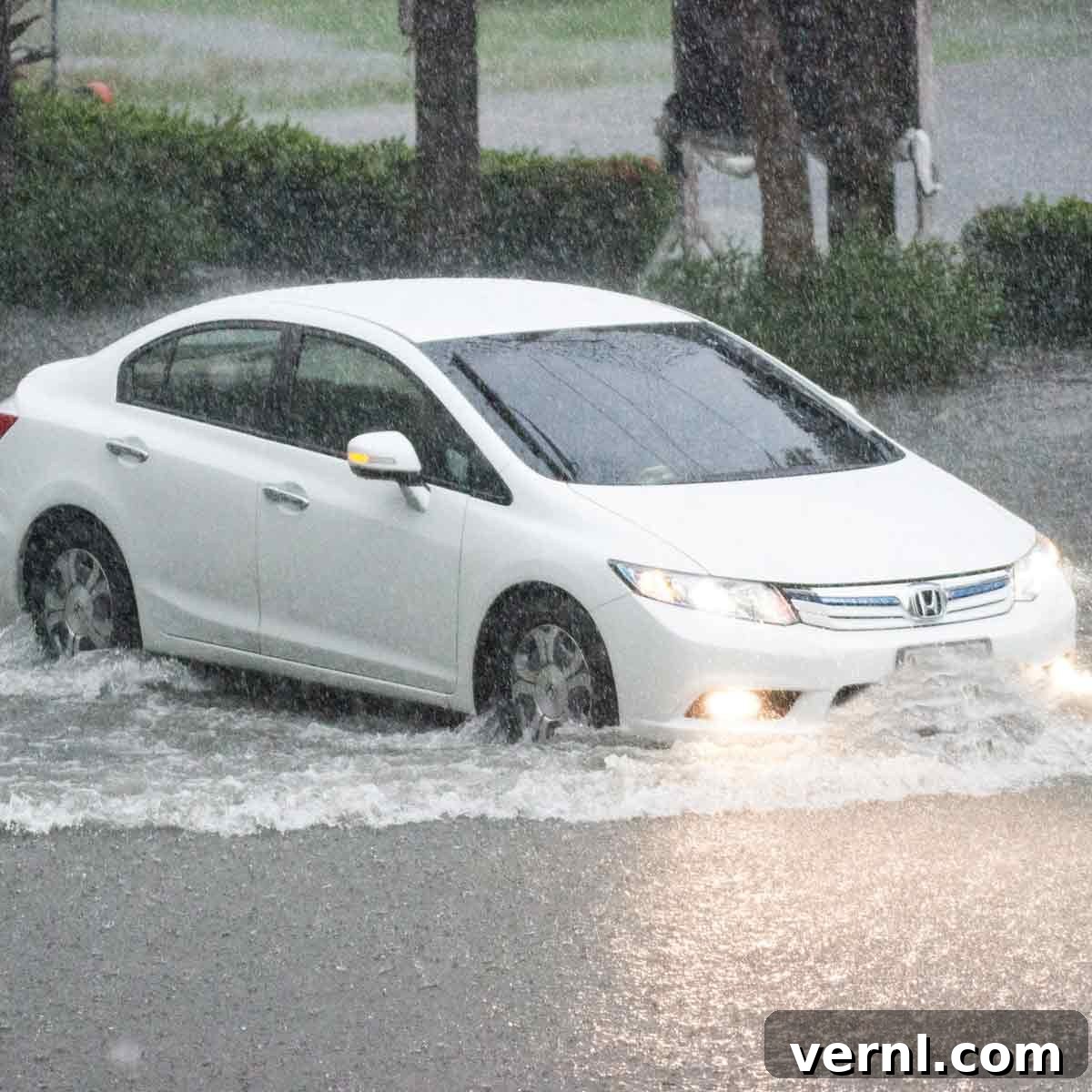
Depending on your geographic location, flash flooding can be a recurring concern, potentially forcing you into situations where encountering high water while driving seems unavoidable. However, it’s crucial to understand the severe risks involved. Even as little as six inches of standing water can submerge the underside of most passenger vehicles. When this happens, it can trigger a destructive chain reaction, leading to catastrophic damage to your engine and other vital components. Water reaching just one foot in depth is enough to float many cars, rendering them uncontrollable, while two feet of water possesses enough force to sweep away a vast majority of vehicles. Beyond the mechanical hazards, floodwaters drastically reduce road visibility, making it incredibly difficult to discern road edges, hazards, or even other vehicles, significantly increasing the risk of accidents and veering off the road into deeper, unseen dangers. Prioritizing safety and avoiding flooded routes is always the best course of action.
Understanding the Risks: Will Your Car Survive Driving Through High Water?
The potential for your vehicle to emerge unscathed after driving through floodwaters hinges on several critical factors, primarily the depth of the water encountered and the specific location of your car’s air intake system. Modern vehicles are designed with varying air intake positions; some are situated relatively low in the engine bay, close to the ground, while others are positioned higher. If your car’s air intake is low and it ingests even a small amount of water, you are likely facing significant trouble. Water, unlike air, is incompressible. If sucked into the engine’s cylinders, it can lead to a phenomenon known as “hydro-lock,” which can instantly cause severe internal engine damage. Conversely, if your vehicle’s air intake is located higher, reducing its chances of drawing in water, you might be fortunate enough to avoid immediate engine complications. However, even then, other crucial systems remain vulnerable.
The Critical Role of Air Intake in Preventing Hydro-Lock
The air intake system is a vital pathway for oxygen, which is essential for the combustion process within your engine. If this system draws in water instead of air, the consequences can be devastating. Water is far denser and incompressible compared to air. When a piston attempts to compress water within a cylinder during its upward stroke, the immense force generated has nowhere to go. This typically results in a bent connecting rod (the rod linking the piston to the crankshaft), a cracked piston, or in severe cases, the entire engine block can be ruptured. The exact location of your vehicle’s air intake varies significantly by make, model, and engine configuration. Generally, larger vehicles like SUVs and trucks tend to have higher air intakes, offering a slight advantage in shallower floodwaters, whereas many sedans and compact cars have lower intakes, making them far more susceptible to hydro-lock.
Even if your car doesn’t immediately hydro-lock, driving through deep water can expose numerous electrical components, sensors, and belts to moisture, leading to short circuits, corrosion, and eventual system failures. The force of moving water can also dislodge parts, carry away debris that impacts undercarriage components, and introduce contaminants into various fluid systems. It’s not just about the engine; a wide array of systems can suffer irreparable harm.
The Devastating Impact: What Happens When Water Enters Your Engine?
The entry of water into your vehicle’s engine spells disaster for multiple reasons. As mentioned, the primary and most immediate threat is hydro-lock. When water fills one or more cylinders, the piston, unable to compress the liquid, attempts to complete its stroke. The immense hydraulic pressure created has no escape, causing internal components to fail catastrophically. Piston rods, designed for the stresses of air compression and combustion, will often bend or snap under the unyielding force of water. A bent piston rod immediately throws off the engine’s balance and timing, leading to severe vibrations and a significant loss of power. A broken piston rod, however, is far more destructive. When a connecting rod breaks, it can become a projectile within the engine block, often punching a hole through the side of the engine block or oil pan as it tries to exit. This typically results in irreparable damage, often deeming the engine a total loss.
Beyond Hydro-Lock: Widespread Engine and Drivetrain Damage
The damage isn’t confined solely to the pistons and rods. Water can infiltrate various other critical engine and drivetrain components, leading to a cascade of problems:
- Crankshaft and Bearings: The sheer force of hydro-lock can bend or fracture the crankshaft, which is the backbone of the engine, converting linear piston motion into rotational power. Water can also wash away essential lubrication from crankshaft and camshaft bearings, leading to accelerated wear and eventual seizure.
- Rust and Corrosion: Even if hydro-lock is avoided, water introduces moisture into the engine’s internal mechanisms. Components like cylinder walls, valves, and camshafts, which are normally coated in oil, become susceptible to rust and corrosion. This can lead to decreased performance, increased friction, and ultimately, premature component failure.
- Lubrication System Contamination: Water can mix with your engine oil, turning it into a milky, ineffective sludge. This compromised lubricant loses its ability to protect moving parts, leading to excessive friction, overheating, and rapid wear of critical engine components. Similarly, water can contaminate transmission fluid, differential fluid, and power steering fluid, compromising their lubricating properties and causing significant damage to these expensive systems. If water enters your differential, it can quickly rust the gears and bearings, effectively seizing the unit and immobilizing your vehicle.
- Electrical System Short Circuits: While the engine is the immediate concern, numerous sensors, wiring harnesses, and the Engine Control Unit (ECU) are often located within the engine bay or under the vehicle. Water immersion can cause short circuits, leading to erratic engine behavior, warning lights, or complete electrical system failure, effectively bricking the car.
- Exhaust System Damage: Water entering the exhaust system can clog the catalytic converter and mufflers, leading to back pressure issues and potential engine damage. Water sitting in the exhaust system can also accelerate rust and corrosion.
In many instances of significant water ingress, the repair costs can quickly escalate to exceed the vehicle’s market value, often resulting in the car being declared a total loss by insurance companies.
Crucial Checks After Driving Through Water: A Post-Flood Vehicle Inspection Guide
If you find yourself in the unfortunate situation of having driven your vehicle through high water, a thorough inspection is paramount before you attempt to drive it further or consider it safe. Ignoring potential damage can lead to more severe problems, costly repairs, or even dangerous situations on the road. Here’s a comprehensive guide on what to check:
1. Inspect Your Brakes
Wet brakes typically lose a significant portion of their grip due to water acting as a lubricant between the pads and rotors, reducing friction. Before turning off your vehicle, gently and repeatedly tap the brake pedal a few times while driving slowly. This action helps to generate heat, which aids in evaporating the water from the brake pads and rotors, restoring their effectiveness. Listen for any grinding, squealing, or unusual noises that might indicate damaged pads or rotors, or the presence of debris. Also, check your brake fluid reservoir for any signs of water contamination (milky appearance).
2. Listen Closely to Your Engine
After driving through water, your engine will often give you auditory clues if it has suffered damage. If water has entered the engine, you might hear a variety of unusual noises. These can include a distinct knocking or clunking sound, especially if a piston rod has been bent. Sputtering, misfires, or a significant loss of power are also tell-tale signs of internal engine damage or water affecting the combustion process. Any bizarre behavior, rough idling, or unusual grinding noises should be an immediate red flag. If you notice any of these symptoms, it is absolutely critical not to attempt to restart the engine if it has stalled, and to have the vehicle towed to a qualified mechanic immediately. Trying to run a damaged engine can exacerbate the existing harm, turning a potentially repairable issue into a complete engine replacement.
3. Check Your Vehicle’s Electronics
While many modern vehicle electrical connections are designed with some degree of water resistance, and fuse boxes are generally well-protected, deep water immersion can still wreak havoc on your car’s electrical system. Inspect your fuse box for any signs of water intrusion, corrosion, or blown fuses. Pay attention to dashboard warning lights, erratic gauge readings, malfunctioning power windows, seats, lights, or the infotainment system. Water damage can fry sensitive electronic control units (ECUs), sensors, and wiring harnesses, leading to a myriad of electrical issues. Even if everything appears functional immediately after the incident, long-term corrosion can develop, leading to intermittent problems weeks or months down the line. If you notice any electrical anomalies, it’s best to have a professional diagnose the system.
4. Examine All Fluid Levels and Conditions
Water can contaminate essential fluids throughout your vehicle. Check your engine oil dipstick for any milky appearance, which indicates water contamination. Do the same for your transmission fluid (if applicable and accessible). Also, inspect your power steering fluid, coolant, and brake fluid. Contaminated fluids must be flushed and replaced immediately to prevent further damage to the respective systems. Water in these systems significantly compromises their lubricating and cooling properties.
5. Inspect the Air Filter
Open your car’s air filter housing and inspect the air filter element. If it’s wet, it’s a clear indication that water was drawn into the air intake system, significantly increasing the likelihood of engine damage. A wet air filter needs to be replaced immediately, and a professional inspection of the engine’s internal components is strongly recommended.
6. Check the Exhaust System
Water can enter and collect within the exhaust pipes, catalytic converter, and mufflers. This can cause significant back pressure, restricting exhaust flow and potentially damaging the engine. Water trapped in the exhaust system will also accelerate rust from the inside out. Listen for any unusual sounds coming from the exhaust or any noticeable decrease in engine power.
7. Thorough Interior Inspection
Beyond mechanical components, floodwaters can cause extensive damage to your vehicle’s interior. Check carpets, upholstery, and floor mats for dampness, discoloration, or mud. Water can seep into electrical components located under seats or in the dashboard, affecting airbags, seatbelt pretensioners, and infotainment systems. Furthermore, damp interiors are a perfect breeding ground for mold and mildew, which can lead to unpleasant odors and significant health hazards. Professional cleaning and drying are essential to prevent long-term issues.
8. Inspect Suspension, Steering, and Undercarriage
The force of moving water can damage suspension components, steering linkages, and other parts of the undercarriage. Debris carried by floodwaters can also impact these critical systems. Look for any bent parts, leaks, or unusual alignments. Driving with compromised suspension or steering can be extremely dangerous.
9. Consider Insurance Implications
If your vehicle has sustained significant water damage, contact your insurance provider immediately. Comprehensive insurance policies typically cover flood damage, but the claims process can be complex. Document everything with photos and videos, and be prepared for your vehicle to be assessed as a total loss if the repair costs outweigh its value.
Prevention is Key: How to Avoid Driving Through Floodwaters
The best way to protect your vehicle from water damage is to avoid driving through floodwaters altogether. Always heed flash flood warnings and never attempt to drive through standing water if you cannot ascertain its depth. “Turn around, don’t drown” is a life-saving mantra for a reason. If you absolutely must navigate through unavoidable shallow water, proceed with extreme caution, drive slowly, and maintain a steady, low speed to avoid creating a bow wave that could push water into your engine bay. However, even with precautions, the risks are substantial. Prioritize your safety and the longevity of your vehicle by choosing alternative routes during flood events.
Conclusion: Prioritizing Safety and Professional Assessment
Driving through high water poses an undeniable and significant threat to both your safety and the structural integrity of your vehicle. The potential for catastrophic engine damage, electrical system failures, and long-term corrosion issues is extremely high, often leading to repairs that far exceed the car’s value. Understanding the mechanisms of damage, from hydro-lock to contaminated fluids, underscores the importance of avoiding flooded roads at all costs. If your vehicle has unfortunately been exposed to floodwaters, a meticulous post-event inspection is not just recommended, but absolutely essential. Do not attempt to restart a stalled vehicle, and seek professional assessment from a qualified mechanic immediately. Proactive prevention, informed caution, and prompt professional attention are your best defenses against the devastating consequences of water-damaged vehicles, ensuring your safety and minimizing financial burden.