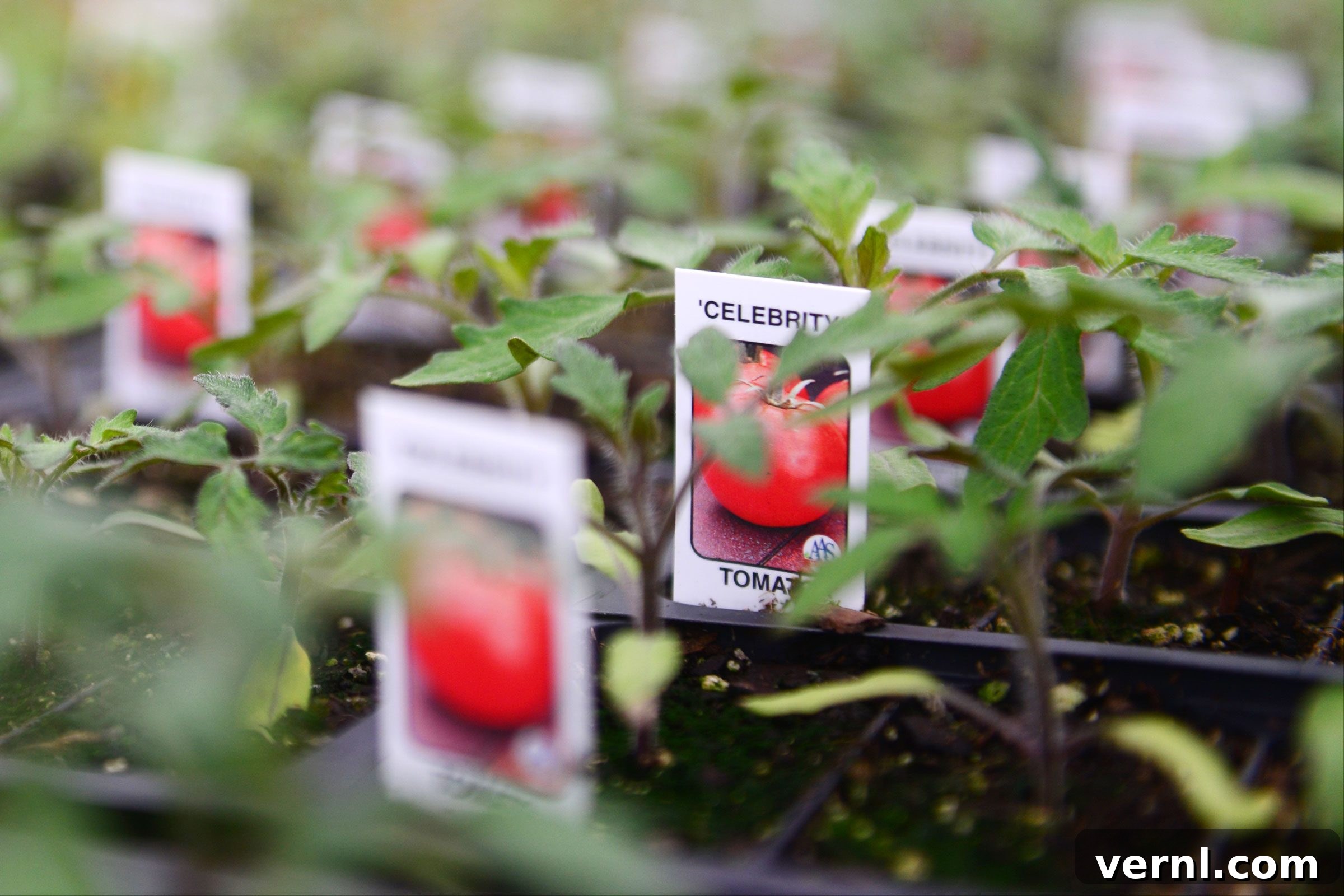
Last spring, I witnessed a common scene at our local garden center: neighbors staring at tomato plants, baffled by the cryptic information on their plant tags. While the tags offered a wealth of useful details, the specialized codes after each variety name left them puzzled. After a quick chat, I helped them demystify the abbreviations, and armed with this newfound knowledge, they ultimately cultivated the most impressive tomatoes they had ever grown. This experience reinforced a crucial lesson: understanding your tomato plant tags is the first step towards a truly bountiful harvest.
Understanding the Language of Tomato Plant Tags
Every time you purchase a new plant, whether it’s a vibrant flower or a promising vegetable seedling, the accompanying tag is your primary source of vital information. For tomatoes, these small labels are packed with details extending far beyond just the variety name and mature size. They often include critical codes related to disease resistance, growth habit, and even specific needs. Deciphering these codes can make the difference between a struggling plant and a thriving one, guiding you to select varieties best suited for your garden’s conditions and your personal preferences. Overlooking this valuable resource is a missed opportunity for successful gardening.
Determinate, Indeterminate, and Dwarf: Unraveling Tomato Growth Habits
One of the most fundamental pieces of information on a tomato plant tag describes its growth habit. Tomatoes are generally categorized into one of two main types: indeterminate or determinate, with a third, specialized category known as dwarf. Knowing which type you’re planting is essential for proper care, support, and managing your harvest expectations throughout the growing season.
Indeterminate Tomatoes: The Vining Wonders
Often considered the most common type, indeterminate tomato plants are true vining plants that continue to grow, flower, and produce fruit throughout the entire growing season until the first hard frost. These plants are characterized by their continuous vertical growth, often reaching impressive heights of six feet or more, and by their prolific development of side shoots, frequently referred to as “suckers.” This continuous growth habit means they offer a steady, extended harvest, providing ripe tomatoes for many weeks.
Because of their vigorous, indeterminate growth, these plants absolutely require robust support to prevent their heavy fruit-laden stems from sprawling on the ground, which can lead to disease and pest issues. Staking or caging are popular methods. A sturdy tomato cage, preferably one that is tall and wide, provides excellent all-around support. Alternatively, a strong stake, to which the main stem can be tied as it grows, is another effective solution. Pruning suckers from indeterminate varieties can also help direct the plant’s energy into fruit production and improve air circulation, though some gardeners prefer to let them grow for a larger overall yield.
Determinate Tomatoes: The Bushy Producers
In contrast to their vining cousins, determinate tomato plants have a more self-contained, bushy growth habit. They grow to a specific height, typically between three and five feet, and then stop growing. Crucially, they produce most of their tomatoes within a relatively short period, usually a few weeks, making them ideal for gardeners who want a large, concentrated harvest all at once. This characteristic makes determinate varieties exceptionally well-suited for canning, sauce making, or large-batch processing, as you’ll have an abundance of ripe fruit ready at approximately the same time.
While determinate tomatoes don’t grow indefinitely like indeterminate types, they still benefit significantly from support. Their compact nature and tendency to set a heavy fruit load can cause branches to break or plants to collapse if not adequately supported. A sturdy wire cage, positioned early in the plant’s life, provides ample structure to hold up the fruit and foliage, keeping them off the ground and promoting healthier growth. Their more contained size also makes them excellent choices for smaller gardens, raised beds, or even large containers, provided they receive proper support.
Dwarf Tomatoes: Perfect for Compact Spaces
A fascinating classification, dwarf tomato plants are a relatively newer development, popularized by the Dwarf Tomato Project. These varieties typically reach a maximum height of two to four-and-a-half feet, showcasing a unique “rugose” or crinkly foliage. Despite their compact size, dwarf tomatoes often produce surprisingly large fruits with excellent flavor, rivalling their standard-sized counterparts. They offer the best of both worlds: the manageable size suitable for smaller gardens, balconies, patios, and containers, combined with the potential for diverse and delicious yields.
Dwarf varieties usually exhibit a determinate-like growth habit, setting their fruit over a concentrated period, though some may offer a longer harvest window. While their smaller stature makes them less demanding in terms of support than indeterminate types, providing a small stake or compact cage can still be beneficial, especially when plants are heavy with fruit. Their robust, sturdy stems generally manage well, but a little extra help ensures the fruit stays clean and the plant remains upright. For urban gardeners or those with limited space, dwarf tomatoes present an exciting opportunity to grow a wide array of tomato types without sacrificing precious garden real estate.
Decoding Disease Resistance Codes on Tomato Tags
Beyond growth habit, perhaps the most critical information embedded in those cryptic letters on tomato plant tags relates to disease resistance. Tomatoes are famously susceptible to a range of common ailments, including various blights, wilts, and pests like nematodes. Plant breeders tirelessly work to develop new varieties with built-in resistance to these diseases, and these resistances are communicated through a standardized system of codes on the plant tags. When you see these codes, it signifies that the particular variety has genetic protection against the indicated disease, offering a significant advantage in garden health and yield.
Common Disease Resistance Codes Explained
Understanding these abbreviations can help you select the most resilient plants for your specific garden conditions:
- F: Fusarium Wilt. This code indicates resistance to Fusarium Wilt, a soil-borne fungal disease that causes wilting and yellowing of leaves, often starting from the bottom of the plant. It can quickly spread and devastate a crop. Varieties resistant to Fusarium Wilt are a smart choice in areas where this fungus is prevalent.
- V: Verticillium Wilt. Similar to Fusarium Wilt, Verticillium Wilt is another common soil-borne fungal disease causing yellowing and wilting, often affecting one side of the plant more than the other. Resistance to Verticillium Wilt provides an important layer of protection against this widespread pathogen.
- N: Nematodes. This refers to resistance to root-knot nematodes, microscopic roundworms that attack plant roots, causing galls or swellings that impede water and nutrient uptake. This leads to stunted growth, wilting, and reduced yields. In sandy soils or areas with known nematode problems, N-resistant varieties are invaluable.
- T: Tobacco Mosaic Virus (TMV). A viral disease that causes mottled, mosaic-like patterns on leaves, stunted growth, and distorted fruits. TMV can be highly contagious and significantly impact yield. Resistance helps prevent its spread and effects.
- A: Alternaria Stem Canker. This code indicates resistance to Alternaria Stem Canker, a fungal disease causing dark, sunken lesions on stems, which can girdle the plant and cause it to die back.
- St: Stemphylium/Gray Leaf Spot. Resistance to Stemphylium, also known as Gray Leaf Spot, a fungal disease that creates small, dark, angular spots on leaves, leading to defoliation.
- L: Late Blight. This is a highly destructive fungal-like disease, especially in cool, wet conditions, causing large, irregular, water-soaked spots on leaves and fruit. Resistance to Late Blight is highly sought after in regions prone to this disease, which can wipe out an entire crop rapidly.
Beyond simply choosing resistant varieties, understanding these codes empowers you to make informed decisions about managing your garden’s health. If you’ve previously experienced tomatoes succumbing to specific plant diseases before the end of the growing season, considering resistant varieties is a proactive step. For precise identification of any persistent issues, sending a sample to a plant pathology lab for testing is recommended. Contact your local cooperative extension service to learn about proper sampling and submission procedures. Once you pinpoint the disease present in your garden, you can strategically select tomato plants with targeted resistance, dramatically increasing your chances of a successful and healthy harvest.
The “F1” Code: Hybrid Vigor for Your Garden
Another common code you might encounter is “F1” after a tomato variety name. This designation signifies that the plant is an F1 hybrid. An F1 hybrid is created by deliberately cross-pollinating two distinct, pure-bred parent varieties. The resulting seeds, labeled F1, produce plants that often exhibit what is known as “hybrid vigor” – they are typically more uniform, grow more robustly, produce higher yields, and frequently possess enhanced disease resistance compared to their open-pollinated counterparts.
Hybrid tomatoes like Burpee’s famous Big Boy are celebrated for their consistent performance and often superior taste and disease resistance. While F1 hybrids offer many advantages, one key difference from heirloom or open-pollinated varieties is that saving seeds from an F1 hybrid will not produce plants identical to the parent. The offspring from F1 seeds will revert to various characteristics of the original parent lines, meaning you need to purchase new F1 seeds each year to maintain the desired traits.
In contrast, heirloom tomatoes are open-pollinated varieties that have been passed down through generations, often cherished for their unique flavors, colors, and historical significance. Seeds saved from heirloom varieties will reliably produce plants with the same characteristics as the parent, allowing gardeners to preserve beloved traits year after year. However, heirlooms generally possess less inherent disease resistance than many F1 hybrids and can sometimes have more variable yields. The choice between F1 hybrids and heirlooms often comes down to a gardener’s priorities: consistency, vigor, and disease resistance from hybrids, or unique flavor, history, and seed-saving potential from heirlooms.
Choosing Your Perfect Tomato: From Culinary Uses to Unique Characteristics
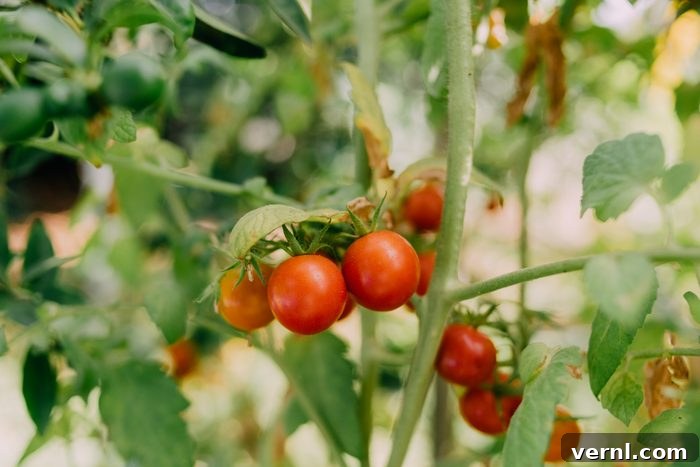
Beyond their growth habits and disease resistance, tomatoes offer an astonishing diversity in size, shape, and color, each lending itself to different culinary applications. When selecting your seedlings in the spring, it’s wise to consider what you intend to do with your harvest. Understanding the various types will ensure you’re growing the perfect tomato for your palate and kitchen needs.
Common Tomato Types and Their Culinary Applications
- Currant Tomatoes: Tiny Flavor Bombs. These are the smallest of all tomatoes, often no larger than a jelly bean or a small pea. Despite their diminutive size, currant tomatoes pack an intense, concentrated flavor, often very sweet. They are excellent for tossing into salads whole, garnishing dishes, or simply popping into your mouth as a delightful garden snack. Their productivity can be astonishing, often producing hundreds of tiny fruits on a single plant.
- Cherry and Grape Tomatoes: Snacking and Salads. As their names suggest, these varieties are typically the size of cherries or grapes. They are renowned for their sweetness and juicy texture, making them incredibly popular for snacking straight from the vine. Cherry and grape tomatoes are also perfect for fresh salads, roasting, grilling on skewers, or making quick, fresh sauces. They come in a rainbow of colors, including red, yellow, orange, and even black, each offering slightly different flavor nuances.
- Roma (Paste) Tomatoes: The Sauce and Canning Stars. Roma tomatoes, also known as paste tomatoes, are generally oblong or pear-shaped with thick, meaty walls and very few seeds. Their low water content makes them ideal for processing – they shine in sauces, pastes, purees, and for canning. They hold their shape well when cooked and offer a rich, concentrated tomato flavor. Varieties like ‘San Marzano’ are highly prized for their superior sauce-making qualities, making them a staple for any serious cook or preserver.
- Slicing and Beefsteak Tomatoes: Sandwich Superstars. This category includes the larger, juicier tomatoes perfect for fresh eating. Beefsteak tomatoes, in particular, can be quite sizable, often weighing a pound or more, yielding impressive, thick slices ideal for sandwiches, burgers, or enjoying simply with a sprinkle of salt. Slicing tomatoes offer a broad spectrum of flavors, from sweet and mild to tangy and robust. They also come in an incredible array of colors – classic red, vibrant yellow, sunny orange, deep purple-black, and even striped varieties, each offering a unique visual and gustatory experience.
Beyond these main categories, you might encounter other fascinating types like “Oxheart” tomatoes, known for their distinctive heart shape and meaty texture, or “Green-When-Ripe” varieties that offer unique tangy and complex flavors. Exploring the vast world of tomato colors and shapes is part of the joy of gardening. From the classic reds to vibrant yellows, oranges, and even the dramatic purples and stripes, each color often hints at subtle differences in sweetness, acidity, and overall flavor profile, enriching your culinary adventures.
Essential Tips for a Thriving Tomato Harvest
Cultivating a successful tomato crop goes beyond just choosing the right variety; it involves providing the optimal conditions for growth. Tomatoes are sun-lovers, requiring at least six to eight hours of direct sunlight per day. They thrive in rich, well-drained soil with a slightly acidic to neutral pH (6.0-6.8). Incorporating plenty of organic matter, such as compost, into your garden beds before planting will give your tomatoes a strong start.
Consistent watering is crucial, especially during fruit development. Deep, infrequent watering is generally better than shallow, frequent watering, as it encourages roots to grow deeper, making the plant more resilient. Avoid overhead watering, which can promote fungal diseases; instead, water at the base of the plant. A balanced fertilizer applied according to package directions, particularly once fruits begin to set, will also support healthy growth and abundant yields.
If you’re new to growing tomatoes, embrace experimentation. Try several different varieties each year – a mix of determinate and indeterminate, perhaps an F1 hybrid and an heirloom, and various culinary types. This approach allows you to discover which varieties perform best in your specific garden environment and, most importantly, which ones taste the best to you and your family. Once you’ve identified your favorites, you can confidently grow those trusted varieties every season.
Finally, a critical practice for preventing the buildup of soil-borne diseases is crop rotation. Always remember to plant your tomato plants in different spots in your garden each year. If you are growing your tomatoes in containers, it is essential to fill them with fresh potting soil each spring. This simple yet highly effective strategy significantly lessens the chances of your plants succumbing to blights, wilts, or other pathogens that might have lingered in the soil from the previous growing season, ensuring a healthier and more productive garden year after year.