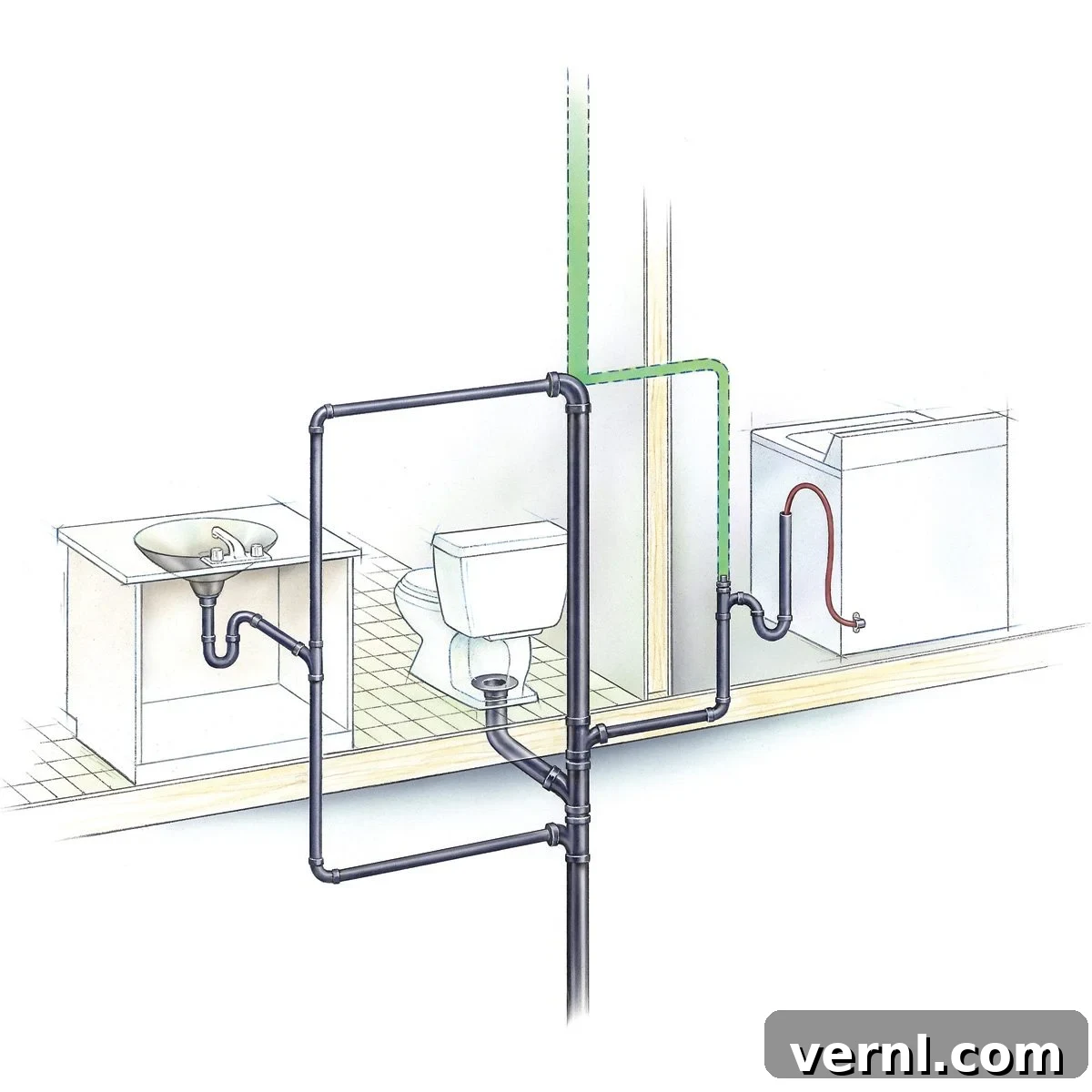
The plumbing system in your home relies on two fundamental elements to function seamlessly: water and air. While the necessity of water is instinctively understood, the role of air often remains an unsung hero. Yet, without proper airflow, your drainage system can quickly become a source of frustration and even health hazards. This comprehensive guide will delve into the vital importance of your home’s plumbing vent system, explain how it works, detail the common problems that arise when it’s compromised, and provide actionable solutions for diagnosis and repair.
For water to efficiently flow down any drain, the associated pipes require air to equalize the internal pressure. This crucial balance prevents a vacuum from forming, which would impede water flow and create a host of other issues. This is precisely why every residential plumbing fixture is mandated to be adequately vented. These plumbing vents are an integral part of the overall drainage system, and together, this entire interconnected network is known as the Drain, Waste, and Vent (DWV) system. Just like their wastewater-carrying counterparts, plumbing vents can become blocked, leading to problems remarkably similar to those caused by a clogged drain line. In the following sections, we’ll provide a more detailed explanation of how these essential vents operate, alongside expert tips and practical advice for resolving common issues within your home’s vent system.
The Physics of Flow: How Your Drain Plumbing Works
Imagine trying to pour liquid from a sealed container without allowing any air in – the flow would be sluggish and sporadic, if it happened at all. The same principle applies to your home’s drainage. Without the essential air provided by the vent system, water struggles to flow freely down the drain and can even back up. The vent system ensures that atmospheric pressure is maintained within the drain pipes, allowing gravity to pull wastewater away efficiently. When a plumbing vent becomes blocked or partially obstructed, this delicate balance is disrupted. Water rushing down the drains can then create a negative pressure, or suction, strong enough to pull water directly from nearby P-traps, leading to a cascade of unpleasant problems.
Understanding the Lifeline: What’s a P-Trap?
Often overlooked but undeniably critical, the P-trap is the unsung hero safeguarding your household from the unpleasant and potentially dangerous realities of the sewer system. If it dries out, your nose will quickly alert you to its compromised state.
As plumber David Lewis meticulously explains: “A P-trap is the U-shaped pipe you’ll commonly discover nestled beneath sinks, bathtubs, showers, and laundry room standpipes. Its ingenious design allows it to hold a small, static amount of water. This water creates a vital liquid seal, acting as an impenetrable barrier that prevents noxious sewer gases from backing up and infiltrating your home. Without this simple yet effective mechanism, you’d be constantly contending with truly foul odors and, more importantly, potentially harmful fumes. Beyond its role as a gas barrier, the P-trap also serves as an initial defense, catching debris and preventing minor clogs from making their way further down the main drain line, where they could become significantly more challenging and costly to clear.” Maintaining the water seal in your P-traps is paramount for both comfort and safety.
Decoding the Signals: Why is My Toilet Bubbling?
Every pipe within a building’s intricate vent network ultimately converges into the main vent stack, which typically terminates on your roof. This rooftop exit point is frequently where an obstruction in the plumbing vents originates. If you begin to experience a clogged vent, one of the earliest and most unmistakable indicators of trouble will often manifest in your toilet bowl.
If air bubbles are persistently rising up through your toilet bowl (especially when it’s not flushing), or if you observe the water level within the bowl noticeably rising and falling without apparent cause, these are strong signals that you may be dealing with a clogged or partially blocked plumbing vent. You are even more likely to have a vent problem if you notice your toilet bubbling specifically when you drain a nearby high-volume water-using appliance, such as a washing machine, bathtub, or even a shower. This phenomenon occurs because your drain system is literally “gasping for air,” and in its struggle for proper pressure equalization, it attempts to pull air through the nearest available opening – which, in this case, is often your toilet’s water seal.
- Pro Tip: It’s important to note that a clogged waste line can produce symptoms very similar to those of a blocked vent. If your initial suspicions lean towards a main drain clog, here are some practical steps you can take to attempt to unclog it before investigating your vent system. Careful observation of when the bubbling or water level changes occur can help differentiate between these two common plumbing dilemmas.
Unstable Water Levels: Why is the Toilet Water Level Rising and Falling?
While blocked plumbing vents are a primary culprit for the water level in your toilet bowl mysteriously rising and falling, they are not the only potential causes. An incorrectly pitched waste line, which hinders proper drainage and airflow, might also be responsible. Similarly, a subtle hairline crack in the toilet trap itself could be allowing a slow, imperceptible leak, leading to fluctuating water levels. It could also simply be a persistent clog in the waste line that you might need to tackle with a specialized tool like a drain snake. However, if you’ve methodically ruled out these more direct causes, then it’s highly probable that the plumbing vents are indeed the source of your concern.
The drain in the toilet bowl is essentially an integrated P-trap, and as we’ve previously explained, a blocked vent directly impacts the integrity and function of these crucial water seals. Beyond the toilet, you may also begin to notice other related drain problems that strongly indicate a blocked vent. These can include notoriously slow draining from a bathtub or sink, accompanied by an even more alarming symptom: rotten, sulfurous smells emanating persistently from a drain. These putrid odors are unequivocally from sewer gas, a dangerous mixture that typically contains methane and hydrogen sulfide. Inhalation of these gases can cause severe nausea, dizziness, headaches, and in higher concentrations, even loss of consciousness. Besides being profoundly noxious and detrimental to health, sewer gas is also highly flammable, making its uncontrolled leakage into your home a significant and potentially catastrophic danger that demands immediate attention.
Taking Action: How to Unclog a Plumbing Vent
When faced with the tell-tale signs of a clogged plumbing vent, proactive intervention is key. “Your first point of investigation should be the vent on your roof, as that’s typically where the vent pipe terminates and exits,” advises plumbing expert David Lewis. “Common culprits for blockages at this point often include an accumulation of leaves, other organic debris, or even small animals like squirrels or birds building nests inside the pipe. If you’re uncertain about the nature or location of the obstruction, or if it appears to be deeper than anticipated, a professional plumber can utilize a specialized camera to peer inside the pipe, accurately pinpointing the exact location and nature of the clog.”
If you prefer to attempt a DIY solution before contacting a professional, you can start by using a powerful flashlight to carefully look down the vent pipe from the roof. If you can visually identify the blockage and it appears to be relatively shallow and accessible, you can try to dislodge and remove it using a drain auger, also known as a plumber’s snake. Gently insert the auger into the pipe and manipulate it to break up or pull out the obstruction. Once you’ve removed the primary blockage, take a garden hose equipped with an adjustable nozzle. Set the nozzle to a powerful jet setting and blast water down the pipe to flush out any remaining debris and ensure the line is clear. Remember to exercise extreme caution while working on the roof, ensuring proper footing and securing any ladders or equipment.
Should the blockage prove elusive or be beyond the reach of your auger, you can still attempt to clear it by simply using the garden hose with its jet setting. Oftentimes, the sheer force of the water is sufficient to dislodge and clear most common obstructions. However, if the obstruction is particularly large, stubborn, or if you’re uncomfortable working at heights or dealing with a persistent blockage, that’s a clear indication that it’s time to call in a professional plumber. They possess the specialized tools, expertise, and safety equipment to handle even the most challenging vent clogs.
An Alternative Approach: How to Unclog a Plumbing Vent Without Getting on the Roof
Accessing your roof can present numerous challenges. It may be too steeply pitched to safely walk on, or adverse weather conditions like ice and snow might make an ascent treacherous. Perhaps you simply feel squeamish about climbing onto your roof. In such scenarios, if your house features an accessible attic, you’re in luck – you can often perform the necessary maintenance and cleaning from within your home. Begin by locating the vent pipe as it passes through the attic space and exits through the roof. Once identified, carefully cut out a manageable section of the pipe. This allows you to perform a thorough internal inspection and cleaning of the vent from the safety and comfort of your attic. After you’ve cleared the blockage, you can easily reassemble the pipe using standard PVC fittings and appropriate plumbing glue, ensuring a watertight and secure connection.
It’s crucial to understand that this method involves removing and repairing pipes within your home’s structural envelope, making it a more intricate task than simple rooftop clearing. This approach requires a degree of familiarity with plumbing repair techniques, including cutting, fitting, and gluing PVC pipe. Therefore, unless you are genuinely confident in your ability to competently repair plumbing pipes and ensure a leak-free seal, it is generally advisable to err on the side of caution and enlist the services of a professional plumber. They can execute this procedure safely and effectively, guaranteeing the integrity of your DWV system.
FAQ: Your Plumbing Vent Questions Answered
How can I prevent vent clogs in the first place?
Preventative measures are always preferable to reactive repairs. One of the most common reasons for vent clogs is small animals, such as birds or squirrels, climbing inside the open vent stack on your roof to build nests or seek shelter. To effectively prevent this, cover the vent opening with a durable mesh screen or a specialized vent cap. Once installed, make it a routine to inspect this screen annually (or arrange for someone else to do so) to clear any accumulated leaves, twigs, or other debris that could block the screen itself. Another significant concern, particularly in cold climates, is the potential for roof vents to ice over. This can create a severe blockage that persists for the entire duration of the cold weather. Icing typically occurs with undersized two-inch vent pipes, where the warm, moist air rising from the drain system meets the frigid outdoor temperatures, leading to condensation and freezing. The most effective long-term solution to prevent this is to replace the section of pipe extending through the roof with a larger three-inch pipe. The wider diameter reduces the likelihood of ice formation and provides a larger escape route for moist air. As a temporary solution, you can also de-ice the vent from inside the attic using a hairdryer or a heat gun (with extreme caution to avoid damaging the pipe or creating a fire hazard).
What is an Air Admittance Valve (AAV) and when is it used?
In certain architectural or design scenarios, a sink’s P-trap might be located too far from the main vent network, making a traditional connection to the existing vent system impractical, excessively complex, or prohibitively expensive. This situation frequently arises with basement sinks, kitchen island sinks, or sinks situated on the opposite side of the house from the main vent stack. To circumvent the challenges and costs associated with installing an elaborate conventional vent for such a remote P-trap, plumbers often turn to an innovative solution: an Air Admittance Valve (AAV).
An AAV is a compact, dome-shaped mechanical vent that serves as a localized alternative to a traditional vent pipe. You typically install it on the horizontal arm of the drain pipe leading directly from the P-trap to the main drain line. Inside, it contains a spring-loaded diaphragm or similar mechanism that remains closed under normal conditions, preventing sewer gases from escaping. However, when water begins to drain, the negative pressure created within the pipe forces the AAV open, allowing ambient air to be “admitted” into the pipe. This influx of air effectively equalizes the pressure, ensuring smooth drainage and preventing the P-trap from siphoning. Once the water flow ceases, the mechanism automatically closes, resealing the system and maintaining the vital sewer gas barrier.
AAVs are generally straightforward to install, offering a cost-effective and space-saving solution, and they are not affected by potential blockages within the larger, traditional plumbing vent system. However, it’s critically important to be aware that their legality varies significantly by location. Some local building codes permit their use as primary venting, while others restrict them to specific applications or prohibit them entirely. Before deciding to incorporate an AAV into your plumbing system, always consult your local building department or a qualified plumber to ensure compliance with all applicable codes and regulations.
About the Expert
- David Lewis is a highly seasoned professional with extensive expertise in the field of HVAC, plumbing, and comprehensive home services. He is the distinguished owner of Mission AC, a reputable company based in Houston, TX, known for its commitment to quality service and customer satisfaction.