Pressure washers are incredibly powerful and efficient tools for cleaning everything from grimy driveways and dusty siding to dirty decks and vehicles. When they work correctly, they save immense amounts of time and effort. However, like any mechanical equipment, they can occasionally develop issues that prevent them from operating at their best. It’s a common scenario: you pull your pressure washer out of storage, eager to tackle a cleaning project, only to find it sputtering, refusing to start, or delivering weak performance.
The good news is that many common pressure washer malfunctions don’t require a trip to a repair shop. With a little patience and the right guidance, you can often diagnose and fix these problems yourself. This comprehensive guide will walk you through the most frequent issues faced by pressure washer owners, offering clear troubleshooting steps and valuable expert advice to get your machine back in pristine working order. We’ll cover everything from engine starting problems and water flow inconsistencies to pump leaks and detergent dispensing failures, ensuring you’re equipped to handle most repairs.
Understanding Why Your Pressure Washer Isn’t Working
Before diving into specific fixes, it’s helpful to understand the general categories of problems that can plague a pressure washer. Pinpointing the area of malfunction is the first critical step towards a successful repair. Pressure washers, whether electric or gas-powered, rely on a few key systems: power delivery (engine/motor), water flow, and the pump. A fault in any of these can lead to a non-functional unit.
Common Power Delivery Issues
If your pressure washer fails to start or struggles to run, the problem often lies within its power source or associated components. This is especially true for gasoline-powered models, which have more elements susceptible to wear and contamination.
- Clogged Air Filter: A dirty or obstructed air filter starves the engine of the oxygen it needs for combustion. This can prevent the engine from starting altogether, or cause it to run poorly, bog down under load, or emit excessive exhaust. Regular inspection and cleaning or replacement of the air filter are vital for optimal performance.
- Old or Contaminated Gasoline: Gasoline is not indefinitely shelf-stable. Over time, particularly when left in a tank for extended periods (e.g., over winter), it degrades. Old fuel can separate, lose its octane rating, and form gummy deposits or varnish that clog fuel lines, carburetors, and fuel filters. This is a leading cause of hard starts or non-starts in gas pressure washers.
- Spark Plug Problems: A fouled, damaged, or incorrectly gapped spark plug will fail to ignite the fuel-air mixture efficiently, resulting in starting difficulties or misfires.
- Insufficient Oil Level: For gas engines, low oil can prevent the engine from starting as a safety measure, or it can lead to severe internal damage if operated with inadequate lubrication.
- Electrical Issues (for Electric Models): If an electric pressure washer has no power, check the power outlet, circuit breaker, GFCI (Ground Fault Circuit Interrupter) on the cord, and the power switch on the unit itself.
Water Flow and Pressure Problems
Even if your pressure washer’s engine roars to life, a lack of adequate water flow or pressure means it can’t perform its cleaning duties. These issues typically involve blockages, leaks, or problems with the water supply itself.
- Clogged Nozzles: The tiny aperture of a pressure washer nozzle is highly susceptible to blockages from dirt, mineral deposits, or debris that may be present in your water supply. A clogged nozzle will significantly reduce or completely obstruct the water stream, leading to a noticeable drop in pressure or a complete absence of spray.
- Low House Water Pressure: Your pressure washer requires a consistent and sufficient supply of water from your garden hose to operate effectively. If your household water pressure or flow rate is too low, the pump may struggle to draw enough water, resulting in weak or intermittent pressure output.
- Kinked or Blocked Hoses: Any obstruction in the garden hose supplying water to the unit, or in the high-pressure hose leading to the spray wand, will restrict water flow. Kinks, twists, or internal blockages in either hose can drastically reduce pressure.
- Damaged Unloader or Relief Valve: Delah Gomasi, Managing Director at MaidForYou, notes, “If you’re experiencing a loss of water pressure, it could be that you’ve left the pressure washer running too long without using the trigger.” This prolonged “bypass mode” causes water to continually circulate and heat up within the pump, stressing the unloader valve. This critical component regulates pressure and can be damaged, necessitating replacement, and leading to significant pressure loss.
Pump-Related Malfunctions
The pump is undeniably the heart of your pressure washer, responsible for taking incoming water and pressurizing it to the desired output. Problems with the pump often manifest as leaks, strange noises, or a complete failure to pressurize water.
- No Water Output: If your engine is running but absolutely no water emerges from the high-pressure hose, the problem almost certainly originates within the pump assembly. This could indicate a severe internal blockage or a major component failure.
- Water Leaking from the Pump: Visible water leaks from the pump casing are a clear and concerning sign of internal damage. Gomasi shares, “I usually find that this occurs in winter. The pump freezes, then when you go to start it up again, the sudden rush of water damages the seals.” Water trapped in the pump that freezes will expand, causing cracks in seals, o-rings, or even the pump housing itself. These leaks prevent the pump from building and maintaining adequate pressure.
- Worn or Damaged Internal Seals/Components: Over time, the internal piston seals, valves, and o-rings within the pump can wear out, crack, or become brittle. When these components fail, water can bypass the pressurization chambers, leading to reduced pressure, internal leaks, or pump cavitation (drawing air).
Comprehensive Troubleshooting Guide: Getting Your Pressure Washer Back in Action
Now that we’ve outlined the potential causes, let’s delve into specific troubleshooting steps for each common pressure washer problem. By systematically addressing these issues, you can often pinpoint the exact fault and perform the necessary repairs to restore your machine’s functionality.
The Engine Won’t Start or Runs Poorly (Gas Models)
A stubborn engine is one of the most common frustrations. Here’s how to systematically check and fix it:
- Check Fuel Supply and Quality: Ensure the gas tank has enough fuel. More importantly, confirm the fuel is fresh (preferably less than 30 days old) and free of contamination. Old or stale gasoline is a primary culprit.
- Verify Kill Switch Position: Make sure the rocker switch or kill switch is firmly in the “ON” or “RUN” position. This simple oversight can save you a lot of headache.
- Inspect Air Filter: Remove the air filter and visually inspect it. If it’s heavily soiled, clogged with dust or debris, or looks damp, it needs attention. Clean it according to your manual (often with soap and water for foam filters, or compressed air for paper filters) or replace it.
- Examine Spark Plug: Disconnect the spark plug wire and use a spark plug wrench to remove the plug. Check the electrode for carbon buildup, oil fouling, or damage. Clean it with a wire brush or replace it if it looks worn or damaged. Ensure the gap is set correctly.
- Confirm Engine Oil Level and Condition: Use the dipstick to check the engine oil level. Low oil can prevent starting. Also, look for signs of contamination; milky oil indicates water, while a strong gasoline smell means fuel has seeped into the crankcase. Change the oil if contaminated or significantly low.
How to fix: If old or suspected contaminated fuel is the issue, it’s best to completely drain the fuel tank. Then, flush the tank and carburetor with a dedicated carburetor cleaner to remove any gummy deposits or varnish. Daniel Reinhart, Senior Product Manager at Generac Chore Products, explains, “Old or degraded gas loses its volatility and will turn into a gummy varnish that will clog fuel to the carburetor, restricting the necessary flow of gasoline to the combustion chamber.” Once clean, refill with fresh, high-quality, stabilized gasoline. Ensure the fuel cap is venting properly.
Low or Inconsistent Water Pressure
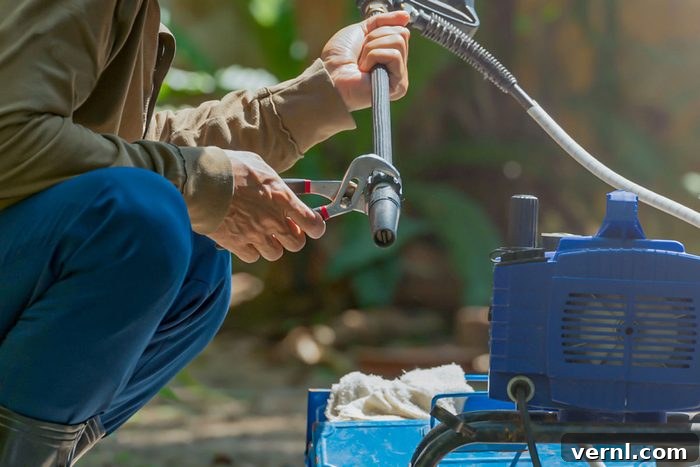
If your pressure washer starts but delivers a weak or sputtering spray, the issue usually lies within the water delivery path:
- Loose Connections or Worn O-Rings: Thoroughly inspect all hose connections – from the garden hose to the unit, and the high-pressure hose to the wand. Even a small leak from a loose coupling or a brittle, cracked, or missing o-ring can significantly drop pressure.
- Clogged Water Inlet Filter: The small filter or screen at the water inlet of your pressure washer can become blocked with sediment, sand, or debris from your garden hose. This restricts water flow into the pump.
- Malfunctioning Unloader Valve: The unloader valve is crucial for regulating pressure. If it’s stuck open, faulty, or incorrectly adjusted, it can divert pressurized water back to the pump inlet or bypass, leading to low pressure at the nozzle.
- Damaged Pressure Spring: Within the pump, a broken or weakened pressure spring can prevent the pump from generating the necessary force for high pressure.
- Blocked Nozzle: This is a very common and often simple fix. The small orifice of the spray nozzle can easily become clogged with debris.
How to fix: Start by ensuring all hose and wand fittings are tightly secured. Then, remove the high-pressure nozzle from the wand and inspect its opening for any debris. Often, a small piece of wire (like a paperclip) or the specialized nozzle cleaning tool supplied with your washer can dislodge the blockage. Also, check the water inlet filter for accumulated sediment and clean it thoroughly. Inspect all o-rings for signs of wear, cracks, or compression and replace any that are compromised. Gomasi advises for blocked nozzles, “It’s often just a matter of unscrewing the quick connect a bit until the pressure in the valve is released, then re-screwing it together.” This technique can sometimes clear minor clogs by dislodging trapped particles.
Water Leaking From the Pump
Leaks from the pump casing itself are a serious indicator of internal wear or damage, which needs prompt attention to prevent further deterioration and potential pump failure.
- Worn or Damaged Seals and O-Rings: The most frequent cause of pump leaks is the degradation of internal seals (such as piston seals, oil seals, or valve seals) and o-rings that maintain watertight compartments within the pump. These components naturally wear out over time.
- Cracked Pump Housing: Exposure to freezing temperatures without proper winterization can cause residual water inside the pump to expand, leading to cracks in the pump’s metal or plastic housing. This is a severe issue.
How to fix: For minor leaks attributed to accessible worn seals, you might be able to purchase a pump seal repair kit. However, replacing internal pump seals often requires specific tools and a good understanding of pump mechanics. For more extensive leaks, especially those involving visible cracks in the pump housing, trying to patch or repair it is usually a temporary and unreliable solution. In such cases, Gomasi suggests, “since pumps aren’t expensive, your best bet is to just replace the pump.” Replacing the entire pump assembly is often the most cost-effective and reliable long-term solution, especially given the precision required for proper pump function.
Water Leaking From the Wand or High-Pressure Hose
Leaks along the user-facing components of your pressure washer compromise pressure and can pose safety risks due to the high-velocity water spray.
- Loose Connections: The points where the high-pressure hose attaches to the pump and the wand, or where different attachments connect to the wand, are common areas for leaks if not securely tightened.
- Missing, Worn, or Damaged O-Rings: Similar to pump leaks, o-rings inside the quick-connect fittings and coupling points along the wand and hose can become worn, cracked, or dislodged, creating pathways for water to escape under pressure.
- Damaged High-Pressure Hose: Over time, the high-pressure hose itself can develop pinholes, cuts, abrasions, or ruptures from being dragged, kinked, or exposed to harsh conditions. This is a significant safety hazard.
How to fix: Systematically inspect all connections along the high-pressure line, from the pump outlet to the nozzle. Hand-tighten any loose fittings. Disconnect each section and carefully inspect the o-rings within the couplings. Replace any o-rings that appear brittle, flattened, cracked, or are missing entirely. If you find any damage to the high-pressure hose itself (e.g., cuts, bulges, or leaks), it is crucial to replace the entire hose immediately. Never attempt to patch a high-pressure hose, as it can burst violently under operating pressure.
Strange Noises Coming From the Pump
Unusual sounds like grinding, chattering, or gurgling are often warning signs that something is amiss within the pump or the water supply system.
- Air in the Water Line (Cavitation): As Reinhart explains, “If you’re hearing strange noises, it could be air in the water line, which pops and gurgles under pressure.” This phenomenon, known as cavitation, occurs when the pump is drawing in air instead of a steady stream of water. This creates damaging grinding noises and accelerates wear on internal pump components due to erratic pressure fluctuations and impacts.
- Loose or Damaged Internal Pump Components: Less commonly, grinding or rattling noises could indicate a worn bearing, a loose piston, or other internal parts that are worn or broken within the pump assembly.
How to fix: The primary objective is to purge any air from the system. Reinhart recommends “running water through the washer while it’s turned off, but with the trigger engaged, until a steady stream begins to flow.” This process, known as priming the pump, helps to expel trapped air. Also, ensure all hoses (both garden and high-pressure) are securely connected and free of any air leaks. Inspect the garden hose for kinks or blockages that might restrict water flow to the pump. Remove and thoroughly clear the suction line (if your model has one) and check the high-pressure nozzle for any blockages that could create back pressure and exacerbate cavitation.
No Water Flowing from the Nozzle (Engine Running Smoothly)
This scenario suggests a complete obstruction or total lack of water supply to the pump, even though the engine or motor is operating correctly.
- Severely Clogged Wand, Hose, or Inlet Filter: Any of these points can completely block the passage of water. If you hear a chattering noise, it often indicates an air leak in the inlet fitting or suction hose, signifying the pump is struggling to draw water.
- Inadequate House Supply Pressure or Volume: If your garden hose connection isn’t delivering sufficient water pressure or flow rate to the pressure washer, the pump won’t have enough water to pressurize, leading to no output.
- Kinked Supply Hose: A severely kinked garden hose can completely cut off the water supply to the pressure washer.
- Frozen Pump or Components: In colder climates, if the unit was not properly winterized, any residual water inside the pump or hoses can freeze solid, creating a total blockage and potentially damaging components.
How to fix: First, ensure your water source (spigot) is fully open and delivering adequate pressure and flow. Disconnect the garden hose from the pressure washer and run water through it directly to confirm it’s clear and the flow is strong. Next, thoroughly inspect the pressure washer’s water inlet filter for debris and clean it if necessary. Attach the garden hose to the pressure washer’s inlet, turn on the water, and then turn on the pressure washer (without the high-pressure hose attached, if possible, or with the trigger depressed) to see if water flows out of the pump outlet. If a trickle of water flows, it suggests a partial blockage. Otherwise, remove and thoroughly clear the suction hose (if applicable) and the high-pressure nozzle for any obstructions. Finally, check all inlet fittings for leaks or loose connections that might be allowing air into the system. If you suspect freezing, allow the unit to thaw completely in a warm environment before attempting operation.
Detergent Not Dispensing From Reservoir
When your cleaning solution isn’t making it to the spray, it can hinder your cleaning effectiveness. Several factors can prevent proper detergent siphoning:
- Over-Concentrated Soap: Some detergents are highly concentrated and need to be diluted before use. If the soap is too thick, the injector mechanism may struggle to siphon it effectively.
- Clogged Detergent Injector: The small injector that draws soap into the water stream can easily become clogged with dried soap residue, debris, or mineral deposits.
- Incorrect Nozzle or Pressure Setting: Many pressure washers require a specific low-pressure or “soap” nozzle to be attached for the detergent siphoning function to activate. Using a high-pressure nozzle often bypasses the detergent injector system. Reinhart also notes that “too much pressure can also force the soap back into the tank” if the system isn’t correctly configured for dispensing.
- Blocked Siphon Hose or Filter: The small hose that draws detergent from the reservoir can become kinked, clogged with dried soap, or its internal filter (if present at the end of the hose) might be blocked.
How to fix: Begin by cleaning or replacing the detergent injector. Consult your user’s manual to confirm you are using the correct nozzle (typically a black soap nozzle) and the appropriate pressure setting for detergent application. Most machines will only activate the detergent siphoning feature under low-pressure conditions. Test your setup by applying pressure on the trigger and waiting a few moments for the detergent to visibly mix with the water stream. If no suds appear, thoroughly check the filter at the bottom of the soap tank for blockages and ensure the siphoning hose itself is free of kinks or obstructions. Reinhart offers a useful tip: “You can always test with water by removing all nozzles and pulling the trigger. If slow-moving water comes out, add warm water to see if it dissolves any residue that might be gummed up instead of the tank.” This can help clear internal soap lines. If your soap is highly concentrated, try diluting it slightly according to the manufacturer’s recommendations.
When to Call a Professional for Pressure Washer Repairs
While many common pressure washer problems are amenable to DIY fixes, there are situations where calling a professional is the smartest, safest, and most cost-effective option. Knowing your limits can save you from further damage, frustration, or even injury. Nate Cording, manager at Generators Direct, strongly advises calling a professional if you encounter “major engine, pump, or electrical issues you’re uncomfortable addressing by yourself.”
- Complex Engine or Motor Problems: If you’ve tried basic troubleshooting (spark plug, fuel, air filter) and the engine still won’t start or runs very poorly, you might be facing more complex issues like a carburetor rebuild, valve adjustments, or significant internal engine damage. These often require specialized tools, diagnostic equipment, and expertise.
- Persistent Pump Failures: If you’ve already attempted to replace seals or even the pump itself, and problems quickly recur, there might be an underlying systemic issue (e.g., water supply issues causing cavitation, unloader valve malfunction) that a professional can accurately identify and resolve.
- Electrical System Malfunctions (Electric Models): Any faults involving internal wiring, the motor itself, complex switches, or persistent GFCI tripping on electric pressure washers should be handled by a qualified technician. Electrical repairs carry a risk of electric shock and improper repairs can be dangerous.
- Safety Concerns: If you are unsure about the integrity of a component, especially with high-pressure parts like hoses or the pump, it’s always safer to consult a professional. High-pressure water can cause severe lacerations, blunt force trauma, and eye injuries.
- Time and Cost Efficiency: Sometimes, the time, effort, and cumulative cost of acquiring parts for a complex DIY repair might outweigh the benefit. A professional can often diagnose and fix issues more quickly and efficiently, especially if they have access to parts and specialized tools.
Preventative Maintenance Tips for Pressure Washer Longevity
Regular maintenance is the single most effective way to extend the life of your pressure washer, prevent unexpected breakdowns, and ensure it’s always ready for your next cleaning task. A small investment of time in upkeep can save you significant repair costs and frustration in the long run.
- Regular Oil Changes (Gas Models): Just like any internal combustion engine, your gas pressure washer’s engine requires clean oil for proper lubrication and to prevent premature wear. Follow the manufacturer’s recommended oil type and change intervals, typically every 25-50 operating hours or annually.
- Inspect and Clean the Air Filter: A clean air filter ensures your engine gets the oxygen it needs. Check it regularly (e.g., before each use or after every few uses) and clean or replace it when it appears dirty or clogged.
- Clean the Water Inlet Screen: This small filter prevents debris from your garden hose or water supply from entering and damaging the pump. Remove and rinse it frequently to maintain an unobstructed water flow.
- Maintain Detergent Siphoning Hose and Filter: After each use of detergents, always run clean water through the detergent system for a few minutes. This flushes out any residual soap that could dry and clog the hose or its filter, ensuring it’s ready for next time.
- Inspect Wand and Nozzles: Regularly check your spray wand and all nozzles for blockages, wear, or damage. Clean nozzles after each use to prevent mineral buildup and ensure a consistent spray pattern.
- Check Other Fittings and Hoses: Routinely inspect all hoses (both the garden hose and the high-pressure hose) and fittings for kinks, cuts, leaks, or loose connections. Pay close attention to o-rings; replace any that are brittle, cracked, or missing.
Nate Cording underscores the critical importance of adhering to manufacturer guidelines: “Always read and follow the manufacturer’s guidelines.” He further advises, “Using the right nozzle for the job is crucial, as different nozzles have different spray patterns and pressures,” which directly impacts both cleaning effectiveness and the longevity of your machine. Crucially, Cording warns, “avoid running the pressure washer without water as it can damage the pump.” Operating the pump dry, even for a short period, can lead to rapid overheating and severe damage to its internal components due to a lack of lubrication and cooling from water.
Proper Storage Procedures: When storing your pressure washer for an extended period, especially during colder months, proper preparation is essential to prevent damage. For gas models, add a high-quality fuel stabilizer to the gas tank and run the engine for a few minutes to ensure the treated fuel circulates throughout the system, preventing fuel degradation and varnish buildup. Most importantly, drain all water completely from the pump, hoses, and spray wand to prevent damage from freezing. Residual water expands when it freezes, which can crack the pump, hoses, and fittings. Consider using a pump saver solution (available at hardware stores) to lubricate and protect the internal pump components during storage.
Frequently Asked Questions (FAQs) About Pressure Washers
How long do pressure washers typically last?
The lifespan of a pressure washer can vary significantly, heavily depending on its initial quality, how often it’s used, and the diligence of its maintenance. According to Cording, “a good-quality unit can last between 300 and 3,000 hours.” For the average homeowner, this translates to “several years,” often ranging from 3 to 10 years or even longer for professional-grade or exceptionally well-maintained models. Electric pressure washers, generally designed for lighter duty, tend to have a shorter lifespan than more robust gas-powered units. Consistent cleaning, proper storage, and promptly addressing minor issues are key factors in maximizing its operational life.
When should I consider replacing my pressure washer instead of repairing it?
The decision to repair or replace often hinges on a cost-benefit analysis. If repairs become frequent, expensive, or if a major component like the engine or pump experiences a catastrophic failure, replacement might be the more economical choice. Reinhart advises, “if a pressure washer experiences a pump cycling on and off often, it’s possible the pump and system are worn to a point where a new machine is the most cost-effective option.” Other indicators include a significant and persistent drop in performance that simple fixes cannot resolve, or if the estimated cost of parts and labor for a repair approaches or exceeds half the price of a new unit. Don’t forget to factor in the value of your time and the frustration associated with a machine that continually malfunctions.
What’s the best way to dispose of my old or broken pressure washer?
Proper and environmentally responsible disposal of an old or broken pressure washer is crucial. Because these machines contain various materials such as metal, plastics, and potentially hazardous fluids like engine oil and gasoline, they should not be discarded with regular household trash. Many recycling centers accept small engines, general metal scrap, and electronic equipment. It’s recommended to check with your local waste management facility or municipal recycling program for specific guidelines on disposing of power equipment in your area. You will typically need to drain all fuel and oil from a gas-powered unit before dropping it off for recycling. Some retailers may also offer take-back programs for old equipment when you purchase a new unit.
What are some essential safety tips when using a pressure washer?
Pressure washers are powerful tools that, while effective, can cause serious injury if not handled with care and respect. Always wear appropriate personal protective equipment (PPE), including ANSI-approved safety glasses or goggles, closed-toe shoes with good grip, and hearing protection, especially with gas models. Never point the spray wand at people, pets, plants, or electrical outlets. Maintain a stable footing and be aware of your surroundings to prevent slips or accidents caused by the powerful kickback of the spray. Keep children and pets well away from the operating area. Before performing any maintenance, troubleshooting, or nozzle changes, always turn off the engine/motor, disconnect the spark plug wire (for gas models), and release any residual pressure by squeezing the trigger. For electric models, always use GFC-protected outlets to prevent electric shock.
Meet Our Expert Contributors
We extend our sincere gratitude to the industry professionals who generously shared their invaluable insights, practical advice, and extensive experience for this comprehensive guide. Their expertise is instrumental in ensuring that you receive accurate, reliable, and actionable troubleshooting solutions for your pressure washer.
Daniel Reinhart is a highly respected Senior Product Manager for Generac Chore Products. With a distinguished career spanning over 12 years in the outdoor power equipment industry, Daniel has dedicated five years to expertly managing Generac’s pressure washer category. His primary focus is on the development of innovative Chore Products, including cutting-edge pressure washers, meticulously designed to meet the diverse and demanding needs of both residential homeowners and commercial users, ensuring exceptional performance and unwavering reliability.
Nate Cording serves as a knowledgeable manager at Generators Direct. With over a decade of hands-on expertise in pressure washer repair and maintenance, Nate is deeply passionate about empowering homeowners and businesses to keep their equipment in peak condition and operating flawlessly. He regularly shares practical tips, invaluable expert advice, and comprehensive troubleshooting insights on all aspects of pressure washer care, making him a trusted and authoritative resource in the field.
Delah Gomasi is the accomplished Managing Director at MaidForYou, a prominent and successful house cleaning agency based in Sydney, Australia. Beyond his leadership role, Delah is responsible for meticulously crafting the company’s detailed standard operating procedures for its professional cleaning teams. He also personally oversees and conducts the comprehensive pressure washing training service for all new hires, ensuring the highest standards of safety, efficiency, and quality in their cleaning operations.