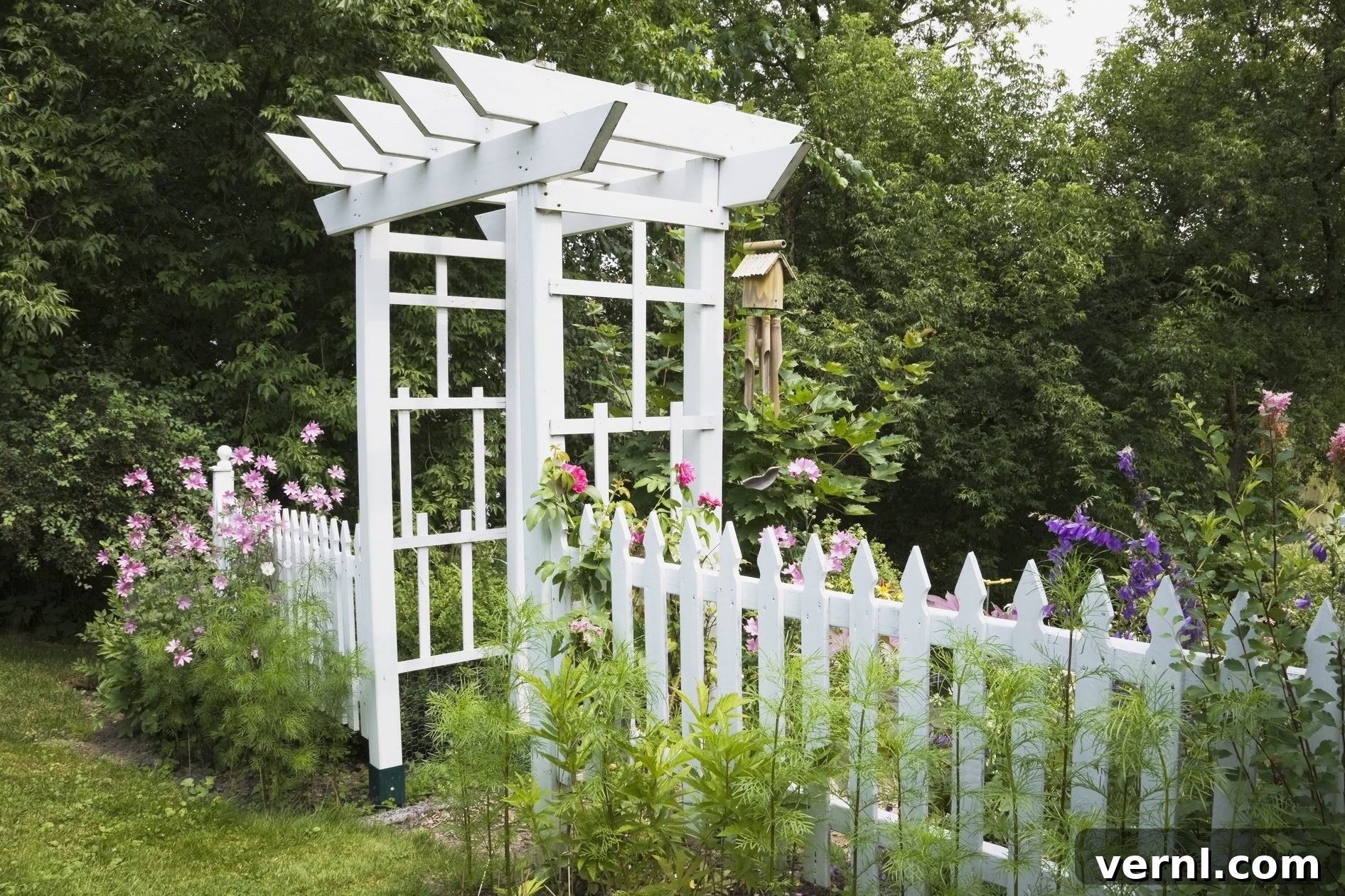
Stemming from the Latin word for tree, arbors have long been celebrated for their ability to introduce vertical elegance and architectural charm to any garden. From the ancient Romans, who sought respite from the scorching sun beneath arched structures, to modern landscapers, arbors have consistently served as a timeless element for providing both shade and captivating beauty. These versatile structures transcend mere aesthetics, offering functional benefits that enhance the usability and appeal of your outdoor environment.
Whether you’re looking to create an inviting entryway, a secluded seating area, or a stunning focal point for climbing plants, understanding the nuances of arbors is key. This comprehensive guide will walk you through essential considerations when selecting or building a garden arbor, ensuring it perfectly complements your home and lifestyle.
What Exactly Is a Garden Arbor?
At its core, an arbor is an open structure, often formed from latticework, timber, or metal, designed to support climbing plants and create a sheltered passage or nook. It’s essentially a charming framework over which vines or branches can gracefully ascend, offering a delicate canopy of foliage. Arbors typically define a clear entryway, such as a garden gate or a path leading to another section of the yard, or they can envelop an alcove, crafting a serene spot for a small seating area. The dappled shade cast by an arbor’s leafy cover creates an inviting atmosphere, perfect for relaxation or a quiet stroll.
The beauty of arbors lies in their adaptability. You can easily purchase a prefabricated arbor as a kit, which often comes with straightforward instructions and can be assembled and installed within a few hours. This is a convenient option for those seeking a quick and effective outdoor enhancement. Alternatively, for a truly bespoke touch, you can embark on a DIY project to build a custom arbor that perfectly integrates with the unique dimensions and aesthetic of your outdoor space. This allows for personalized design choices, from material selection to intricate details, making your arbor a true reflection of your gardening vision.
Arbor vs. Pergola: Understanding the Key Differences
While both arbors and pergolas are beloved outdoor structures designed to offer shade and enhance your garden’s architecture, they serve distinct purposes and possess unique characteristics. Understanding these differences is crucial for choosing the right structure for your needs.
An arbor is generally a more compact and narrower structure. It’s typically defined by two side supports connected by an arched or flat top, often covered in climbing foliage. The primary role of an arbor is to delineate an entrance, frame a pathway, or create a small, intimate nook. Think of an arbor as a gateway or a portal, inviting you to pass through or linger briefly. Its scale is usually modest, making it ideal for creating shaded little entries or defining specific points of interest within a garden. The shade provided by an arbor is often partial and ethereal, a gentle filtering of sunlight through leaves, creating a romantic and sheltered feel.
A pergola, on the other hand, is a much larger and more expansive structure. It typically features a flat, slatted roof supported by four or more posts, with open sides. Pergolas are designed to cover a significant outdoor area, such as a patio, deck, or outdoor dining space, effectively creating an “outdoor room.” The slatted roof can be left open for partial sun, covered with fabric canopies for more substantial shade, or adorned with robust climbing vines like wisteria or grapes for a natural, living roof. Pergolas are perfect for defining larger zones for dining, cooking, lounging, or entertaining, providing a grander sense of enclosure and shade. While both structures enhance beauty and provide shade, the arbor offers intimate charm and defined passages, while the pergola provides expansive cover and outdoor living space.
Strategic Placement: Where to Install Your Arbor
The placement of your arbor is paramount to its functionality and aesthetic impact. Before installation, take time to consider your outdoor space, existing landscape features, and the primary function you envision for your arbor. Here are several strategic options for placing this versatile garden element:
- Connecting Spaces and Gateways: Historically, arbors were often positioned along property lines or fence lines to mark entry points and greet garden visitors. Following this tradition, placing an arbor where your front yard transitions into the backyard, or at the entrance to a specific garden area, creates a charming and welcoming gateway. It visually signals a change in environment, inviting exploration and adding a sense of journey to your landscape. This can transform a simple path into an enchanting promenade.
- Creating Secluded Nooks: An arbor integrated with a bench or a small seating area, perhaps nestled in a quiet corner of your backyard, transforms an ordinary space into a serene retreat. This creates a captivating focal point, adds significant visual interest, and establishes a shady, intimate destination perfect for reading, reflection, or quiet conversation. Consider adding fragrant climbing plants to enhance the sensory experience of this private sanctuary.
- Defining Entryways: Use an arbor to grandly mark the entrance to your backyard, a specific garden plot, a potting shed, or any pathway leading to your home. This not only enhances the visual appeal but also serves as a clear demarcation, guiding visitors and emphasizing the importance of the space beyond. It adds an element of formality or whimsy, depending on the arbor’s style and the plants adorning it.
- As a Visual Frame: Position an arbor to act as a living frame, guiding the eye to a specific, beautiful view or feature within your landscape. This could be a bubbling fountain, a meticulously curated flower bed, a distant scenic vista, or a breathtaking sunset. The arbor creates a “picture window” effect, drawing attention and elevating the perceived beauty of the framed element.
- Over the Garage Door: Known as an “eyebrow” arbor in this context, installing an arbor directly over your garage door can dramatically enhance your home’s curb appeal. This architectural accent frames the entire door, dressing up an otherwise plain facade and adding character. While typically not covered in plants due to proximity to the house, its design can significantly boost aesthetic value.
- Strategic Sun and Wind Protection: Beyond defining spaces, consider the arbor’s role in mitigating harsh sun or strong winds. Placed thoughtfully, it can offer a cooling shade in hot climates or provide a partial windbreak, making your outdoor areas more comfortable and usable.
How to Choose the Perfect Arbor for Your Garden
Selecting the right garden arbor involves more than just picking one you like. It requires thoughtful consideration of its intended use, the specific characteristics of your outdoor space, and your long-term aesthetic goals. Before you commit to a pre-built model, an arbor kit, or embark on a custom design, ask yourself key questions: Do you envision a cozy seating area with a built-in bench? Is it meant to elegantly frame a walking path? Or will it primarily serve as a sturdy support structure for vigorous vining plants? Once you have a clear vision, delve into these crucial factors.
Arbor Size: Achieving Perfect Proportion and Functionality
Joie Markes, a garden landscape online merchant at The Home Depot, notes that arbors generally vary in width from a compact 42 inches to a grand 122 inches, with heights typically ranging from eight to ten feet. However, these are general guidelines, and custom options can extend beyond these dimensions.
Shopping to scale is perhaps the most critical aspect of choosing an arbor. The structure should blend seamlessly and harmoniously into your existing yard, rather than dominating or being dwarfed by its surroundings. A massive arbor would overwhelm a small, intimate garden, making it feel cramped and out of proportion. Conversely, a tiny arbor would appear insignificant and lost within a sprawling, expansive yard. Always measure your intended placement area meticulously. Consider the height and spread of nearby trees, shrubs, and structures to ensure the arbor fits comfortably without obstruction.
Furthermore, ensure the arbor’s dimensions allow for comfortable passage. If it’s meant to be a walkway, verify that it’s wide enough for people to walk through without brushing against foliage or the structure itself. For arbors with integrated seating, confirm that the bench provides ample space for comfortable use. The overall scale should complement the architecture of your home and the style of your garden, creating visual harmony and balance.
Arbor Cost: Balancing Budget with Quality and Design
The price of an arbor can fluctuate significantly, primarily influenced by its material, size, complexity of design, and whether it’s a standard kit or a custom-built piece. You can find basic, ornamental arbors made of thin metal starting around $75 – these are typically lightweight and suitable for decorative purposes or very light vines.
As you move up in quality and durability, a sturdy wood or steel arbor with substantial depth and design can range from $300 to $800. These options offer greater longevity, structural integrity, and a more pronounced aesthetic presence. Custom-designed arbors, especially those crafted from high-end materials like wrought iron with intricate detailing, can easily run into the thousands. The cost also reflects the complexity of installation; simpler kits are often DIY-friendly, while heavier, more elaborate structures may require professional installation, adding to the overall expense. Markes emphasizes that material, detailing, and size are the primary drivers of price, so carefully weigh these factors against your budget and long-term vision.
Arbor Material: Durability, Aesthetics, and Maintenance
Beyond the initial cost, the material of your arbor is paramount, influencing its durability, required maintenance, and how well it withstands your local climate. A steel arbor, for instance, might be more resilient against consistent rain and humidity than certain types of wood. While a vinyl arbor may weather the elements with minimal fuss, its structural integrity might not suffice for the heavy weight of mature climbing roses or robust grapevines you envision.
Here’s a detailed look at some of the most popular arbor materials, along with their specific advantages and disadvantages:
- Wood Arbor: Classic choices include cedar, redwood, and bamboo, each offering natural beauty and inherent hardiness. Cedar and redwood are particularly prized for their natural resistance to rot and insects, making them excellent long-term investments. Bamboo offers a unique, tropical, or rustic aesthetic. Your choice among these often boils down to personal preference for grain, color, and budget. Regardless of the type, wood arbors require annual inspection for weak spots, rot, or insect damage. For DIYers, Markes highly recommends using ground-contact pressure-treated lumber. This material is specifically engineered to withstand weather extremes, repel water, resist rot, and can be easily painted or stained to match your desired color scheme, offering a durable and customizable option. Regular sealing or staining will further extend its life and beauty.
- Plastic or Vinyl Arbor: Often delivered as easy-to-assemble kits with larger, interlocking pieces, plastic or vinyl arbors are celebrated for being lightweight, inexpensive, and exceptionally easy to install. Their primary draw is minimal to no maintenance – they typically don’t require painting, staining, or sealing and can be cleaned with a simple hose-down. However, their longevity can be a concern; they may become brittle, crack, or discolor over time, especially in areas with extreme temperature fluctuations or intense UV exposure. Furthermore, their lightweight nature means they may not be sturdy enough to withstand heavy winds or the substantial weight of mature, dense climbing plants, potentially requiring additional anchoring.
- Aluminum Arbor: This treated metal offers an excellent balance of sturdiness and low maintenance. Aluminum is naturally rust-resistant, making it an ideal choice for humid climates or coastal areas. It’s lighter than iron or steel, which can simplify installation. Modern aluminum arbors often feature powder-coated finishes, providing a wide array of color options and an extra layer of durability. If you already have an aluminum fence or other outdoor fixtures, an aluminum arbor can create a cohesive look across your landscape. They are long-lasting and maintain their appearance with minimal effort.
- Iron Arbor (Wrought Iron): A classic and timeless choice, wrought iron arbors are significantly heavier than aluminum, lending them superior stability against high winds and inclement weather, especially when installed with deep stakes or concrete footings. Their strength allows for intricate, ornate designs that can add a touch of old-world charm or elegant grandeur. While iron is highly durable, it is susceptible to rust. Therefore, choosing a treated and painted (or powder-coated) iron arbor is crucial for maximum lifespan and to maintain its aesthetic appeal. Despite being one of the most expensive arbor materials, particularly for custom-made pieces that can cost thousands, its unparalleled durability and classic beauty make it a worthwhile investment for a permanent garden feature.
- Steel Arbor: Treated steel arbors can be as robust and durable as iron but offer greater versatility in design. Steel can be molded into thinner rods, allowing for more dainty, modern, and elegant arbor designs that might not be achievable with heavier iron. This material can be galvanized or powder-coated to enhance its weather resistance and provide various color finishes. Steel arbors generally range in price from around $100 for simpler designs to thousands for larger, custom, or intricately designed pieces, offering a middle ground in terms of cost and aesthetic flexibility between aluminum and iron.
Arbor Ease of Installation: DIY vs. Professional Approach
Regardless of the material or style, all arbors require secure anchoring to the ground or adjacent structures to ensure stability and safety. The complexity of this installation varies significantly based on the arbor’s material and weight.
For lightweight plastic or vinyl arbor kits, the installation process is typically straightforward and suitable for a confident DIYer. These kits usually come with everything needed to sink the posts directly into the ground using simple anchors or to secure the lightweight structure to a fence or the side of your home if needed. Assembly often involves snapping or screwing pieces together, making it a project that can often be completed in a single afternoon.
However, installing heavier structures like iron, metal, or wood arbors demands more advanced DIY skills or the assistance of a professional. These robust arbors require more substantial anchoring methods to withstand weight and weather. Common methods include driving heavy-duty stakes deep into the ground or, for maximum stability and longevity, setting the posts into holes filled with concrete.
Markes advises that for concrete footings, you should “set the posts in holes about 16 inches across and one foot deep.” This depth provides adequate support for larger structures. When planning any digging project, and especially for significant holes, it is imperative to contact 811 a few business days beforehand. This free service ensures that buried utilities, such as electrical, gas, water, or sewer lines, are marked on your property, preventing dangerous and costly accidents. Always prioritize safety by wearing appropriate protective gear, such as gloves and eye protection, during installation.
Design and Style Considerations for Your Garden Arbor
Beyond material and size, the overall design and style of your arbor play a crucial role in its integration with your existing landscape and home architecture. Consider the following:
- Architectural Harmony: Choose an arbor style that complements your home’s existing architecture. A Victorian-style home might benefit from an ornate wrought iron arbor, while a modern house could be enhanced by a sleek, minimalist steel or wood design. A rustic cottage garden might pair beautifully with a natural cedar or bamboo arbor.
- Integrated Features: Some arbors come with built-in benches, gates, or planters. An arbor with a gate can create a clear boundary and sense of arrival, while one with a bench provides an instant seating solution. Integrated planters can add another layer of floral beauty.
- Plant Compatibility: Think about the types of climbing plants you intend to grow. Delicate vines like clematis might do well on thinner wires or finely spaced lattice, while robust growers like wisteria or climbing roses will need a very sturdy structure with ample space for their stems to weave through. Ensure the arbor’s design provides adequate support and climbing opportunities for your chosen flora.
Planting Your Arbor: Creating a Living Masterpiece
An arbor truly comes alive when adorned with climbing plants. The right plant selection can transform your structure into a fragrant, colorful, and shaded haven. When choosing plants, consider your climate, the amount of sun the arbor receives, and the desired effect:
- Climbing Roses: Classic and romantic, roses offer a spectacular display of blooms and fragrance. Choose varieties specifically bred for climbing, and be prepared for regular pruning and training.
- Wisteria: Known for its dramatic, cascading clusters of fragrant flowers, wisteria is a vigorous grower that requires a very strong arbor. Its woody stems can become quite heavy over time.
- Clematis: With a vast array of colors and bloom times, clematis offers delicate beauty. Many varieties are less vigorous than wisteria, making them suitable for smaller arbors, but they still benefit from guidance.
- Jasmine & Honeysuckle: These fragrant vines are perfect for creating an aromatic entrance or seating area. They offer beautiful flowers and a sweet scent, attracting pollinators.
- Grapes: For a functional and beautiful arbor, consider planting grapevines. They provide excellent shade and the reward of fresh fruit, though they require specific pruning techniques.
- Morning Glories & Thunbergia: For annual quick growth and vibrant color, these are excellent choices that will cover an arbor quickly in a single season.
Maintaining Your Arbor for Lasting Beauty
To ensure your arbor remains a beautiful and functional feature in your garden for years to come, regular maintenance is essential:
- Inspect Annually: Check for any signs of wear, rot, rust, or loose connections, especially before and after the growing season. Address minor issues promptly to prevent them from becoming major problems.
- Prune Vines: Regularly prune your climbing plants to keep them healthy, prevent them from overwhelming the arbor, and ensure they don’t create excessive weight or block passageways.
- Clean & Treat: Depending on the material, clean your arbor periodically. Wood arbors may need re-sealing or re-staining every few years. Metal arbors might need touch-ups on paint to prevent rust. Vinyl arbors generally only require occasional washing.
- Check Anchoring: Re-examine the stability of the arbor’s anchors, especially after heavy storms or strong winds, to ensure it remains securely in place.
By carefully considering these factors, you can select or build a garden arbor that not only enhances the beauty and functionality of your outdoor space but also provides lasting enjoyment for years to come.