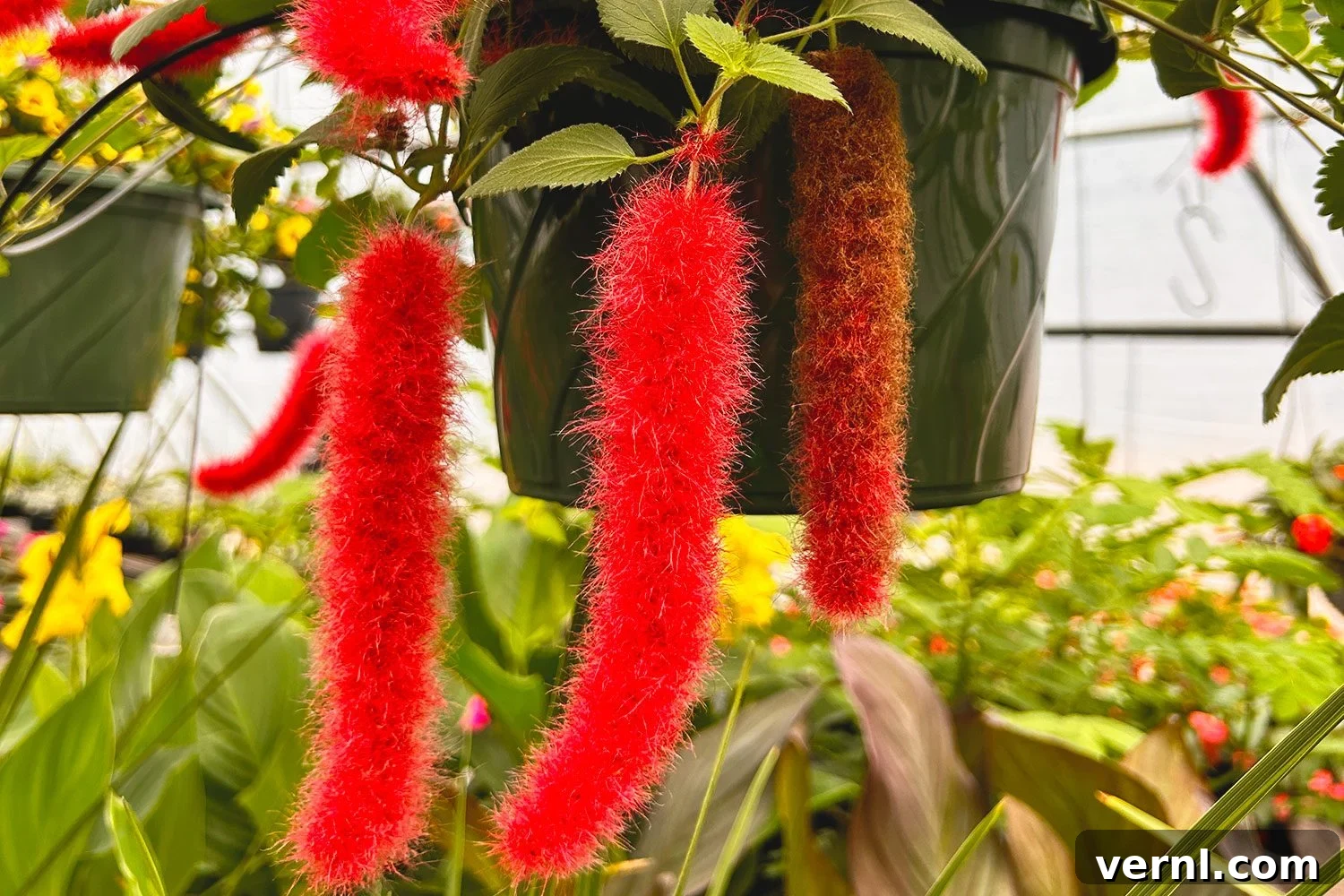
Here at Family Handyman, our passion for flora knows no bounds. From the resilient and vibrantly colorful additions to our gardens to those plants demanding a touch more finesse, we believe every bloom has its perfect spot. We’re thrilled to introduce a new, captivating favorite: the Firetail Chenille Plant, scientifically known as Acalypha pendula. This fuzzy, fuchsia, cattail-like marvel recently caught the eye of our photo editor, Darren Hartwell, at a greenhouse in Roanoke, Virginia, and we’ve been enchanted ever since.
Often described as a bizarre, Dr. Seuss-y plant, the Firetail Chenille is a masterclass in whimsical charm. Its unique appearance makes it an instant conversation starter and a delightful focal point in any garden or home. “The Firetail Chenille Plant can be an excellent choice for beginners, but it’s important to remember that it has specific requirements to truly thrive,” advises Gail Pabst from the National Garden Bureau. Whether you’re a seasoned horticulturist or just starting your green journey, this plant promises a rewarding experience.
This comprehensive guide will equip you with all the essential knowledge to successfully cultivate this extraordinary plant. We’ll delve into everything from its optimal growing conditions to propagation techniques, enriched with expert insights from Gail Pabst and Trisha Singh from Garden for Wildlife.
Meet Your New Favorite Botanical Gem: The Firetail Chenille Plant (Acalypha pendula)
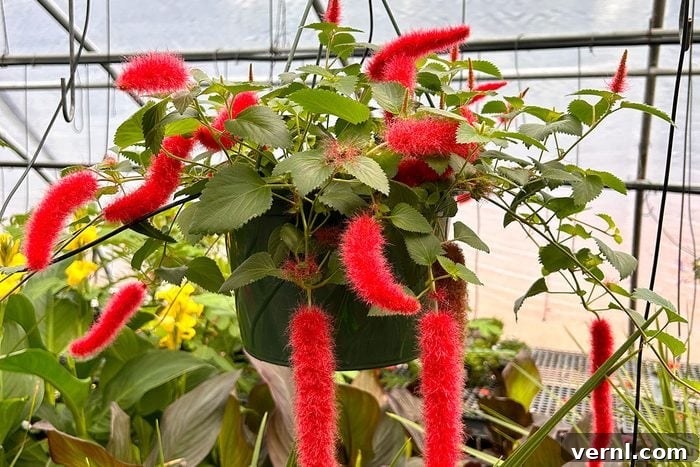
Often referred to as “monkey tails” or “red-hot cattails,” the Firetail Chenille Plant, or Acalypha pendula, is renowned for its “fluffy masses of bright red flower spikes.” These truly distinctive flowers cascade gracefully, resembling vibrant chenille fabric, hence its common name. While its leaves are relatively simple and unassuming, it’s the spectacular, fuzzy flower spikes that command attention, presenting a truly stunning visual display.
Belonging to the Euphorbiaceae family, which also includes poinsettias, Acalypha pendula is a trailing variety, making it an ideal candidate for hanging planters, window boxes, and elevated containers where its unique blooms can elegantly spill over the edges. In the United States, this captivating plant typically graces us with its vibrant blooms throughout the spring and summer months, adding a tropical flair to gardens and patios.
Originating from the tropical climates of the Philippines and New Guinea, the Firetail Chenille Plant can grow quite large in its native habitat, reaching impressive sizes of up to 18 feet tall and 8 feet wide. However, when cultivated in the United States, especially in non-native climates or as container plants, its growth is considerably more modest. Typically, it will only reach around 18 inches wide and about 5-6 inches tall, establishing a compact and manageable presence. This characteristic also makes it a superb choice for ground cover in suitable warm zones, creating a dense, colorful carpet of unique texture.
Understanding the Appeal of Acalypha Pendula
What sets the Firetail Chenille Plant apart is its unparalleled texture and vivid color. The fuzzy, elongated inflorescences are unlike most other garden plants, offering a tactile and visual experience that is both exotic and playful. Its bright, fiery red or fuchsia hues provide a striking contrast against green foliage, making it a natural focal point in any design. Its trailing habit also adds dynamic movement and softness to hard edges of containers or garden beds, enhancing vertical interest and flow.
Sourcing and Site Selection for Your Firetail Chenille Plant
Before rushing out to acquire your own Firetail Chenille Plant, it’s crucial to first assess whether your local environment can provide the conditions it needs to flourish. As Trisha Singh, vice president of product at Garden for Wildlife, explains, “While hardiness zones offer a general measure of a plant’s tolerance to regional temperatures, other critical factors such as light exposure, soil conditions, and the plant’s native range significantly influence its overall success and growth.”
The Firetail Chenille Plant thrives best in USDA Plant Hardiness Zones 9a, 9b, 10a, 10b, 11a, and 11b. In these zones, you’ll have the most favorable outdoor growing conditions to support its tropical needs. “This plant demands consistently warm temperatures, ideally sustained above 60°F (15°C), and absolutely cannot tolerate drops below 50°F (10°C) without suffering damage,” reiterates Gail Pabst. Therefore, gardeners in colder zones should plan to grow it indoors or as an annual.
Beyond temperature, the Firetail Chenille requires a location that receives full to partial sun. “Full sun” typically means at least six hours of direct sunlight per day, while “partial sun” or “partial shade” suggests four to six hours, often with protection from intense afternoon sun, especially in hotter climates. Too much direct, scorching sun can sometimes lead to leaf burn, while too little light will result in sparse flowering and leggy growth. Watch your plant’s response closely to determine the ideal light balance.
Equally important is the right soil composition. This plant flourishes in well-draining, sandy, loamy soil. Loamy soil is a balanced mixture of sand, silt, and clay, offering good drainage while retaining sufficient moisture and nutrients. An ideal pH for Firetail Chenille is slightly acidic to neutral, typically between 6.0 and 7.0. If planting in containers, use a high-quality potting mix formulated for tropical plants or amend a standard potting mix with sand or perlite to enhance drainage.
Indoor Cultivation for Colder Climates
If you reside outside the recommended hardiness zones, fret not! The Firetail Chenille Plant adapts beautifully to indoor environments or can thrive in a greenhouse, perfectly mimicking its preferred tropical climate. “When growing indoors, particularly during the colder winter months, it’s essential to provide as much light and humidity as possible,” Gail Pabst advises. This often means placing it near a bright, south-facing window, supplementing with grow lights if natural light is insufficient, and increasing ambient humidity through misting, pebble trays, or a humidifier.
During its indoor winter stay, you can slightly reduce watering and fertilizing as the plant’s growth naturally slows down. However, don’t let it dry out completely. Pabst further warns, “Without optimal conditions akin to those found in a greenhouse, it’s quite likely that the plant may show some decline in vigor over winter, but it often rebounds with the return of spring and improved conditions.”
Comprehensive Guide: How to Grow and Care for Firetail Chenille
Now, let’s dive into the most exciting part: planting and nurturing your Firetail Chenille Plant! With the right care and attention, you’ll be enjoying its unique beauty in no time.
Planting Your Firetail Chenille
- Container Selection: Choose a suitably sized container that allows for root growth, keeping in mind its trailing nature. A hanging basket or a pot with good drainage holes is essential.
- Soil Preparation: Fill your chosen container with a high-quality, well-draining loamy soil mix. If your soil is heavy clay, amend outdoor beds with organic matter, sand, or perlite to improve drainage.
- Transplanting: Carefully transplant your nursery starter into the prepared soil. Gently loosen any circling roots before placing the plant at the same depth it was in its original container.
- Initial Watering: Water the plant immediately after transplanting to help settle the soil around its roots and reduce transplant shock.
- Establishment Phase: During the initial establishment period, typically the first few weeks, it’s crucial to keep the soil consistently moist but never waterlogged. This encourages strong root development.
Ongoing Care for Thriving Blooms
Watering
Once established, the Firetail Chenille Plant appreciates consistent moisture. Throughout its active growing season (spring and summer), water it generously every 2 to 3 days, or whenever the top inch of soil begins to feel dry to the touch. The key is to ensure the soil never dries out completely, as this tropical plant dislikes drought. However, avoid overwatering, which can lead to root rot. Good drainage is paramount. In cooler months or if growing indoors, reduce the frequency of watering, allowing the soil to dry out slightly more between waterings.
Temperature and Humidity
As a tropical native, maintaining a warm environment is vital. Keep your Firetail Chenille in a location where temperatures consistently exceed 60°F (15°C). Protecting it from cold drafts and sudden temperature drops, especially below 50°F (10°C), is critical. High humidity levels are also beneficial, replicating its natural habitat. Indoors, consider regular misting, placing the pot on a pebble tray filled with water, or using a room humidifier to boost moisture in the air.
Fertilization
To encourage abundant flowering, the Firetail Chenille is a moderate feeder during its active growth phase. For best results, fertilize weekly with a half-strength balanced liquid flower fertilizer (e.g., a 10-10-10 or similar N-P-K ratio) throughout the spring and summer. During fall and winter, or when growth slows, reduce fertilization to once a month or cease altogether if the plant enters a period of dormancy. Always follow the manufacturer’s instructions for application rates to avoid over-fertilization, which can burn roots.
Pruning
Pruning is beneficial for maintaining the plant’s shape, encouraging bushier growth, and promoting more prolific flowering. Lightly prune back leggy stems or trim spent flowers as needed. This will divert energy to new growth and prevent the plant from becoming too sparse or straggly. You can prune more extensively in early spring to rejuvenate an older plant.
Pest and Disease Management
While generally robust, Firetail Chenille Plants can occasionally be susceptible to common houseplant pests like spider mites, mealybugs, and whiteflies, especially in dry indoor environments. Regularly inspect your plant’s foliage for any signs of infestation. Treat promptly with insecticidal soap or neem oil if pests are detected. Good air circulation also helps prevent fungal diseases. With consistent care and observation, your Firetail Chenille will remain a vibrant and healthy friend!
Propagation: Expanding Your Firetail Chenille Collection
Propagating the Firetail Chenille Plant is a rewarding way to create new plants and ensure you always have a fresh supply of these charming blooms. “For the best results, it’s usually recommended to take stem cuttings in early spring and start anew each year, discarding the original plant,” advises Gail Pabst. This method ensures robust and vigorous new plants, as older plants can sometimes become leggy and less floriferous.
Step-by-Step Guide to Stem Cuttings:
- Timing: The ideal time for propagation is in early spring when the plant is actively growing and before it enters its main blooming phase.
- Taking Cuttings: Select healthy, non-flowering stems that are about 4-6 inches long. Using sharp, clean pruning shears or scissors, make a cut just below a leaf node (the point where a leaf or branch emerges).
- Prepare the Cuttings: Remove the leaves from the bottom 2 inches of the cutting. This exposes the nodes from which new roots will emerge and prevents leaves from rotting when submerged in soil.
- Rooting Hormone (Optional but Recommended): Dip the cut end of each stem into a rooting hormone powder or gel. This can significantly increase the success rate and speed up root development.
- Planting the Cuttings: Prepare small pots or a propagation tray with a well-draining, sterile potting mix (such as a blend of peat moss and perlite or sand). Make a small hole in the center of the potting mix and insert the treated cutting. Gently firm the soil around the base of the cutting.
- Creating a Humid Environment: To maintain high humidity, which is crucial for rooting, cover the pots with a clear plastic bag or a propagation dome. Ensure the plastic does not touch the leaves, using stakes if necessary.
- Care During Rooting: Place the pots in a warm spot with bright, indirect light. Keep the soil consistently moist but not waterlogged. Misting the leaves periodically can also help.
- Root Development: Roots typically begin to form within 3-6 weeks. You can gently tug on a cutting to check for resistance, indicating root growth. Once a good root system has developed and new top growth appears, you can remove the plastic cover and care for the new plants as you would a mature Firetail Chenille.
Frequently Asked Questions About Firetail Chenille
Is firetail chenille the same as the chenille plant?
Yes, Firetail Chenille (Acalypha pendula) is indeed a specific variety within the broader genus of Chenille plants, Acalypha. There are several species and cultivars within the Acalypha genus, each with its own unique characteristics. For example, Acalypha hispida, often called “Red Hot Cat’s Tail” or “Foxtail Chenille,” typically grows much larger and has longer, more prominent catkin-like flowers. Acalypha pendula, the Firetail Chenille, is a more compact, trailing variety, highly favored for hanging baskets and container planting due to its smaller size and cascading habit.
How long does the Firetail Chenille Plant bloom?
Under optimal conditions, the Firetail Chenille Plant can be a continuous bloomer, often flowering from spring through summer and well into fall. In tropical climates or when grown indoors with consistent warmth and light, it can even bloom year-round, providing a continuous display of its vibrant, fuzzy spikes.
Is Firetail Chenille pet-safe?
This is a crucial question for pet owners. According to the ASPCA (American Society for the Prevention of Cruelty to Animals), plants in the Acalypha genus (including Chenille plants) are generally considered non-toxic to cats, dogs, and horses. However, it’s always wise to prevent pets from ingesting any plant material, as even non-toxic plants can sometimes cause mild stomach upset if consumed in large quantities. If you have concerns, consult your veterinarian.
What are common problems encountered with Firetail Chenille?
While relatively easy to care for under the right conditions, Firetail Chenille can experience a few common issues:
- Lack of Blooms: Often caused by insufficient light, inadequate fertilization, or temperatures that are too cold.
- Leaf Drop: Can be a sign of environmental stress, such as sudden temperature changes, too little water, or very low humidity.
- Yellowing Leaves: May indicate overwatering, nutrient deficiency, or sometimes natural aging of older leaves.
- Leggy Growth: Typically results from insufficient light, causing the plant to stretch towards a light source.
Addressing these issues usually involves adjusting light, watering, fertilizing, or temperature conditions.
About the Experts
- Trisha Singh is the vice president of product at Garden for Wildlife, a program run by the National Wildlife Federation. This initiative actively encourages the creation of wildlife-friendly gardening spaces, promoting biodiversity and ecological balance. Trisha, a dedicated wildlife biologist, is passionate about native plant gardening and committed to supporting others in their native gardening pursuits.
- Gail Pabst serves as the marketing director for the National Garden Bureau, a respected non-profit organization. The NGB plays a vital role in promoting the joys and benefits of home gardening through education and inspiration, helping countless individuals cultivate their green thumbs.