By the end of 2026, retail giant Walmart is embarking on a significant technological transformation, aiming to implement digital price labels across the vast majority of its 4,600 stores. This ambitious rollout marks a pivotal moment for the retail industry, promising enhanced efficiency and a modernized shopping experience. While many industry experts laud this move as a progressive step forward, it also ignites a crucial conversation about potential implications and consumer concerns, particularly regarding pricing strategies and the future of in-store operations.
“These small electronic displays allow stores to update their prices wirelessly, in a matter of seconds, transforming a time-consuming manual task into an instantaneous digital process,” explains attorney Martin Gasparian, a business expert at Maison Law Modesto. However, Gasparian also highlights a key area of vigilance: “The primary concern to be wary of is the potential for surge pricing, also known as dynamic pricing. Many consumers are already apprehensive about this possibility, especially given the current global economic landscape, persistent inflation, and various other economic pressures that impact household budgets.”
This comprehensive guide delves into the multifaceted aspects of Walmart’s new digital labels, exploring their operational mechanisms, the substantial benefits they offer, and the critical concerns they raise. Additionally, we’ll provide actionable tips for savvy shoppers looking to secure the best possible deals in this evolving retail environment.
Understanding Digital Price Labels
Digital Price Labels (DSLs), often referred to as electronic shelf labels or ESLs, represent a significant leap from traditional paper tags. These aren’t just simple displays; they are sophisticated electronic devices designed to revolutionize how pricing and product information are managed on store shelves. Connected wirelessly to a central store system or cloud-based platform, DSLs eliminate the arduous and error-prone process of manually printing, cutting, and swapping out paper slips for every price change.
Gordon Cummins, CEO of Cudio, a company specializing in retail software systems, emphasizes the core advantages for retailers. “Retailers are increasingly drawn to DSLs because they dramatically reduce the ‘messy gap’ – the frustrating discrepancy between the price displayed on the shelf and the price charged at the checkout counter, particularly during promotional sales events. Beyond accuracy, they also cut down on countless hours of repetitive manual labor and the associated operational costs, which is a powerful incentive driving more large retail chains in this technological direction.” The adoption of DSLs signifies not just a technological upgrade, but a fundamental shift towards more agile, accurate, and cost-effective store management.
How Walmart’s Digital Labels Function in Practice
At their core, Walmart’s Digital Shelf Labels operate similarly to those found in other advanced retail environments. They serve as dynamic displays for product prices, but their capabilities extend far beyond this basic function. Many DSLs can also showcase intricate promotional details, highlight special offers, and even incorporate scannable QR and NFC codes, enabling customers to access additional product information, reviews, or even connect to the store’s mobile app directly from the shelf edge.
Cummins sheds light on the less obvious, yet highly impactful, operational facets of Walmart’s implementation. “The less visible, but critically important, part of their functionality lies in optimizing store operations. Walmart has specifically indicated that these labels are designed to light up, serving as visual cues to help store associates quickly identify products that require restocking. This intelligent feature also guides employees in efficiently picking items for online orders, which is fundamentally about enhancing speed, precision, and overall operational accuracy behind the scenes for the workforce. This capability directly translates into faster fulfillment times and a smoother experience for both in-store shoppers and online customers.” This integration underscores a strategic investment not just in customer-facing technology, but in streamlining the complex logistics of modern retail.
The Undeniable Advantages of Walmart’s Digital Labels
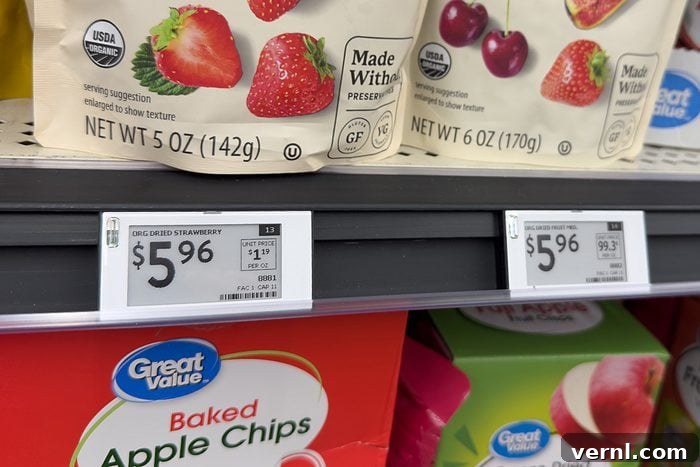
The transition to digital price labels offers a wealth of benefits that can profoundly impact both the customer experience and the operational efficiency of retail stores. For shoppers, one of the most significant and immediate advantages is the drastic reduction in frustration caused by price discrepancies between the shelf and the checkout register. This common retail annoyance, which often leads to delays and disputes, can be virtually eliminated. Moreover, DSLs allow for the instant display of new deals and promotions, ensuring that customers are always presented with the most current and accurate pricing information as soon as it goes live.
Enhanced Pricing Accuracy and Real-time Promotions
Gabriele Vitke, a dynamic pricing expert and product marketing team lead at Decodo, a data access and web intelligence platform, provides compelling data to illustrate this point. “From our extensive data collected at Decodo, we observed that a substantial 53% of Walmart’s price changes in 2025 were markdowns. With traditional paper tags, these valuable deals would often sit in a queue, waiting for manual updates. DSLs mean those attractive discounts and promotions hit the shelf immediately, providing real-time savings opportunities for shoppers.” This instantaneous update capability is a game-changer for promotional strategies, allowing retailers to be far more responsive to market conditions and customer demand.
Operational Efficiency and Cost Savings for Retailers
For the stores themselves, DSLs unlock unparalleled operational efficiency by completely eradicating the labor-intensive process of replacing paper price tags. Vitke elaborates on the scale of this impact: “The old process is excruciatingly slow and resource-intensive. For instance, a large-format store might dedicate up to two full days just to replace paper tags for major special sales events. Now, imagine multiplying that effort across tens of thousands of individual products, with weekly rollbacks, flash sales, and markdown cycles. You’re talking about burning an astronomical amount of labor hours on a repetitive task that modern technology can now handle with just a few clicks from a central system.” This dramatic reduction in manual labor frees up store associates to focus on more value-added activities, such as assisting customers, managing inventory, or fulfilling online orders, thereby improving overall store productivity and customer service.
Environmental Benefits
Beyond efficiency and accuracy, the shift to DSLs also carries an environmental benefit. By replacing millions of paper tags annually, retailers can significantly reduce their paper consumption, contributing to more sustainable business practices and lessening their ecological footprint. This aligns with a growing consumer demand for environmentally conscious businesses.
Potential Concerns and Drawbacks of Digital Labels
While the benefits of digital price labels are clear, their widespread adoption also introduces a set of potential challenges and concerns that warrant careful consideration from both retailers and consumers.
The Shadow of Surge Pricing
One of the most frequently cited concerns associated with all digital labels is the potential for surge pricing, also known as dynamic pricing. This controversial practice involves businesses altering prices based on real-time market demand, inventory levels, competitor pricing, or even external factors like weather. For example, prices might escalate during peak shopping seasons like holidays, or a retailer could theoretically raise the price of sunscreen on an unexpectedly sunny day. This real-time variability raises consumer anxiety about fairness and transparency.
Walmart, keenly aware of these public perceptions, has explicitly stated its commitment not to use DSLs for dynamic or surge pricing. Consumer psychologist and professor Ross Steinman of Widener University, who specializes in the intersection of psychology and business, believes this promise will likely hold true. “While there are legitimate concerns about the potential for surge pricing, I am confident that Walmart will be extremely reluctant to employ such a strategy. Doing so would carry a significant risk of alienating their core target markets, eroding essential brand trust, and could negatively impact their long-term brand equity, which is something a retailer of Walmart’s stature cannot afford.”
Gabriele Vitke concurs, emphasizing the fragility of consumer trust. “The trust gap is arguably the biggest risk here. Our data clearly shows that approximately half of all price changes implemented at Walmart are actually price decreases, offering savings to shoppers. However, if you survey average shoppers, most mistakenly assume that dynamic pricing exclusively means one thing: higher prices, imposed whenever stores believe they can get away with it without immediate backlash.” This highlights a crucial communication challenge for retailers implementing DSLs – to educate consumers and build confidence that the technology is used for their benefit, not exploitation.
Amplified Data Errors and Customer Experience Risks
Another significant risk associated with digital price labels is their capacity to rapidly amplify data errors across an entire store or even an entire region, explains James Lei, chief operating officer at online retailer ooShirts. “A single incorrect entry in the central pricing system – whether it’s a wrong size, an incorrect promotion, or a misconfigured discount – can instantly propagate to thousands of digital labels. This means that errors that once affected only a few physical tags can now become widespread, leading to significant financial losses for the retailer or widespread customer dissatisfaction if not quickly rectified.”
Furthermore, Lei points to potential customer experience pitfalls. “There is also a tangible customer experience risk if stores overuse flashing cues, blinking lights, or overly aggressive visual indicators on the DSLs. While designed to draw attention to deals, excessive visual stimuli can create an overwhelming ‘clutter’ effect, making shelf edges harder to read, irritating shoppers, and ultimately detracting from a smooth and pleasant shopping journey.” Striking the right balance between drawing attention and maintaining readability is critical for effective DSL implementation.
Impact on Workforce
While often presented as an efficiency tool, the introduction of widespread automation like DSLs also raises concerns about the future of jobs. Though not an immediate consequence, some fear workforce reduction in the long term. This topic is further explored in the FAQ section.
Strategic Tips for Securing the Best Prices
Navigating the dynamic landscape of modern retail, even with new technologies like DSLs, requires a savvy approach to ensure you’re always getting the most value for your money. Here are some expert-backed strategies:
Timing Your Shopping Trips
Gabriele Vitke offers invaluable insights based on pricing analytics. “Our data indicates a clear pattern: grocery prices tend to be notably higher on Saturdays and generally drop on Mondays and Wednesdays. This trend is particularly pronounced at major retailers like Walmart and Kroger. Therefore, if you have flexibility in your schedule, planning your main grocery runs early in the week could yield significant savings.” She also highlights product categories with high price volatility: “Frozen foods and dairy products exhibit the highest price volatility, with deep drop rates that can reach around 35%. Keeping an eye on these categories on low-price days could lead to substantial discounts.”
Documenting Shelf Prices
In an environment where prices can change quickly, a simple habit can protect you from potential mismatches. “If you encounter an item with an unusually good price, make it a habit to quickly snap a photo of the digital shelf label with your smartphone before you move away,” advises Gordon Cummins. This visual proof can be invaluable in resolving any discrepancies that might arise at the checkout, ensuring you receive the advertised price.
Leveraging Digital Tools and Loyalty Programs
Beyond in-store practices, utilize retailer apps and loyalty programs. These often provide exclusive discounts, early access to sales, and personalized offers that can lead to significant savings. Comparing prices across different retailers online before visiting a physical store can also help identify the best deals.
Frequently Asked Questions (FAQ)
Will digital price labels lead to surge pricing at Walmart?
Walmart has publicly committed to not using digital price labels for dynamic or surge pricing. The consensus among the experts we consulted supports this claim. James Lei elaborates: “Retailers operate under significant constraints, including the imperative to maintain brand trust, navigate competitive market expectations, adhere to stringent pricing and disclosure rules, and confront the practical reality that shoppers react extremely strongly to any perceived volatility in the prices of essential goods. These factors create a strong disincentive for implementing surge pricing on everyday items.”
How will digital labels impact jobs at Walmart?
The introduction of DSLs naturally sparks concern about potential workforce reductions. However, many experts believe that a dramatic loss of jobs is unlikely in the immediate term. Instead, employee hours previously dedicated to the repetitive task of swapping paper tags are expected to be reallocated to other critical functions. These include enhancing customer service, more efficient stocking of shelves, fulfilling the growing volume of shipping and delivery orders, and performing maintenance tasks such as replacing batteries in the DSLs themselves.
Gordon Cummins notes that “Walmart has strategically positioned DSLs not as a tool for headcount reduction, but as a technological innovation designed to make associates’ jobs easier and to ensure cleaner, more efficient store execution.” However, Gabriele Vitke offers a more nuanced perspective: “The honest answer is that this type of automation typically does lead to a reduction in the hours needed for certain tasks over time. While it may not result in immediate mass layoffs, it could foreseeably mean that fewer new positions are filled as workforce needs naturally shift and evolve with increased technological integration.”
Can digital shelf labels track customer behavior?
As they are currently configured and implemented by Walmart, the digital shelf labels are not designed to track individual customer behavior. Walmart has stated that its DSLs will operate on a “closed loop” system, meaning their functionality is strictly limited to updating prices and tracking inventory levels. Therefore, the DSLs themselves do not directly monitor your shopping habits or personal data.
However, it’s important to understand that your shopping habits are very likely still being tracked through other established channels. As Gordon Cummins explains, “The broader data ecosystem is where the bigger privacy conversation lies, not typically with the shelf tag itself.” This tracking commonly occurs through various means, including your use of retailer mobile apps, participation in loyalty accounts or rewards programs, analysis of point-of-sale (POS) transaction data, and in some retail environments, through in-store cameras or Wi-Fi signal tracking. These methods provide retailers with valuable insights into consumer behavior for marketing and operational purposes, independent of the digital price labels.
About the Experts
- Ross Steinman, PhD, is a distinguished consumer psychologist and an award-winning professor at Widener University. His primary academic and research interests lie at the fascinating intersection of psychology and business, exploring how consumer behavior is shaped by various market forces.
- Gordon Cummins is the esteemed CEO of Cudio, a specialized company dedicated to empowering retailers in the complex process of deploying, customizing, and optimizing their sophisticated software systems, ensuring seamless integration and peak performance.
- Gabriele Vitke serves as the product marketing team lead and a recognized dynamic pricing expert at Decodo, a cutting-edge platform providing unparalleled data access and web intelligence solutions. She is instrumental in leading the research behind the influential annual Dynamic Pricing Index, which meticulously tracks over 1.5 million critical data points across more than 120 e-commerce platforms globally.
- James Lei holds the position of chief operating officer at the prominent online retailer ooShirts. With extensive expertise, he brings a wealth of knowledge in areas such as SaaS (Software as a Service), robust cloud infrastructure, advanced Artificial Intelligence (AI), digital transformation strategies, emerging e-commerce trends, and innovative online shopping technology and strategies.
- Martin Gasparian is an accomplished attorney and shrewd business expert at Maison Law Modesto. Throughout his distinguished career, he has garnered invaluable experience working for various major corporations, providing legal and business insights.