
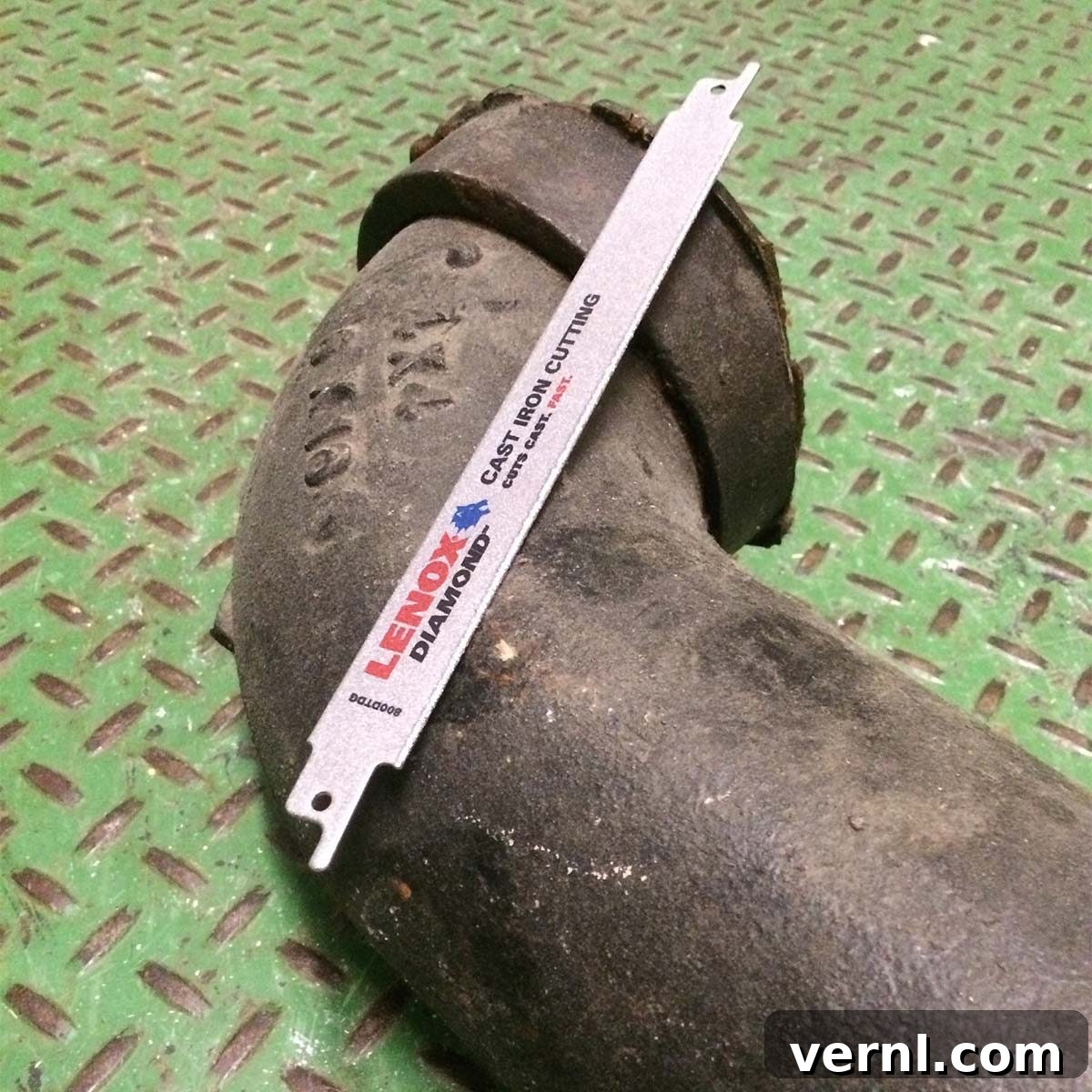
Mastering Cast Iron Pipe Cutting: Grinders, Reciprocating Saws, and the Unsung Hero – The Diamond Blade
Cutting cast iron pipes is often regarded as one of the most demanding tasks in plumbing, demolition, or home renovation projects. Its robust nature, dense composition, and often awkward locations make it a true test for any DIY enthusiast or professional. While specialized tools like a “pipe snapper” exist, they aren’t always accessible or practical for every situation, particularly for the average homeowner or a contractor facing diverse challenges. This guide delves into the most common and effective methods for tackling cast iron, offering insights into their performance, limitations, and the critical role of the right blade.
For years, my go-to strategy for this formidable task has been an angle grinder equipped with a high-performance diamond blade. Its raw power and cutting efficiency are often unparalleled, making quick work of even the thickest cast iron. However, the real challenge emerges when working in constricted areas, such as under sinks, within cramped crawl spaces, or behind existing structures, where the bulk of a grinder becomes a significant hindrance. In these scenarios, the reciprocating saw traditionally steps in, albeit with its own set of frustrations. Standard metal-cutting or carbide-grit blades tend to be excruciatingly slow and, worse yet, suffer rapid deterioration when faced with cast iron, often requiring multiple blade changes just to complete a single cut on a 4-inch pipe. This constant interruption and expenditure on disposable blades can quickly turn a challenging job into a maddening ordeal.
The Traditional Powerhouse: Angle Grinder with a Diamond Blade
When you have ample space and direct access to the pipe, the angle grinder fitted with a diamond blade is unequivocally the king of cast iron pipe cutting. The sheer rotational speed combined with the abrasive power of industrial diamonds allows it to slice through the brittle material with remarkable speed and precision. This method minimizes the physical effort required and significantly shortens the project timeline. It’s the preferred choice for large-scale demolition or when replacing lengthy sections of pipe in an open environment.
Advantages of Using a Grinder:
- Unmatched Speed: A diamond grinder blade offers the fastest cutting speed for cast iron, making it highly efficient for most jobs.
- Clean Cuts: With proper technique, grinders can achieve relatively clean and straight cuts, crucial for fitting new connections.
- Power and Efficiency: High torque and RPM mean less effort and quicker completion compared to other handheld methods.
- Versatility: Grinders are multi-functional tools, capable of cutting various materials with different blades.
Limitations and Considerations:
- Space Constraints: This is the primary drawback. Grinders are bulky and cannot access tight corners, pipes close to walls, or pipes nestled within floor joists.
- Safety Concerns: Grinders produce a significant amount of sparks, dust, and noise. Eye protection, hearing protection, gloves, and a respirator are absolutely mandatory. The sparks can also be a fire hazard, especially in older homes with sawdust or insulation.
- Smoke Alarms: The intense heat and fine metallic dust generated by a grinder can easily trigger nearby smoke alarms, causing inconvenience and requiring ventilation.
- Kickback Risk: Improper handling can lead to dangerous kickback, requiring a firm grip and proper stance.
The Reciprocating Saw: A Necessary Compromise, Until Now
For those tight, confined spaces where a grinder simply won’t fit, the reciprocating saw has long been the only viable handheld alternative. Its slim profile and ability to cut in awkward positions make it indispensable. However, the experience of cutting cast iron with traditional reciprocating saw blades has historically been less than ideal. Metal-cutting blades, designed for softer steels, quickly lose their edge against the brutal hardness of cast iron. Carbide-grit blades fare slightly better but are still agonizingly slow and expensive, often succumbing to the material after just one or two cuts. The frustration of stopping to change blades, the slow progress, and the significant expense of consumable blades have made this method a dreaded last resort.
The Frustration of Traditional Reciprocating Saw Blades:
- Slow Cutting Speed: Even with new blades, the cutting process is painstakingly slow, demanding significant patience and physical exertion.
- Rapid Blade Wear: Cast iron aggressively dulls and destroys traditional blades, leading to frequent replacements and increased project costs.
- Cost Inefficiency: Going through two or three expensive blades for a single pipe cut quickly adds up, making the project more expensive than anticipated.
- Increased Project Time: Constant blade changes and slow cutting significantly prolong the duration of the task.
The Game Changer: The Diamond Reciprocating Saw Blade
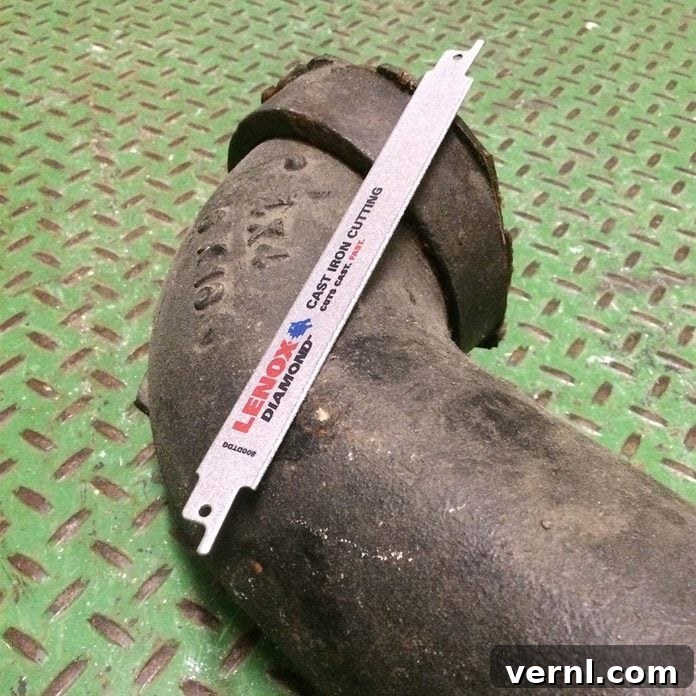
Driven by the persistent challenges of cutting cast iron in tight spots, I recently decided to explore a promising alternative: the diamond reciprocating saw blade. Available from various brands at most home centers, these blades typically range from $10 to $20 each. For my test, I utilized a 9-inch Lenox version, which featured an ingenious design with tangs on both ends. This smart feature allows you to flip the blade over and use the other end once one section starts to dull, effectively doubling its lifespan and value. This innovation alone piqued my interest, hinting at a more efficient and cost-effective solution.
My experience with this specialized blade proved to be a revelation, transforming what was once a source of dread into a manageable task. Here’s what I discovered:
- Enhanced Cutting Speed: The diamond recip blade demonstrably cut faster than both carbide-grit and standard metal-cutting teeth blades. While it couldn’t match the blistering speed of a diamond grinder blade, it offered a significant improvement over traditional reciprocating saw options. This acceleration in cutting speed made a noticeable difference in project efficiency.
- Unprecedented Durability and Longevity: This was perhaps the most impressive characteristic. Even after completing two challenging 4-inch pipe cuts, the blade showed no perceptible signs of dulling or slowdown. It continued to perform consistently, a stark contrast to traditional blades that would have been rendered useless. This remarkable durability translates directly into cost savings and fewer interruptions.
- Exceptional Resilience: Working in confined and awkward spaces often requires bending the blade to navigate obstacles or achieve the right angle. I intentionally, and sometimes unintentionally, subjected the blade to severe bends—a dozen times or more. To my genuine surprise, it withstood these rigorous stresses without breaking. This flexibility and resilience are invaluable in real-world applications where perfect cutting angles are a luxury.
- Bonus: No Smoke Alarm Shenanigans: An unexpected, yet highly appreciated, benefit was the absence of triggered smoke alarms. My grinder invariably sets off nearby alarms due to the intense sparks and fine dust it produces. The diamond recip blade, operating with less friction and heat, minimized these irritating disruptions, allowing for a more peaceful and uninterrupted work environment. This might seem like a minor detail, but anyone who’s had to deal with blaring alarms mid-project knows its true value.
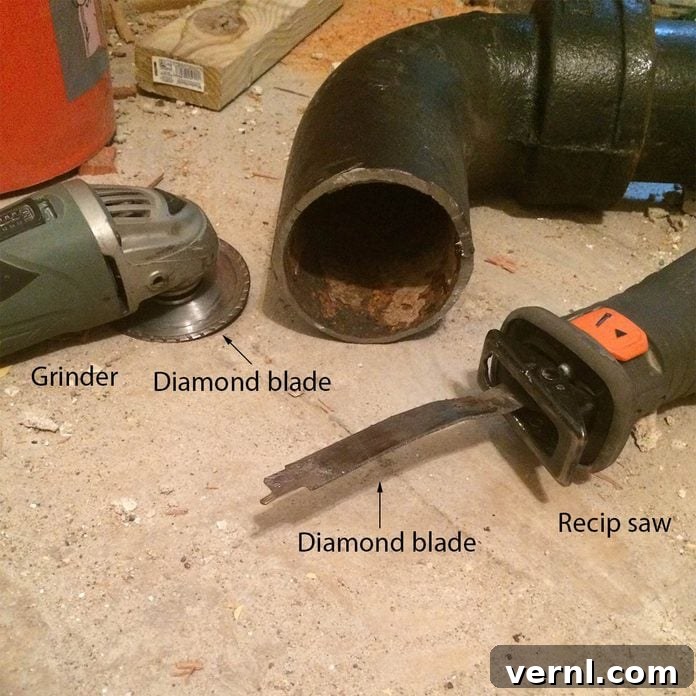
Comparative Analysis: Grinder vs. Diamond Recip Blade
To summarize, the choice between these two powerful tools boils down to the specific demands of your project:
- Speed vs. Agility: The grinder with a diamond blade reigns supreme in terms of raw cutting speed and power, ideal for open spaces. The diamond reciprocating saw blade, while slower, offers unparalleled agility and access in tight, confined areas.
- Blade Longevity: Both diamond blades offer exceptional durability compared to their non-diamond counterparts. The diamond recip blade, in particular, stands out for its resilience against bending and prolonged use in cast iron.
- Safety & Environment: Grinders generate significant sparks, dust, and noise, necessitating extensive PPE and ventilation, and often triggering smoke alarms. Reciprocating saws, especially with diamond blades, are generally cleaner, quieter, and less prone to causing fire hazards or alarm activations, making them preferable for indoor, occupied spaces.
- Cost Efficiency: While diamond blades for both tools have a higher initial cost than traditional blades, their extended lifespan and superior performance against cast iron make them far more cost-effective in the long run. You save money by not having to constantly replace cheap, quickly dulled blades.
The Bottom Line: A Balanced Approach to Cast Iron Cutting
After extensively testing both methods, my preferred strategy for cutting cast iron pipes has evolved to embrace a balanced approach. The angle grinder, paired with a robust diamond blade, will absolutely remain my first choice for any job that offers sufficient clearance and accessibility. Its efficiency and speed are simply unmatched when conditions permit.
However, for those inevitable scenarios where space is at a premium and a grinder is impractical or unsafe, the diamond reciprocating saw blade has proven to be an indispensable tool. It has completely replaced my reliance on traditional, frustratingly slow, and rapidly degrading metal-cutting or carbide-grit blades. The diamond recip blade offers a potent combination of improved cutting speed, incredible durability, and surprising flexibility, making it the ideal solution for tackling cast iron in the most challenging of environments. This intelligent addition to my toolkit has made a once-dreaded task significantly more manageable, efficient, and ultimately, far less frustrating.
Whether you’re a seasoned plumber or a DIY enthusiast embarking on a home renovation, investing in the right diamond blades for both your grinder and reciprocating saw will fundamentally change your approach to cutting cast iron, saving you time, money, and a considerable amount of headache. Make sure to always prioritize safety by wearing appropriate personal protective equipment (PPE) regardless of the tool you choose.