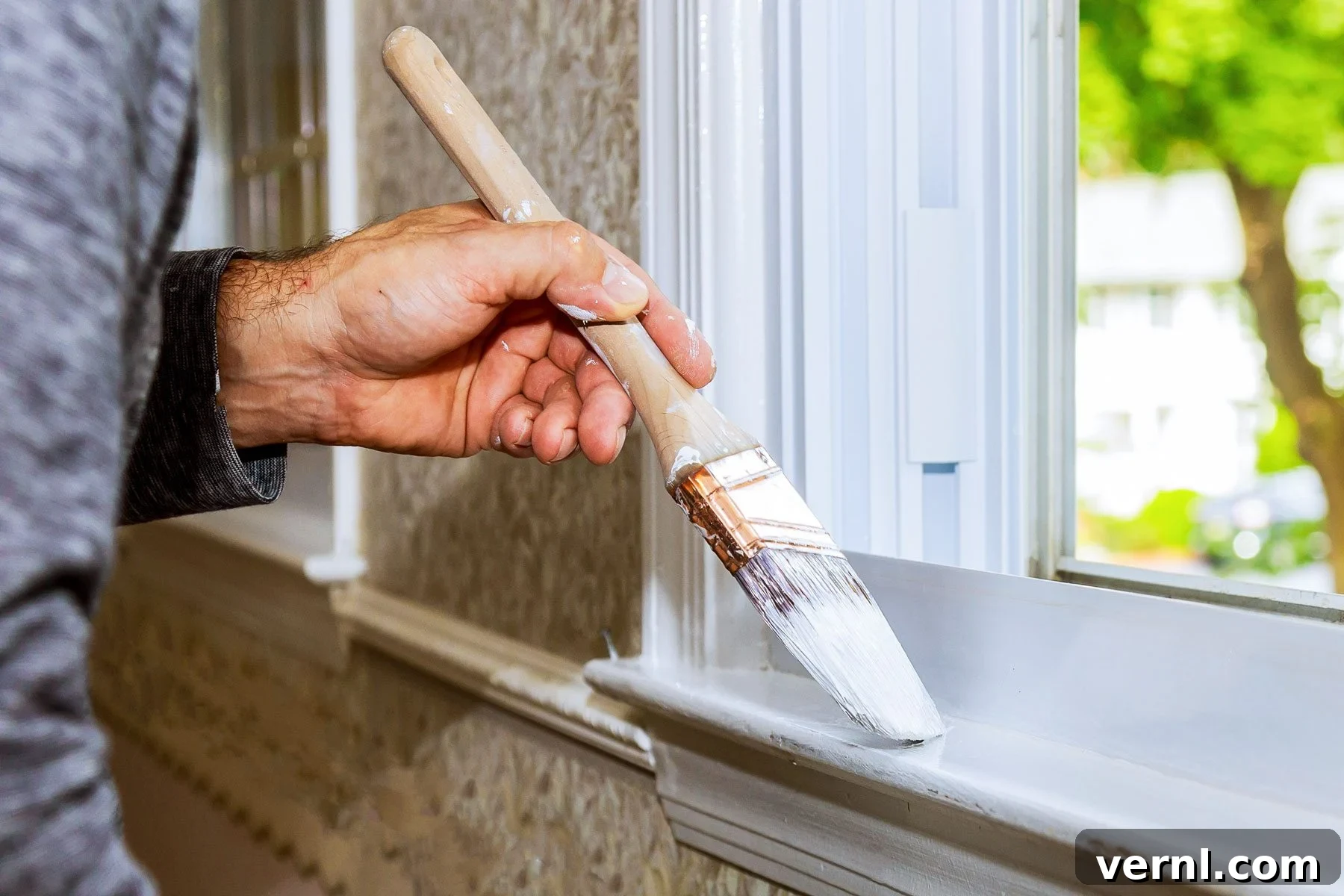
In the realm of home aesthetics, where every detail contributes to the overall charm and character of a space, trim often plays an unsung but vital role. Surrounding our walls, windows, floors, and doors, trim acts as the elegant framework that allows the rest of your home to truly shine. Much like a meticulously chosen frame elevates a piece of art, well-maintained trim defines the architectural elements of your home, adding a touch of sophistication and completeness. However, these crucial architectural details are constantly subjected to daily wear and tear, which can significantly detract from your home’s appearance over time.
“Trim borders everything and makes the whole space look cleaner and more intentional,” explains Todd Berry, a seasoned project coordinator at Emerald Painting. This highlights why addressing any signs of damage on your trim isn’t just about aesthetics; it’s about preserving the integrity and perceived value of your home. From scuffs and dings to fading paint and chipped edges, damaged trim can make an otherwise pristine room feel neglected.
Fortunately, the task of painting trim is a highly manageable DIY project for most homeowners, according to Steve Hester, Vice President of Hester Painting & Decorating. With careful attention to detail and a methodical approach, homeowners can achieve professional-looking results. The key lies in following established guidelines and dedicating sufficient time to each step of the process. For those who feel uncertain about their skills or patience, enlisting the help of a professional painter remains a wise option, ensuring a flawless finish without the stress. But for the eager DIY enthusiast, the satisfaction of transforming your home’s trim is well within reach.
If you’re ready to refresh your home’s appearance and enhance its architectural beauty with a DIY trim painting project, these expert tips will guide you every step of the way.
About the Experts
Todd Berry is a project coordinator at Emerald Painting in Kaneohe, Hawaii, bringing extensive experience in ensuring high-quality finishes.
Steve Hester is the Vice President of Hester Painting & Decorating, a renowned company servicing the Chicago metropolitan area, known for its expertise in residential and commercial painting.
Nick Slavik is the owner of Nick Slavik Painting and Restoration Co. in New Prague, Minnesota. With over 25 years of experience, Nick is a respected professional painter and educator in the industry.
Prioritize Safety: Essential Precautions Before You Begin
Before you even think about picking up a paintbrush, safety must be your absolute priority, especially when dealing with older homes. The primary concern is lead-based paint. If your home was constructed before 1978, there’s a significant chance that the existing paint on your trim contains lead. “If the home was built prior to 1978,” Steve Hester advises, “you should follow the Environmental Protection Agency’s rules for lead paint safety.” This isn’t just a recommendation; it’s a critical health measure. Lead dust, created during sanding or scraping, can be highly toxic, particularly for children and pregnant women.
Invest in an EPA-approved lead test kit, which are readily available at most hardware stores. If the test reveals the presence of lead, it’s crucial to either hire an EPA-certified lead abatement professional or strictly adhere to lead-safe work practices outlined by the EPA, which include containment, specialized respirators, and proper disposal. Once you’ve confirmed that your trim paint is lead-free, or if you’ve safely mitigated any lead hazards, you can proceed with your painting project with peace of mind. Beyond lead, always ensure good ventilation, wear appropriate personal protective equipment like gloves and eye protection, and keep the work area tidy to prevent slips and falls.
Start with a Thorough Cleaning: Preparing Your Trim Surface
The foundation of any successful paint job lies in meticulous surface preparation, and for trim, this begins with a thorough cleaning. After you’ve taken the necessary steps to protect your floors and furniture with drop cloths and established a contained work area to manage dust and odors, it’s time to tackle the trim itself. As Nick Slavik points out, “We typically wash trim before sanding. Grease and grime on the trim can gum up sandpaper, making your sanding efforts less effective and potentially damaging your sandpaper.”
Over time, trim accumulates a surprising amount of dirt, dust, grease, fingerprints, and other residues. These contaminants prevent new paint from adhering properly, leading to peeling, chipping, or an uneven finish. Use a mild detergent solution or a TSP (trisodium phosphate) substitute, mixed according to the manufacturer’s instructions, and a clean sponge or cloth. For stubborn grime, a soft brush might be necessary. Wipe down all surfaces of the trim, paying special attention to high-traffic areas and corners. After cleaning, rinse the trim with a clean, damp cloth to remove any soap residue, and allow it to dry completely. This step is non-negotiable for ensuring optimal adhesion and a durable, professional-looking result for your newly painted trim.
Next, Sand the Trim for a Flawless Finish
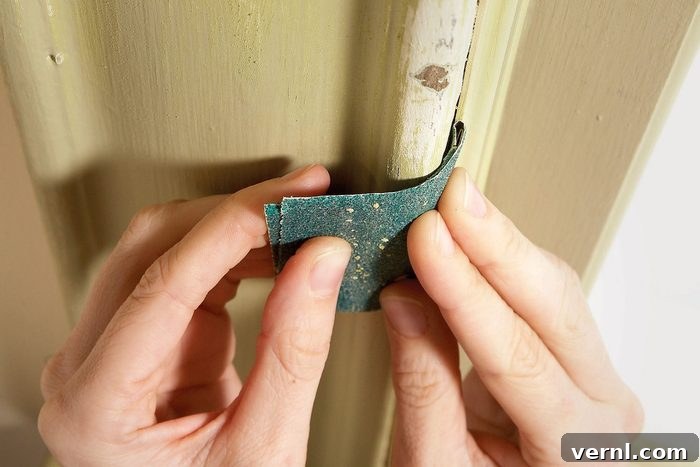
Sanding is a critical step that many DIYers are tempted to skip, but it’s essential for achieving a smooth, professional-grade finish and ensuring excellent paint adhesion. Todd Berry suggests that “most homeowners can stick to 220-grit sandpaper” for general sanding, which is ideal for lightly scuffed or previously painted trim that just needs a little roughing up for the new paint to grip. However, if your trim is in particularly rough shape, perhaps with significant nicks, deep scratches, or multiple layers of old, peeling paint, you’ll need a more aggressive approach.
In such cases, begin with a coarser 80-grit sandpaper to remove major imperfections and old paint layers effectively. Once the worst of the damage is addressed, transition to 100-grit sandpaper to smooth out the surface and blend any areas where the paint was heavily layered. Finally, go over all the wood with 120-grit sandpaper. This progression ensures you remove imperfections without leaving deep sanding marks. “Giving it a proper sanding will make sure the surface is smooth and free of defects,” Berry emphasizes. A smooth surface is paramount not only for aesthetic appeal but also because it makes it significantly easier to apply paint evenly, which can drastically cut down on the time required to finish the project and achieve a uniform coat. After sanding, meticulously clean off all sanding dust using a shop vacuum, followed by a tack cloth, to ensure no particles compromise the paint adhesion.
Properly Prime the Trim: The Foundation of Durability
Priming is often considered the unsung hero of a long-lasting paint job, and nowhere is this more true than with trim. “I’m a firm believer that trim should be primed first, then caulked,” states Nick Slavik, underscoring its importance. Priming before caulking or patching ensures that these fillers adhere properly and also prepares the surface uniformly.
Steve Hester concurs, highlighting the necessity of priming all raw surfaces. If your trim is new, unpainted wood, or if you’ve sanded down to the bare wood in certain spots, priming is non-negotiable. Todd Berry adds that “oil primer is the best choice for raw wood trim you’re likely to find in new builds,” as it seals the wood, prevents tannin bleed-through (discoloration from natural wood resins), and provides superior adhesion.
But priming isn’t just for raw wood. “We prime everything, or do an adhesion test to determine if priming is needed,” Slavik explains. This meticulous approach is due to a common failure point: “When trim painting fails, it usually fails with adhesion.” A good primer creates a strong bond between the trim surface and the new topcoat, ensuring durability and preventing chipping or peeling. Slavik also strongly recommends an oil-based primer for its excellent sealing and adhesion properties. A high-quality primer also helps in achieving a more uniform final color, as it prevents the porous wood from absorbing paint unevenly and allows for a smoother, more consistent application of your chosen topcoat. Apply primer in a thin, even coat, allowing it to dry completely according to manufacturer instructions before moving to the next steps.
Fill Any Holes and Dents for a Flawless Canvas
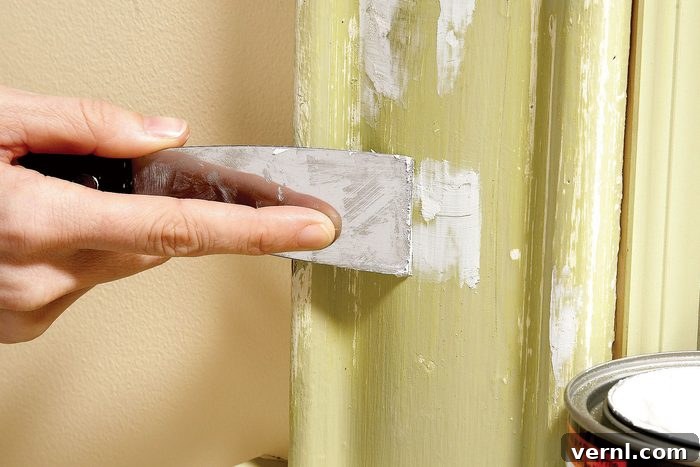
After priming, inspecting your trim for any remaining imperfections like holes, dents, or gouges is crucial for achieving a truly smooth and professional finish. The type of filler you choose depends on the size and depth of the damage. For larger dents, chips, or gouges, especially on edges that are vulnerable to impact, a hardening-type two-part wood filler is your best bet. These fillers are incredibly durable once cured and can be sanded, stained, and painted just like real wood. You can purchase wood filler online, at any home improvement store, or for the truly adventurous, you can even take a stab at making your own. Apply it with a putty knife, slightly overfilling the damaged area, then allow it to dry thoroughly.
For smaller dents, nail holes, or minor surface imperfections, spackling compound is typically sufficient. It’s easier to work with and sands smoothly. However, spackling compound tends to shrink as it dries, so you’ll often need to apply a second and possibly a third coat to achieve a flush repair. Apply thin layers, allowing each to dry completely before applying the next.
After each application and drying period, use a bright work light to shine across the woodwork. This technique dramatically highlights any subtle depressions or uneven spots that you might have missed under normal lighting. Once you’re fully satisfied that all imperfections are addressed, gently sand the filled areas smooth and flush with the surrounding trim. Use fine-grit sandpaper (220-grit) for this step to avoid scratching the primed surface. Remember to clean off all sanding dust before proceeding.
Caulk to Avoid Gaps and Cracks: Sealing for a Seamless Look
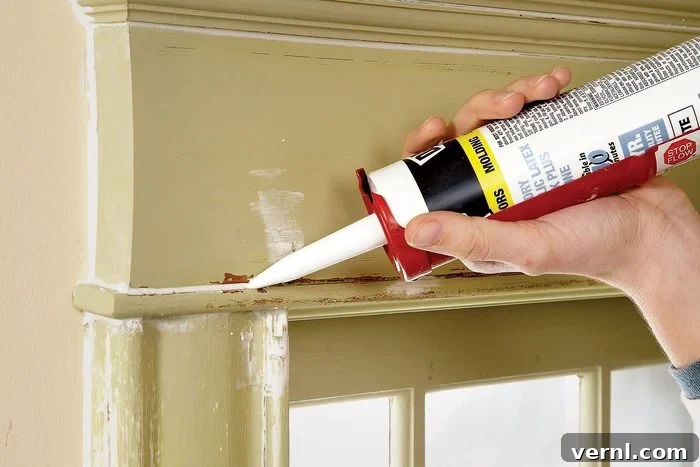
Once your trim is primed, filled, and sanded smooth, the next crucial step is caulking. This process seals any gaps or cracks that exist between the trim and the wall, or between trim pieces themselves, creating a cohesive, professional, and finished appearance. “If there are any cracks or nail holes, that’s when you’ll want to start caulking,” Todd Berry advises. Beyond aesthetics, sealing these openings is a practical measure. “Sealing those cracks can protect your trim from things like water damage in the future and make the paint job last longer,” he adds, highlighting the functional benefits of this step.
For interior trim, use a high-quality latex (acrylic) caulk or a paintable latex/silicone blend. These types offer flexibility, good adhesion, and are easy to clean up with water. The key to successful caulking is precision. Begin by cutting the tip of your caulk tube carefully, creating a very tiny hole. This allows for fine, controlled beads. Start by filling all the small, hairline cracks. Once those are addressed, if you encounter wider gaps, you can then recut the tip of the tube to make a slightly larger opening for a more generous bead.
Apply the caulk by moving the gun swiftly and steadily along the crack, maintaining consistent pressure. This technique helps prevent excess caulk buildup, which can look messy. If you do get too much caulk, or if you need to smooth the bead, lightly run a wet fingertip along the fresh caulk line. Keep a damp rag in your pocket to wipe your finger clean frequently and prevent the caulk tube tip from drying or gumming up. For corners where caulk might pile up, a flexible putty knife can be used to carefully remove the excess and create a crisp line. If you’re new to caulking, practicing on scrap material first can build confidence, or follow these expert-approved tips for a flawless application.
Choose the Right Paint: Durability Meets Aesthetics
Selecting the appropriate paint is paramount for the longevity and aesthetic appeal of your trim. While there are various options, most painting professionals have distinct preferences. Historically, oil-based paint has been the top choice for trim for a couple of key reasons. Firstly, it doesn’t dry as quickly as water-based paint, providing a more extended working time, which is invaluable for intricate trim work and allows for better ‘laying off’ techniques. Secondly, oil-based paint typically levels out better, resulting in an exceptionally smooth surface with minimal visible brush marks, yielding a truly refined finish. However, oil-based paints come with significant drawbacks, including higher VOC (Volatile Organic Compound) emissions, stronger odors, and more difficult cleanup requiring mineral spirits.
For these reasons, particularly for DIYers, water-based enamel paints have become increasingly popular. They are more environmentally friendly, have low odor, and are much easier to clean up with just water. Todd Berry notes that “most homeowners he works with choose a gloss finish for their trim because it’s easier to clean.” While gloss provides excellent durability and washability, Steve Hester recommends “higher end products with a satin enamel or semi-gloss finish,” particularly from reputable brands like Benjamin Moore or Sherwin-Williams. Satin or semi-gloss offer a subtle sheen that is still highly durable and easy to clean, but with a less reflective appearance than full gloss, often preferred for a more contemporary look. Nick Slavik points out that he and his painters often opt for water-based enamel, especially since “oil-based enamel isn’t readily available” in all regions or formulations due to stricter VOC regulations. Ultimately, the best paint for your trim balances desired finish, durability, ease of application, and environmental considerations.
Paint From a Separate Bucket or Pail: Enhancing Control and Efficiency
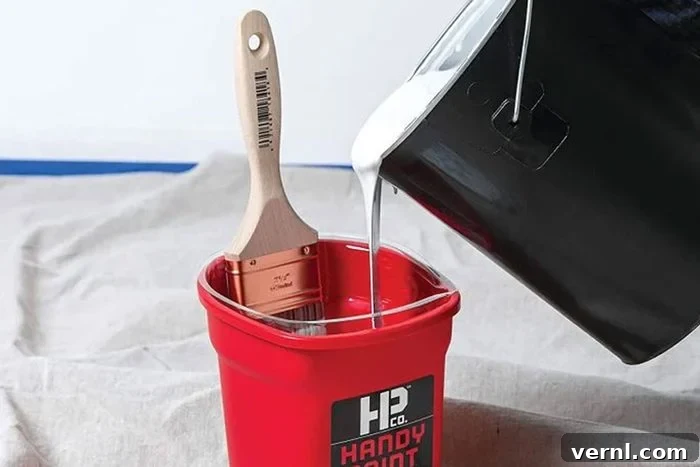
This might seem like a small detail, but painting from a separate bucket or pail, rather than directly from the paint gallon can, is a game-changer for efficiency and control. Todd Berry emphasizes its importance: “it’s essential to work out of a different bucket or pail so you can easily bump or slap the brush against the side to remove excess paint.” Standard paint cans are typically filled so close to the brim that attempting to scrape excess paint from your brush is nearly impossible without spilling. This often leads to overloaded brushes, messy drips, and uneven application.
By pouring a manageable amount of paint into a smaller container, such as a dedicated paint pail or a clean plastic bucket, you create a much more functional workspace. This setup allows you to dip your brush just about one inch into the paint, loading the bristles precisely without oversaturating them. The side of the pail provides an ideal surface to gently tap or scrape off any excess paint, ensuring your brush holds just the right amount for controlled application. This enhanced control is particularly essential when painting smaller, detailed areas like trim, where precision is key to avoiding paint on adjacent walls or ceilings. It also helps keep your main gallon of paint clean and free from debris, preserving its quality for future use.
Use the Proper Brushstrokes to Paint Precisely: The Art of Application
After years immersed in the painting industry, Steve Hester distills his primary advice for homeowners down to one core principle: “Paint with precision.” Achieving a smooth, professional-looking trim relies heavily on meticulous application and a good understanding of brush control. “To keep paint from dripping or running on your trim, you need to put on an even coat of paint,” Hester explains. The temptation to apply a thick, single coat to save time often backfires, leading to unsightly runs and drips that mar the finish. “Don’t overload the brush with material,” he warns. “If there is a need for another coat, then add a second coat. Don’t try to make it cover in one coat because that can lead to runs.” Thin, even coats, applied patiently, are the secret to a durable and beautiful finish. This approach also allows the paint to cure properly, enhancing its durability over time.
Mastering Cutting-in the Edges for Crisp Lines
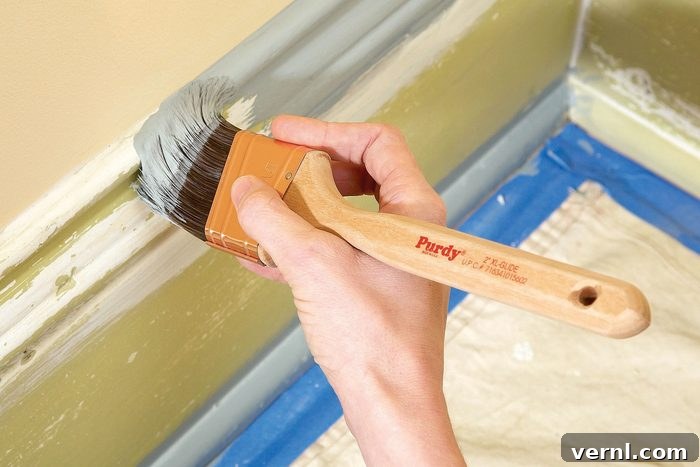
Cutting-in is the art of painting a straight line where two different colors meet, typically where the trim meets the wall or ceiling. It’s a skill that takes practice to master, but it’s absolutely worth the effort for achieving clean, professional-looking results without painter’s tape. An angled sash brush is usually the best tool for this task, offering superior control.
To cut in effectively, first load your brush with paint, then gently scrape off most of the excess paint on the edge of your pail. You want the bristles loaded but not dripping. Begin by pulling the brush along the edge of the trim, but keep the bristles about 1/4-inch away from the wall or ceiling. This deposits a small ‘bead’ of paint on the wood, near the line. Now, return with another brushstroke, this time a little closer to the line, allowing the paint from the first pass to act as a guide. This method of “sneaking up” to the line is far easier than trying to hit it perfectly on your first attempt. As you reach the end of your stroke, gently arc the brush away from the cut-in line to avoid creating a thick buildup. Cut in a few feet at a time, ensuring you work quickly enough that the paint remains wet for the next technique.
Achieving Smoothness with the Lay-on, Lay-off Technique
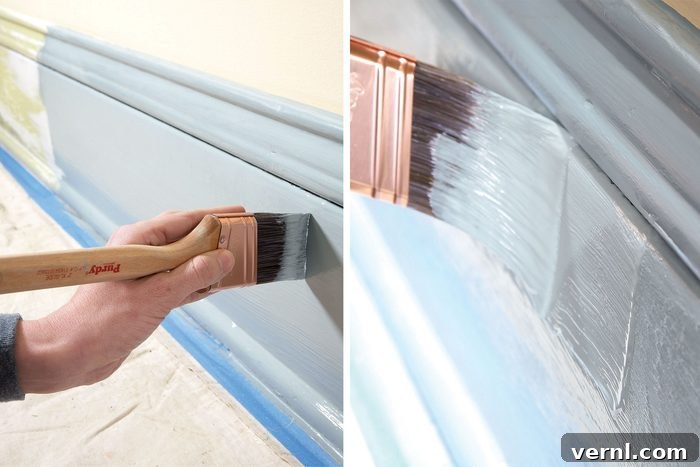
Once you’ve cut in the edges of a section of trim, the “lay-on, lay-off” technique is essential for filling the middle area smoothly and avoiding visible brushstrokes. This two-part method ensures a uniform and glass-like finish.
First, “lay on” the paint: load your brush, then quickly and generously unload the paint onto the surface of the trim using a few back-and-forth brushstrokes. Don’t worry about perfection at this stage; the goal is simply to get sufficient paint coverage over a small section (a few feet of trim). Repeat this until the desired area is covered. The key here is speed to ensure the paint remains wet.
Next, without reloading your brush, “lay off” the paint. This involves lightly dragging the tips of the bristles over the wet paint in one long, continuous, and very light stroke. The objective is to gently smooth out the paint you just laid on, removing any brush marks or imperfections. Start your lay-off stroke in the unpainted area just next to your freshly laid paint, and gently drag into the wet paint. As you finish each stroke, sweep your brush up and off the surface to avoid creating a hard stop mark. For wider pieces of trim, you’ll need several parallel laying-off strokes to cover the entire width, ensuring they slightly overlap to blend seamlessly. The critical factor is to work quickly; never brush over partially dried paint, as this will create texture and streaks. By mastering this technique, you’ll achieve a truly professional, brushstroke-free finish on all your trim.
Don’t Brush Across an Edge: Prevent Drips and Buildup
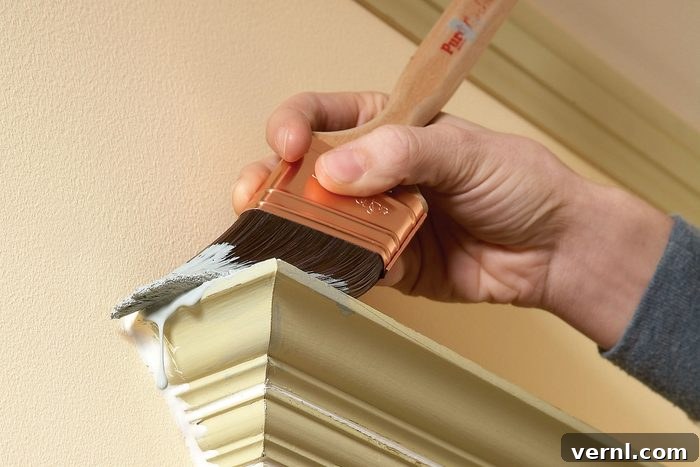
One common mistake that leads to frustrating drips and heavy paint buildup on trim is brushing across an edge. When you drag your brush perpendicular to an edge, it effectively wipes paint from the bristles, depositing an excessive amount of material right along that critical line. This thick accumulation is highly prone to running or dripping, ruining your crisp lines and requiring immediate cleanup or sanding once dry.
To avoid this, always strive to brush parallel to the edges whenever possible. Instead of wiping your brush along the edge, which creates that unwanted buildup, approach the edge as if you are cutting-in: carefully align the bristles and guide them precisely. If you absolutely must start a brushstroke directly at an edge, ensure your brush is not overloaded and gently place the bristles down rather than dragging them across. Should you accidentally create an area with too much paint that threatens to run, address it immediately. You can gently spread out the excess paint with a dry paintbrush, or quickly wipe it away with a damp rag or even your fingertip before it has a chance to set. Timely intervention is key to maintaining a clean and professional finish.
Air Out the Area: Ventilation for Health and Faster Drying
Proper ventilation is a crucial, yet often overlooked, step that contributes to both your health and the quality of your paint job. “If everything is closed up your home will smell like paint for days, if not weeks,” Todd Berry explains. This isn’t just an annoyance; it can be a health concern. “People with breathing issues or respiratory illnesses could be affected by paint fumes.”
Opening windows and doors creates cross-ventilation, which helps dissipate harmful volatile organic compounds (VOCs) released by paints and primers. This is especially important during application and while the paint is drying between coats and after the final coat. Utilizing fans, such as box fans placed in windows or oscillating fans within the room, can significantly improve air circulation, drawing fresh air in and expelling paint fumes. This not only makes the painting environment safer and more comfortable but also aids in faster and more even drying of the paint. Better drying means less waiting time between coats and a harder, more durable finish. Ensure ventilation is maintained for several hours, or even days, after the final coat, especially if using oil-based paints which have a longer off-gassing period. Your respiratory health and the freshness of your home will thank you.