Do you find yourself constantly battling to cultivate a healthy, green lawn in those stubborn, shady corners of your yard? If so, you are certainly not alone. Many homeowners experience frustration when conventional turf grass, even varieties labeled “shade-tolerant,” struggles to thrive in low-light environments, resulting in thin, patchy, and often unsightly areas that detract from your home’s curb appeal. The endless cycle of reseeding, watering, and fertilizing can be both time-consuming and disheartening when faced with consistently poor results.
I personally faced this exact challenge in my own yard. A majestic pine tree cast a significant shadow, creating an impossible environment for traditional grass. I tried every trick in the book: adjusting my watering schedule, enriching the soil with various amendments, and even aerating the compacted ground. Yet, no matter my efforts, a vibrant lawn remained an elusive dream. What *did* flourish, however, was moss. Initially, I saw it as an adversary, diligently tearing it out to make way for yet another futile attempt at growing grass seed. Over time, a realization dawned: it made far more sense to work in harmony with nature and embrace what truly wanted to grow there. I shifted my focus, actively encouraging the moss to expand, and eventually, it completely transformed that challenging area, replacing the struggling grass with a lush, verdant carpet. Looking back, it’s a decision I’ve never regretted.
The benefits have been remarkable. I’ve eliminated the need for regular mowing, significantly reduced my water consumption, and completely stopped applying chemical fertilizers. My moss lawn remains beautifully green throughout the entire season, effortlessly maintaining its appeal. As Eric Tiedeman-Mau, a knowledgeable expert from Gardener’s Supply, wisely states, “The more you’re willing to accept and encourage plants to do well where they’re doing well, the better your lawn care experience will be.” This philosophy not only simplifies yard work but also fosters a more sustainable and harmonious outdoor space.
If you’re ready to discover a stunning, eco-friendly, and remarkably low-maintenance alternative to traditional grass, read on. This comprehensive guide will walk you through everything you need to know about converting a problematic patch, or even your entire lawn, into a captivating moss landscape – a truly beautiful and sustainable solution for your garden.
Unlock the Secrets of Moss Lawns: Your Ultimate Guide to a Low-Maintenance Landscape
Embracing a moss lawn is more than just a gardening trend; it’s a strategic shift towards a more sustainable, less labor-intensive, and aesthetically unique landscape. For homeowners grappling with shaded areas or seeking an eco-conscious alternative to conventional turf, moss presents an elegant and surprisingly robust solution. Let’s delve into the fundamental aspects of this remarkable ground cover.
What Exactly is a Moss Lawn?
At its core, moss is a fascinating, non-vascular plant, meaning it lacks the complex root systems, stems, and flowers found in typical grasses. Belonging to the division Bryophyta, there are over 9,000 distinct species of moss, each possessing unique characteristics adapted to various environments. As a ground cover, moss forms dense, verdant mats that cling to surfaces, drawing moisture and nutrients directly from the air and its immediate surroundings. Unlike flowering plants, moss reproduces primarily through spores, which are microscopic and carried by wind or water, allowing it to spread effectively in favorable conditions. This ancient plant offers a naturally resilient and eco-friendly alternative to traditional grass lawns, especially in areas where turf struggles to thrive.
What Does a Moss Lawn Look Like? A Tapestry of Green
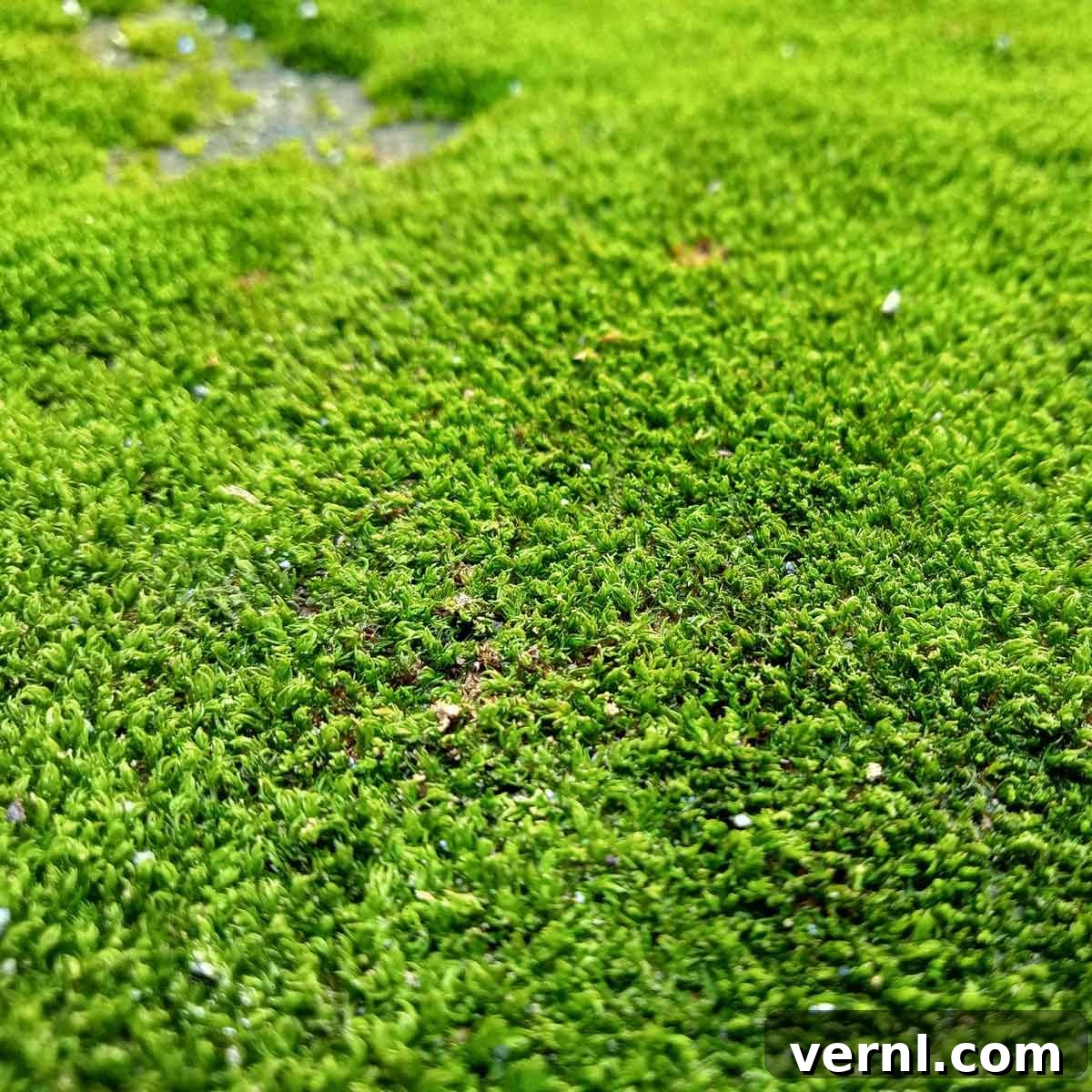
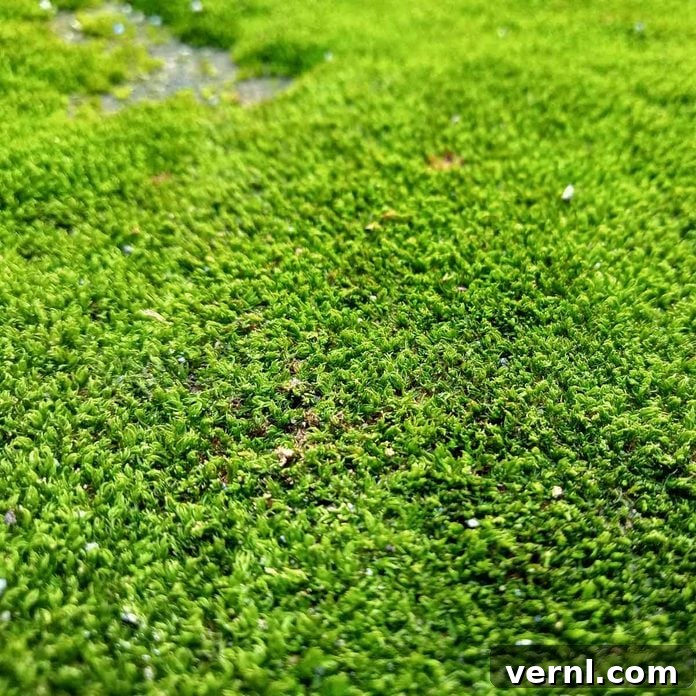
A well-established moss lawn is a sight to behold – a lush, dense, and low-lying carpet that exudes tranquility and natural beauty. Its texture is distinctly soft and fuzzy, inviting touch, and creating a serene, almost magical atmosphere in your garden. While typically associated with vibrant shades of emerald and deep forest green, moss can also present in a spectrum of other hues, including chartreuse, golden green, and even subtle reddish-brown tones, depending on the species and environmental conditions. The individual plants are tiny, often just a few millimeters tall, but they grow together in tight colonies, creating a seamless, uniform appearance. This uniform density is what gives a moss lawn its signature plush, velvety feel, making it an exquisite backdrop for other garden elements like rocks, pathways, or shade-loving perennials.
The Abundant Advantages of Cultivating a Moss Lawn
Transitioning to a moss lawn offers a plethora of benefits that extend beyond mere aesthetics, impacting your wallet, your leisure time, and the environment. Here’s why embracing moss could be one of the best landscaping decisions you make:
-
Effortless Establishment and Growth: Planting moss is a straightforward process, often simpler than seeding a new lawn. Once established, moss is remarkably resilient and requires minimal intervention, preferring to settle in and expand naturally.
-
Remarkable Environmental Resilience: Moss thrives in conditions where conventional grass often fails. It can survive and even flourish in a wide array of environments, particularly those with low light, compacted or poor-quality soil, and varying moisture levels. Its adaptability makes it ideal for challenging spots in your yard.
-
Exceptional Drought Tolerance: While moss appreciates moisture during establishment, mature moss lawns can endure prolonged periods without water. Unlike grass that browns and dies without consistent irrigation, moss often merely goes dormant during dry spells, quickly greening up again with the return of rain. This significantly reduces your water bill and environmental footprint.
-
Unparalleled Low Maintenance: This is arguably one of the biggest draws. As Eric Tiedeman-Mau aptly puts it, “You don’t need to mow it, and it’s quite low-maintenance.” Imagine reclaiming countless hours previously spent on mowing, edging, and weed-whacking. Moss maintains its perfect, low-lying height naturally, eliminating the need for noisy, fuel-guzzling equipment.
-
A Truly Eco-Friendly Landscape Choice: By opting for moss, you drastically reduce your environmental impact. There’s no need to apply chemical fertilizers or pesticides, which can leach into waterways and harm local ecosystems. The reduced water consumption also conserves a vital natural resource. Furthermore, moss helps prevent soil erosion, especially on slopes, and contributes to air purification by absorbing pollutants.
-
Natural Weed Suppression: Thanks to its dense growth habit, moss forms a thick, impenetrable mat that effectively chokes out most common weeds. Once established, you’ll spend far less time pulling undesirable plants, as they simply won’t have the space or light to take root.
-
Thrives in Challenging Soil: Unlike grass which demands nutrient-rich, well-draining soil, moss is far less discerning. It can flourish even in poor-quality, acidic, and compacted soils that would be detrimental to most turf varieties. This makes it a perfect solution for previously unmanageable areas.
-
Diverse Aesthetic Options: With thousands of species available, you have a wealth of choices. Different moss varieties offer unique textures, shades of green, and growth patterns, allowing you to create diverse and visually interesting moss gardens tailored to your specific aesthetic preferences and local climate.
-
Exceptional Sound Absorption: The dense, velvety carpet of moss acts as a natural sound dampener. It can absorb ambient noise, contributing to a quieter, more peaceful garden environment, particularly beneficial in urban settings or near busy roads.
Considerations: The Potential Drawbacks of Moss Lawns
While the allure of a low-maintenance moss lawn is strong, it’s important to be aware of its specific requirements and limitations. Understanding these potential challenges will help you determine if moss is the right choice for your particular landscape:
-
Specific Light Requirements: Most varieties of moss require at least partial shade to thrive, with many preferring deep shade. This means moss is not a universal solution for all lawn areas, particularly sunny, open spaces where traditional grass would excel. Attempting to grow moss in full sun will likely lead to browning and eventual decline.
-
Debris Management: Although you won’t be mowing, moss lawns do require occasional attention to remove fallen leaves, twigs, and other debris. If left undisturbed, a thick layer of organic matter can smother the moss and encourage fungal growth. Gentle raking or using a leaf blower on a low setting is usually sufficient.
-
Potential Impact on Home Resale Value: This is a point of debate. While a moss lawn can be a stunning and eco-friendly feature, it might not appeal to every prospective homebuyer. Many buyers still favor conventional turf grass, which could potentially lower your home’s perceived resale value for a segment of the market. However, for buyers seeking unique, sustainable landscapes, it could be a significant draw.
-
Vulnerability to Foot Traffic: “Moss doesn’t take foot traffic very well,” cautions Tiedeman-Mau. “You’ll tear it up playing a game of soccer on it, for instance.” Its delicate structure means it’s not ideal for high-traffic areas, children’s play zones, or sports fields. It’s best suited for serene garden paths, contemplative spaces, or areas where occasional light foot traffic is expected.
-
Pet Damage Concerns: Similar to heavy human foot traffic, the claws of dogs and other pets can easily tear and dislodge moss, creating unsightly patches. If you have active pets, consider fencing off moss areas or dedicating separate spaces for pet activity to protect your delicate moss carpet.
Transforming Your Yard: A Step-by-Step Guide to Growing a Moss Lawn
Creating a beautiful and thriving moss lawn is a rewarding endeavor that begins with understanding and replicating the conditions moss naturally favors. Unlike grass, moss doesn’t fight against its environment; it embraces it. The key to success lies in proper site selection and preparation.
- 1. Choose the Perfect Location: The single most crucial step is selecting the right spot. Moss will not grow successfully in sunny, hot parts of your yard. Instead, identify areas that receive consistent shade – dappled light, partial shade, or even deep shade are ideal. These are typically the spots where you’ve previously struggled to grow grass due to insufficient sunlight. As Eric Tiedeman-Mau explains, “Moss grows in an area because the conditions are right for it. The soil’s usually acidic, often compacted, and in an area that receives a good amount of shade, which is good for moss and bad for grass.” Look for north-facing slopes, under dense trees, or alongside buildings that block direct sun.
- 2. Prepare the Soil and Site: Once your location is chosen, perform a comprehensive soil test. Moss typically prefers acidic soil with a pH ranging from 5.0 to 5.5. If your soil pH is higher, you can gradually lower it by incorporating elemental sulfur, applied according to product instructions. Next, thoroughly remove any existing lawn covering, weeds, and other undesirable plants. Use a rake to clear the area completely of debris, rocks, and loose organic matter, creating a clean canvas for your moss. Lightly compacting the soil surface can actually be beneficial, as moss prefers firm contact with the ground.
- 3. Ethical Sourcing of Your Moss: It is vitally important to avoid harvesting moss from natural environments, as this practice can disrupt delicate ecosystems and is often illegal. Instead, visit reputable local nurseries, garden centers, or specialized online suppliers that offer cultivated moss. Alternatively, consult with a professional landscape or lawn care expert who can help you select and source appropriate moss varieties. Prioritize moss species native to your region, as they are best adapted to your local climate and have the highest chance of thriving. Moss is remarkably widespread, found in nearly every part of the United States, from humid forests to arid deserts and mountainous terrains, so finding a suitable native variety should not be difficult.
- 4. Understanding the Investment: Expect the initial cost of moss grass to range from $4 to $10 per square foot, depending on the specific variety, supplier, and whether you’re purchasing mats or smaller clumps. This is admittedly higher than the immediate cost of professionally installed sod, which typically runs about $1 to $2 per square foot. However, it’s crucial to view moss as a long-term investment. The significant savings on water bills, fertilizers, pesticides, and the complete elimination of mowing costs will undoubtedly offset the initial outlay over the years, making it a highly economical choice in the long run.
- 5. Installation and Initial Care: To transplant moss, begin by moistening the prepared soil thoroughly. Gently place the moss sections directly onto the moist soil, ensuring good contact. You can lightly walk or press down on the moss to secure it. For larger areas or to encourage faster spread, some gardeners blend moss with buttermilk, beer, or yogurt to create a “moss slurry” that can be painted onto surfaces. After placement, mist the newly installed moss daily, especially during the first few weeks, to help it establish its rhizoids (root-like structures) and adhere to the soil. Be patient; while some mosses establish quickly, others may take several weeks or even months to fully settle and begin reproducing. A dedicated moss garden is essentially any deliberately cultivated outdoor space where moss is the primary feature, inviting serenity and contemplation.
When Moss Becomes a Nuisance: How to Get Rid of Unwanted Moss
While many embrace moss, it’s understandable that some gardeners might view it as an unwelcome guest, especially if it’s appearing in areas where grass is desired. If you consider moss a nuisance rather than a feature to be cultivated, rest assured that its removal is a straightforward process. Chris Lemcke, the national technical director at Weed Man, recommends utilizing a product containing iron (often ferrous sulfate) for effective removal. “Once it turns the moss black,” he advises, “you can rake out the dead moss and reseed the area.” The iron compound essentially ‘burns’ the moss, causing it to die back and darken, making it easy to clear.
Alternatively, for smaller patches, manual removal by carefully scraping or raking the moss away can be effective. Ensure you remove as much as possible to prevent regrowth. Chemical treatments should always be applied according to manufacturer instructions, taking care to protect desirable plants nearby.
Long-Term Solutions: How to Prevent Moss from Returning
Once you’ve successfully removed unwanted moss, the next crucial step is to address the underlying conditions that allowed it to thrive in the first place. Preventing its return is primarily about creating an environment that favors grass and discourages moss. Lemcke emphasizes that the best defense against recurring moss is a healthy, dense lawn. “Overseed the area where you removed the moss,” he advises. “Moss has less chance of establishing itself in a thick, grassy lawn.”
Here are key strategies to prevent moss regrowth:
- Improve Sunlight: Trim overhanging tree branches or shrubs to increase the amount of sunlight reaching the area. Moss flourishes in shade, so enhancing light exposure will deter its return.
- Enhance Drainage: Moss prefers consistently moist, and often poorly draining, soil. Aerate compacted soil, or amend heavy clay soils with organic matter like compost to improve drainage and reduce persistent dampness.
- Adjust Soil pH: Since moss prefers acidic conditions (pH 5.0-5.5), raising the soil pH to a more neutral range (6.0-7.0), which is ideal for most turf grasses, will make the environment less hospitable for moss. Apply lime (calcium carbonate) according to soil test recommendations.
- Promote Healthy Grass: A thick, vigorous lawn will naturally outcompete moss. Ensure your grass is properly fertilized, watered, and mowed at the correct height to encourage strong, dense growth. Overseeding regularly with appropriate grass varieties will help maintain a full canopy that shades the soil and inhibits moss spores from germinating.
- Clear Debris: Regularly rake or blow away fallen leaves and other organic debris. A layer of debris can create a moist, shaded environment ideal for moss.
Frequently Asked Questions About Moss Lawns
Will moss overtake other plants in my garden?
Moss is a non-invasive plant. While it will spread and fill in available spaces, it does not possess aggressive root systems or growth habits that would allow it to “take over” or overwhelm nearby flowering plants, shrubs, or trees. It coexists peacefully, creating a beautiful ground cover without competing for nutrients in a harmful way.
Is moss grass safe for pets and kids?
Absolutely, yes! Moss grass is completely non-toxic and poses no known health risks to pets, children, or wildlife. It’s a natural, chemical-free ground cover, making it an excellent choice for family-friendly outdoor spaces where safety is a top priority. Just be mindful of its sensitivity to heavy foot traffic from playful kids or pets.
How long does it take for a moss lawn to establish?
The establishment time for a moss lawn can vary depending on the species of moss, the method of installation, and environmental conditions. Transplanted moss mats can start to show signs of establishment within a few weeks, while moss slurries or spore applications might take several months to a year to form a dense carpet. Patience and consistent moisture during the initial phase are key to success.
Can moss grow on rocks, pavers, or other hard surfaces?
Yes, many types of moss are epiphytic or lithophytic, meaning they can grow on surfaces like rocks, pavers, bricks, and even wood, as long as there is sufficient moisture and shade. This characteristic makes moss an excellent choice for softening hardscape elements, creating a natural, aged look, and integrating them seamlessly into the garden landscape.
About Our Expert Contributors
This article benefits from the invaluable insights of leading experts in lawn care and horticulture:
- Chris Lemcke serves as the national technical director at Weed Man, bringing extensive knowledge in lawn health and maintenance.
- Eric Tiedeman-Mau is the seasoned store manager of the Gardener’s Supply location in Hadley, Massachusetts, sharing his practical expertise in plant care and garden solutions.