Optimize Your Home’s Energy Efficiency: A Comprehensive Guide to Insulation
Just as you wouldn’t brave freezing temperatures without proper winter attire, your home requires its own protective layer against the elements. That essential layer is insulation, a critical component that safeguards your living spaces, keeps you comfortable, and significantly influences your energy bills year-round. Far more than just a luxury, robust home insulation is a fundamental investment for any homeowner, whether you’re embarking on a new construction project or upgrading an existing property. While many insulation tasks are suitable for a DIY enthusiast, understanding the nuances is key to a successful outcome.
However, the effectiveness of insulation extends beyond simply adding materials to your walls and attic. As Reuben Saltzman, CEO of Minnesota-based home inspection service Structure Tech, emphasizes, “Air leaks are the cause of 70% of problems in attics, and are more important to address than insulation.” Insulation alone cannot compensate for a leaky building envelope where unconditioned air freely passes through gaps and cracks. Addressing these air leaks is the foundational step towards a truly energy-efficient home, preventing drafts, moisture issues, and optimizing your insulation’s performance.
Once your home’s envelope is properly sealed, the next crucial decisions involve selecting the right type of insulation, determining the adequate R-value (thermal resistance) needed, and strategically placing it throughout your property. This comprehensive guide will equip you with the knowledge to make informed choices, ensuring your home remains a haven of comfort and efficiency.
Understanding the Core Principle: How Insulation Works
At its heart, insulation capitalizes on a surprisingly simple principle: still, isolated air is an excellent thermal barrier. Most insulation products are engineered to be lightweight, porous, and often fluffy, designed to trap countless tiny pockets of air. These air cells are separated from each other, effectively impeding the transfer of heat through convection and conduction. By minimizing heat flow, insulation keeps warmth inside during colder months and outside during warmer months, leading to a stable indoor temperature and reduced reliance on your HVAC system.
Exploring Common Types of Home Insulation
The market offers a diverse range of insulation materials, each with unique properties, advantages, and ideal applications. Here are six common insulation options readily available at most building centers:
- Fiberglass Insulation: A ubiquitous choice, fiberglass is crafted from incredibly thin glass fibers spun into a wool-like texture. It’s widely available in pre-cut batts, convenient rolls, or as loose-fill material. Faced batts and rolls typically come with a fire-resistant Kraft paper or foil backing, which doubles as a vapor barrier to manage moisture. Unfaced batts, lacking this backing, are often used in conjunction with a separate vapor retarder. Batts are specifically sized to fit standard stud spacing (16 inches on center) and joist/rafter spacing (24 inches on center), making them a popular DIY-friendly option for walls, floors, and ceilings. Fiberglass offers good thermal performance and is relatively inexpensive, but requires careful handling due to potential skin irritation from glass fibers.
- Cellulose Insulation: An environmentally friendly option, cellulose insulation is primarily manufactured from recycled newsprint and other paper products. The shredded paper bits are treated with boric acid, imparting excellent insect and fire resistance. Cellulose is exclusively available as loose-fill insulation, meaning it requires specialized blowing equipment for installation. This equipment can often be rented from building supply stores, making it accessible for DIY projects, particularly for insulating attics or existing wall cavities by drilling holes and blowing in the material. Its dense packing can also offer some soundproofing benefits.
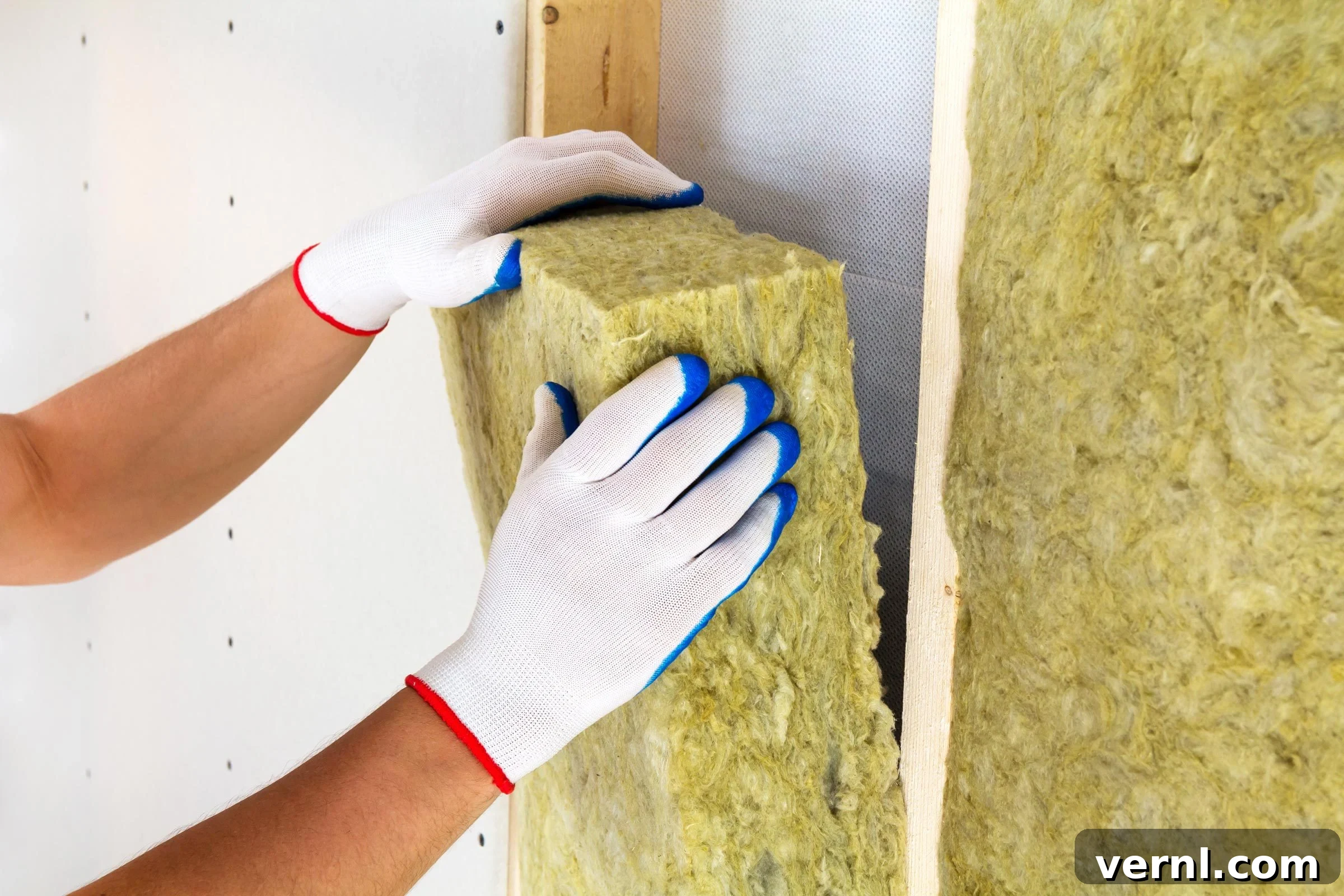
- Mineral Wool Insulation (Rock Wool): Also known as rock wool or slag wool, mineral wool is an increasingly popular alternative to fiberglass. It is produced from molten basalt rock and recycled slag, spun into fibers and formed into rigid or semi-rigid batts. Mineral wool is inherently fire-resistant, mold-resistant, and boasts thermal performance comparable to or even superior to fiberglass. Its higher density often makes it easier to cut and fit tightly, reducing air gaps during installation. While it tends to be heavier than fiberglass, its robust properties make it an excellent choice for basements, particularly around furnace rooms and subfloors, where its fire resistance and moisture resilience are highly valued. Mineral wool insulation is typically unfaced, requiring a separate vapor barrier if needed.
- Rigid Foam Insulation: Composed of polystyrene (expanded polystyrene, EPS, or extruded polystyrene, XPS) or polyisocyanurate, rigid foam insulation comes in large, lightweight four-by-eight-foot sheets. These sheets are available in various thicknesses, typically ranging from one-half to two inches. Many rigid foam panels feature a reflective foil coating on one or both sides, which helps prevent radiant heat transfer, enhancing its overall insulating properties. Rigid foam boards are highly effective in situations where a thin, high-R-value barrier is needed, such as insulating concrete walls in basements, crawl spaces, or exterior sheathing applications. They are also moisture-resistant and durable.
- Polyurethane Spray Foam Insulation: Widely regarded as the pinnacle of insulation performance inch-for-inch, polyurethane spray foam offers exceptional thermal resistance and an air-sealing capability unmatched by other insulation types. It expands upon application, filling every void and crack, creating a monolithic, airtight barrier. Spray foam is available in two main formulations: open-cell (less dense, lower R-value per inch, more flexible, and allows some moisture vapor diffusion) and closed-cell (denser, higher R-value per inch, rigid, and acts as its own vapor barrier). While its performance is outstanding, installation requires specialized equipment, training, and personal protective equipment. The application can also be messy, which is why spray foam insulation is typically best left to experienced professionals to ensure proper application and maximum benefit.
- Pipe Insulation: A specialized form of insulation, pipe insulation is designed to prevent heat loss from hot water pipes and condensation on cold water pipes. It typically consists of flexible foam-rubber tubing with a pre-cut slit along its length. This design allows for easy installation by simply fitting the insulation around existing pipes. Insulating pipes reduces energy waste, improves hot water delivery efficiency, and prevents potential damage from freezing pipes in unheated areas.
Strategic Insulation Placement: What to Use Where
The effectiveness of your insulation strategy hinges on selecting the right material for each specific area of your home. Different zones have unique challenges, such as moisture exposure, ventilation requirements, and structural configurations.
- Attics: Attics are often the easiest and most impactful areas to insulate. Most types of insulation, with the exception of rigid foam boards, can be used effectively here. For new construction, Saltzman specifically recommends blown cellulose due to its cost-effectiveness and ability to conform to irregular spaces, creating a seamless thermal blanket. This holds true for many regions beyond Minnesota. Loose-fill fiberglass is also a popular choice for attics. The goal is to achieve a deep, uniform layer of insulation to maximize R-value and prevent heat transfer through the roof. Proper attic ventilation, however, must be maintained to prevent moisture buildup and mold growth.
- Walls: For wall cavities, fiberglass batts are a common and convenient choice, as they are pre-cut to fit standard stud spacing. Faced batts, with their extended paper backing, make stapling to stud faces straightforward. However, Saltzman offers a valuable tip for insulating walls, recommending the unfaced variety paired with a continuous plastic moisture barrier. This approach offers two key advantages: it ensures a tight and uninterrupted moisture barrier, crucial for preventing condensation within the wall cavity, and it encourages installers to fully fill the entire cavity, eliminating potential gaps that can compromise performance. Alternatively, blown-in cellulose or spray foam can be used in walls for superior air sealing and thermal performance, particularly in existing homes where opening up walls isn’t feasible.
- Basements: Basements present unique insulation challenges primarily due to their direct contact with the ground, making moisture resistance a paramount concern. For this reason, mineral wool and rigid foam are often the best choices. Mineral wool is excellent for filling wall cavities in finished basements, offering both insulation and fire resistance. Rigid foam insulation is ideal for insulating bare concrete foundation walls, creating a continuous thermal break and moisture barrier against the damp earth. Additionally, ensure you use specialized pipe insulation to cover exposed water pipes, protecting them from temperature fluctuations and potential freezing.
Determining Your Insulation Needs: The R-Value Explained
The performance of an insulation product is quantified by its R-value, which measures its resistance to heat flow or heat transfer. A higher R-value indicates greater insulating power. R-value is typically expressed per inch of material thickness. For example, if cellulose has an R-value of approximately 3.5 per inch, you would need four inches of material to achieve a total R-value of 14.
The specific R-values recommended for your home’s walls, attics, and floors are not universal; they are largely dependent on your local climate zone. Energy.gov provides detailed charts outlining recommended R-values for every climate zone across the U.S., which should serve as your primary reference. Consulting these guidelines is crucial for optimizing your home’s energy performance.
It’s important to adhere to these recommended numbers and avoid the temptation to drastically over-insulate. While more insulation generally equals better performance, excessive insulation can, in some scenarios, inadvertently create problems. For instance, in attics, over-insulation without adequate ventilation can impede airflow, trap moisture, and lead to condensation, mold growth, and a reduction in the insulation’s effectiveness over time. Balance is key.
Essential Insulation Installation Tips for Homeowners
Proper installation is just as vital as choosing the right insulation material. Even the best insulation will underperform if installed incorrectly.
Prioritize Air Sealing
Before you even consider adding insulation, the absolute first step is to meticulously seal all air gaps and penetrations in your home’s envelope. This critical task can be accomplished using appropriate caulking for smaller cracks and gaps, or expanding spray foam from a can for larger openings. Pay particular attention to sealing gaps in attic floors, especially where they meet walls, around plumbing vents, electrical boxes, and lighting fixtures (recessed lights, in particular, can be significant sources of air leakage). In the basement, ensure you seal the ends of floor joists where they connect with the rim joists—this area is a common entry point for cold air and moisture. Air sealing dramatically reduces drafts, prevents moisture infiltration, and allows your insulation to work at its maximum potential.
Cut Batts to Fit Tightly, Not Compressed
While batts are pre-cut for standard stud spacing, you will inevitably encounter spaces that are narrower, such as corners, around windows, and door frames. When installing batt insulation, it’s crucial that the material fits snugly without being overly compressed or stuffed. Compression reduces the air pockets within the insulation, thereby lowering its R-value and effectiveness. Use a sharp utility knife or specialized insulation knife to precisely cut batts to fit these smaller or irregularly shaped areas. Measure carefully and aim for a fit that is snug but not forced, ensuring the insulation maintains its full loft and thermal resistance. For detailed instructions, you can refer to resources on installing fiberglass batt insulation.
Install Attic Baffles for Essential Ventilation
When blowing loose-fill insulation into your attic, it’s paramount to avoid covering the soffit vents. These vents are crucial for maintaining proper attic ventilation, allowing outside air to circulate and preventing heat and moisture buildup. Covering them can lead to stagnant air, condensation, mold growth, and compromised insulation performance. Attic baffles (also known as vent chutes) are simple, inexpensive barriers, typically made of cardboard or plastic, that are stapled to the rafters above each soffit vent. They create a clear channel for airflow from the soffits up into the attic, ensuring that insulation does not obstruct this vital ventilation path.
The Importance of Uncovered Attic Insulation
While a moisture barrier (often polyethylene plastic sheeting) is necessary between attic insulation and the ceiling drywall (on the warm side in colder climates) to prevent moisture migration into the insulation, you should never cover the insulation from the top with another impermeable layer. Doing so would effectively trap any moisture that gets into the insulation (from minor leaks, humidity, or even diffusion through the ceiling drywall), preventing it from drying out. This trapped moisture will lead to condensation, causing the insulation to clump, lose its R-value, and become a breeding ground for mold and mildew. Attic insulation needs to breathe from the top to allow any moisture to dissipate harmlessly.
Meet the Expert Behind the Advice
Reuben Saltzman is the accomplished CEO of Structure Tech, a highly respected home inspection company that serves the Minneapolis/St. Paul metropolitan area and surrounding regions in Minnesota. With a lifetime dedicated to remodeling and understanding the intricacies of home construction, Reuben brings invaluable, practical expertise to the field of home performance and energy efficiency. His insights underscore the importance of foundational elements like air sealing as prerequisites for effective insulation.
Final Thoughts: A Comfortable and Efficient Home Awaits
Investing in proper home insulation and meticulous air sealing is one of the most effective strategies to enhance your home’s comfort, reduce energy consumption, and lower your heating and cooling bills. By understanding the different types of insulation, their ideal applications, and the importance of R-value and correct installation techniques, you can transform your living space into an energy-efficient sanctuary. Remember to prioritize air sealing, choose the right materials for each area, and always ensure proper ventilation, especially in attics. With these steps, you’ll not only enjoy a more comfortable home but also contribute to a greener planet and a healthier wallet.