
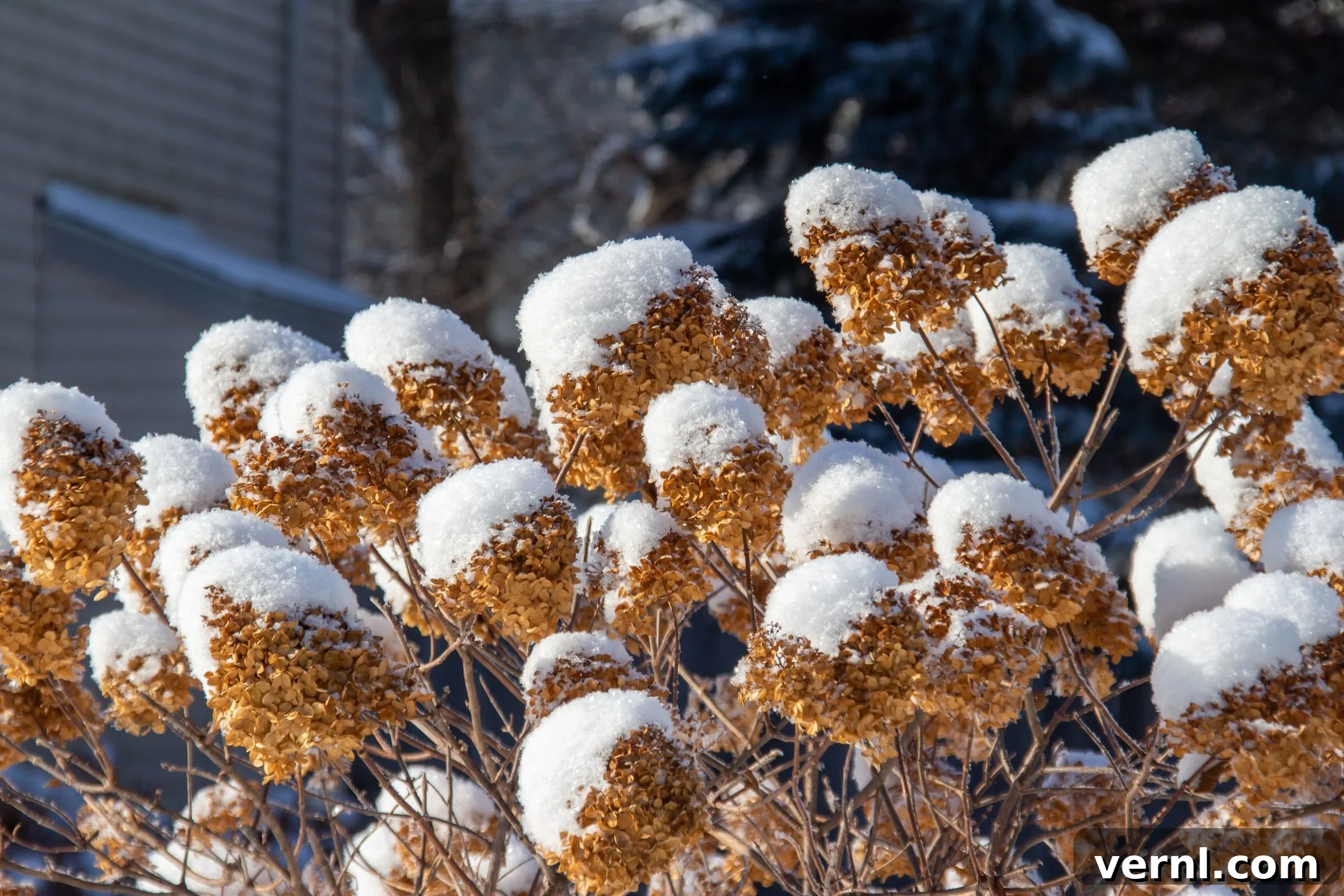
I confess, I don’t do much to prepare my hydrangeas for winter.
Most bloom on new wood, which means flower buds form in the spring and don’t need to overwinter. Or they’re the re-blooming types of hydrangeas, which form flower buds on old and new wood. That means if flower buds are killed off over the winter, ones form on the new wood. So I’ll still get some blooms, just later in the year.
I don’t even prune my hydrangeas in the fall. But if your hydrangeas depend on overwintering, you might need to do a little more work to prepare them for the coldest season.
Decoding Winter Care for Your Hydrangeas: A Comprehensive Guide
Beyond Basic Protection: Ensuring Vibrant Blooms Year After Year
For many gardeners, the sight of hydrangeas in full bloom evokes a sense of joy and tranquility. These versatile shrubs, known for their magnificent flowers, are a staple in landscapes across various climates. Yet, as the vibrant colors of summer begin to fade and autumn’s chill sets in, a common question arises: how do we prepare our beloved hydrangeas for winter? While some varieties are remarkably resilient, others require a bit more attention to ensure a spectacular display the following season. This comprehensive guide will delve into the nuances of winterizing hydrangeas, helping you understand which types need protection, why it matters, and how to provide the best care for a thriving garden.
It’s a common misconception that all hydrangeas demand rigorous winter preparation. In truth, many modern cultivars, especially those that bloom on new wood or are re-blooming varieties, are surprisingly forgiving. These hydrangeas form their flower buds in the spring on the current year’s growth. Even if a harsh winter damages some existing wood, new growth emerges, carrying with it the promise of blooms. Re-blooming types take this a step further, producing flowers on both old and new wood, offering a ‘safety net’ against winter damage. This inherent resilience often means I can be a bit more relaxed about their winter prep, knowing that spring will still bring a beautiful floral show, perhaps just a little later in the season.
However, for certain types of hydrangeas, particularly the classic bigleaf varieties, successful blooming next year hinges significantly on protecting their delicate flower buds through the cold months. Understanding your specific hydrangea variety is the first crucial step in determining its winter needs. Ignoring these needs can result in a season of lush green foliage but a disappointing absence of the iconic blooms we all cherish.
Hydrangea Hardiness: Surviving the Winter Chill
The good news is, most hydrangeas are remarkably resilient and can certainly survive frost. The key factor is understanding their specific cold hardiness, typically defined by the U.S. Department of Agriculture Plant Hardiness Zones. This system helps gardeners identify which plants are most likely to thrive at a location. Some hydrangea varieties are hardy only to Zone 6, meaning they can withstand minimum winter temperatures of -10 to 0°F (-23.3 to -17.8°C). Many other robust types, however, can endure the much colder winters of Zone 4, where temperatures can plummet to -30 to -20°F (-34.4 to -28.9°C).
Different species of hydrangeas exhibit varying degrees of cold tolerance:
- Bigleaf Hydrangeas (Hydrangea macrophylla): These include the popular Mophead and Lacecap varieties. They are generally hardy in USDA Zones 5-9, though some newer cultivars are more cold-tolerant (Zone 4). Their primary vulnerability is not the plant itself, but the flower buds formed on old wood, which are easily damaged by extreme cold.
- Panicle Hydrangeas (Hydrangea paniculata): Such as ‘Limelight’ and ‘Vanilla Strawberry’, are among the most cold-hardy, thriving in Zones 3-8. They consistently bloom on new wood, making them less susceptible to winter bud kill.
- Smooth Hydrangeas (Hydrangea arborescens): Varieties like ‘Annabelle’ and ‘Incrediball’ are also extremely hardy, flourishing in Zones 3-9. Like Panicle hydrangeas, they bloom reliably on new wood.
- Oakleaf Hydrangeas (Hydrangea quercifolia): Known for their distinctive foliage and peeling bark, these are hardy in Zones 5-9. They typically bloom on old wood, so winter protection can be beneficial in colder parts of their range.
- Mountain Hydrangeas (Hydrangea serrata): Often considered a more compact and cold-hardy cousin to H. macrophylla, these are hardy in Zones 5-9 and also bloom on old wood.
Even a blooming hydrangea purchased from a florist, often a bigleaf type, can transition successfully to an outdoor garden. These plants, typically forced for indoor display, can be “hardened off” by gradually introducing them to outdoor conditions during spring or early summer. Once acclimatized, they can be planted in the garden. While typically hardy in Zones 6-8, with proper winter protection, I’d even recommend trying them in the colder climates of USDA Zones 4 and 5, especially if they are sentimental gifts.
The Crucial ‘Why’: Understanding Hydrangea Winter Protection
The decision to winterize your hydrangeas hinges primarily on their blooming habit and your local climate. Most garden hydrangeas, particularly the highly popular Panicle (H. paniculata) and Smooth (H. arborescens) varieties, are wonderfully low-maintenance when it comes to winter. They reliably produce their flower buds on the new growth that emerges in spring, meaning their buds are not exposed to the ravages of winter cold. For these types, extensive autumn preparation, including fall pruning, is generally unnecessary and can even be detrimental if done incorrectly.
The significant exception, and the main focus of intensive winter care, is the Bigleaf Hydrangea (Hydrangea macrophylla). This category includes the iconic Mophead and the more delicate Lacecap types, distinguished by their large, showy flower clusters. What makes H. macrophylla special, and sometimes challenging, is its tendency to form flower buds on “old wood” – the stems that grew the previous season. These delicate buds develop in late summer and autumn and must survive the entire winter to produce blooms the following year. If these overwintering buds are exposed to prolonged freezing temperatures, extreme cold snaps, or fluctuating temperatures that cause thawing and re-freezing, they can be severely damaged or killed.
When these precious old wood buds are destroyed, you’ll still get a healthy, leafy plant in spring, but it will be entirely devoid of flowers. This scenario, often referred to as “winter bud kill,” is a common source of frustration for gardeners in colder regions who adore their Mophead and Lacecap hydrangeas. Therefore, providing winter protection for these specific varieties isn’t about saving the plant itself – hydrangeas are quite tough – but about safeguarding the future floral display. Modern re-blooming varieties of H. macrophylla, which bloom on both old and new wood, offer a degree of insurance. Even if the old wood buds are lost, new growth will eventually produce flowers, albeit typically later in the season. However, to ensure the earliest and most abundant bloom, protecting the old wood buds remains crucial.
The Right Timing: When to Begin Winterizing Your Hydrangeas
Timing is everything when it comes to successful winterization. For the vulnerable bigleaf hydrangeas (Hydrangea macrophylla) that depend on overwintering buds for their spectacular display, the process should begin once temperatures consistently drop and the plant has entered its dormant phase. This typically means after several hard frosts have occurred, but before sustained deep freezes set in. Depending on your specific USDA Plant Hardiness Zone and local microclimate, this period could range from late October to as late as the end of November.
A good rule of thumb is to wait until the leaves have fully dropped or withered brown, signaling that the plant has ceased active growth and is preparing for dormancy. Attempting to protect a plant that is still actively growing can sometimes trap moisture and heat, potentially leading to fungal issues or hindering the natural hardening-off process. Observe your local weather patterns; once daytime temperatures struggle to rise above freezing and nighttime lows consistently dip below 20°F (-6°C), it’s a clear indication that it’s time to take action. In milder climates (Zone 7 and above), winter protection might only be necessary during exceptionally cold spells or for particularly exposed plants.
Essential Tools and Materials for Hydrangea Winter Protection
Protecting your bigleaf hydrangeas from the biting cold doesn’t require specialized, expensive equipment. With a few readily available and basic supplies, you can create an effective barrier against winter damage. Gathering these materials beforehand will ensure you’re prepared when the time comes to act.
- Chicken wire or other pliable wire fencing: This is essential for creating a protective cage or enclosure around your hydrangea. Choose a roll that is tall enough to extend well above the anticipated height of your shrub once mulched, typically 2-3 feet high. The pliability allows you to easily form a circular structure.
- Wire snips or heavy-duty scissors: Necessary for cutting the chicken wire to the appropriate length and shaping it around your plant.
- Burlap fabric or frost cloth: This material will be wrapped around the wire cage to provide an insulating layer and block harsh winds. Burlap is breathable, preventing moisture buildup, while frost cloth offers similar protection. Ensure you have enough to encircle the cage completely.
- Stakes or rebar: To secure the chicken wire cage firmly to the ground, preventing it from blowing away in strong winds.
- Twine or zip ties: For fastening the burlap to the wire cage and securing the cage itself.
- Shredded leaves, straw, or pine needles: These serve as the primary insulating material to fill the cage. Shredded leaves are ideal as they offer excellent insulation without becoming too heavy or compact. Avoid grass clippings, which can become slimy and promote rot.
- Garden gloves: To protect your hands while working with wire and plant material.
Step-by-Step Guide: How to Winterize Hydrangeas for Optimal Bloom
Regardless of the hydrangea type, a few foundational steps are crucial for promoting overall plant health and resilience through winter. These initial actions set the stage for any additional protection your specific variety might require.
1. Ensure Adequate Hydration
Throughout the fall, it’s vital to ensure all your hydrangeas are well-watered. As the growing season winds down, plants are still absorbing water, and proper hydration helps them withstand the drying winds and freezing temperatures of winter. If you experience a dry autumn with insufficient rainfall, take the initiative to water your hydrangeas deeply once a week until the ground begins to freeze. This is especially critical for hydrangeas planted within the last year, as their root systems are not yet fully established.
2. Apply a Generous Layer of Mulch
Mulching is one of the simplest yet most effective ways to protect hydrangea roots from winter damage. Before the ground freezes solid, apply a two to three-inch layer of organic mulch around the base of your hydrangeas, extending out to the drip line. Materials like shredded bark, wood chips, pine needles, or compost are excellent choices. Mulch acts as an insulating blanket, moderating soil temperature and preventing the detrimental cycle of freezing and thawing. This freeze-thaw action can heave young plants out of the ground, exposing their delicate roots to drying winds and severe cold, leading to “winter burn” or outright death. Mulch also helps retain essential soil moisture, preventing dehydration during dry winter spells.
3. Resist the Urge to Prune (for old wood bloomers)
For Bigleaf (H. macrophylla), Oakleaf (H. quercifolia), and Mountain (H. serrata) hydrangeas that bloom on old wood, it is absolutely essential to delay pruning until spring. Pruning in the fall would remove the very buds that are destined to produce next year’s flowers. Even if you only prune dead or damaged branches, you risk accidentally cutting off viable flower buds. For these types, leave the spent blooms on the plant throughout winter, as they can offer a small degree of protection to the buds directly below them. Panicle and Smooth hydrangeas, blooming on new wood, can be pruned in late winter or early spring without sacrificing blooms.
4. Specific Protection for Old Wood Bloomers (Mopheads & Lacecaps)
If you live in USDA Zones 5 or colder and grow Hydrangea macrophylla, creating a protective enclosure is highly recommended to ensure those precious flower buds survive. This method is often referred to as a “leaf cage” or “burlap wrap.”
Creating a Protective Cage:
- Construct the Wire Cage: Carefully encircle each hydrangea plant with a cylinder of chicken wire or other pliable fencing. Ensure the cage is wide enough to avoid touching the branches and tall enough to extend at least six inches above the highest anticipated flower buds. Secure the ends of the wire together with wire snips, twine, or zip ties. For added stability, drive two or three stakes or pieces of rebar into the ground around the cage and tie the cage to them.
- Fill with Insulating Material: Once the cage is in place, gently fill it with a loose, insulating material. Shredded leaves are the gold standard, providing excellent insulation and air circulation. Straw or pine needles can also be used. Avoid tightly packing the material; a loose fill provides better trapped air insulation. The goal is to cover the entire plant, especially the upper stems where many of the flower buds reside.
- Cover with Burlap (Optional but Recommended): For an extra layer of protection, particularly in very windy or extremely cold zones, wrap the outside of the wire cage with burlap fabric or a specialized frost cloth. This additional layer helps to block harsh winds, which can cause desiccation and further chill damage, and provides another barrier against freezing temperatures. Secure the burlap with twine or zip ties.
- Monitor and Maintain: Throughout winter, periodically check your protective structures. High winds can dislodge burlap or topple cages. Ensure the insulating material remains fluffy and dry. If heavy snow accumulates, gently brush it off the top to prevent crushing the branches.
This protective enclosure should remain in place until all danger of hard frost has passed in early spring. Removing it too early can expose the vulnerable buds to a late cold snap, undoing all your hard work.
Winterizing Container-Grown Hydrangeas: Special Considerations
Hydrangeas grown in containers offer flexibility but also present unique challenges for winter survival. Their roots are more exposed to freezing temperatures than those in the ground, making them particularly vulnerable. However, with the right approach, you can successfully overwinter your potted hydrangeas.
1. Move to a Sheltered Location
The simplest and most effective method for container hydrangeas is to move them to a more sheltered location. This could be an unheated garage, a shed, a cool basement, or even tucked close to the foundation of your house on a protected porch. The ideal spot should be cool but consistently above freezing, dark or dimly lit, and protected from strong, drying winds. An unheated garage is often perfect, as it provides enough chill for dormancy without allowing the roots to freeze solid.
If the containers are too large or heavy to move, you can still overwinter them in place. Choose the most protected spot available, perhaps against a south-facing wall or in a corner sheltered from prevailing winds. Ensure the pot itself is winter-proof (e.g., terracotta can crack). Before the ground freezes, apply a thick layer of mulch on top of the soil and around the sides of the container. You can also insulate the container by wrapping it with burlap, bubble wrap, or a specialized insulating material, or by placing it inside a larger pot and filling the gap with straw or leaves.
2. Watering Through Winter
Even in dormancy, container plants still need some moisture. The soil in pots tends to dry out more quickly than garden soil. Check the soil moisture periodically throughout the winter. If the soil is completely dry to the touch a few inches down, water lightly, just enough to moisten the root ball without making it soggy. Avoid overwatering, as this can lead to root rot, especially in cold conditions. Do this on a warmer winter day when the soil is not frozen solid.
3. Burying Containers
For maximum protection, especially in very cold zones, consider burying your potted hydrangeas. Dig a trench or hole in your garden large enough to accommodate the entire pot. Place the potted hydrangea into the hole, ensuring the rim of the pot is level with or slightly below the surrounding soil. Backfill around the pot with soil, and then apply a generous layer of mulch over the top of the pot and the surrounding ground. This method leverages the insulating power of the earth to keep the roots at a more stable temperature.
4. Preparing for Spring
Once the danger of hard frost has passed in spring, gradually reintroduce your container hydrangeas to outdoor conditions. If they were indoors, move them to a brighter, sheltered spot for a week or two before placing them back in their permanent sunny location. This helps them acclimate slowly and prevents shock.
Embracing Winter: A Small Effort for Big Rewards
Preparing your hydrangeas for winter might seem like an extra chore, but it’s an investment that pays off handsomely with a spectacular display of blooms the following season. By understanding the specific needs of your hydrangea varieties – particularly distinguishing between old wood and new wood bloomers – you can tailor your winter care routine for maximum effectiveness. While the hardy Panicle and Smooth hydrangeas generally require minimal intervention beyond good autumn hydration and mulching, the beloved Bigleaf hydrangeas (Mopheads and Lacecaps) thrive with dedicated protection for their precious overwintering buds.
From creating protective leaf cages and insulating containers to simply ensuring adequate fall watering, each step contributes to the plant’s overall health and ability to withstand the winter chill. The satisfaction of seeing your hydrangeas burst forth with abundant, vibrant flowers each spring, unharmed by the harshest winter, is a testament to the care and attention you’ve provided. So, take a moment this fall to assess your hydrangeas, gather your simple supplies, and give them the winter send-off they deserve. Your garden will thank you with a breathtaking performance when spring arrives.